


Why Didn’t the Pharaohs Die of Infection? The Secret of the "Sacred" Antibiotic
Introduction: The Mystery of the Uninfected Wound In the modern world, a simple scratch without a bandage or a minor surgery without sterilized tools could lead to a fatal infection. Yet, 3,500 years ago, Egyptian surgeons were performing complex amputations, setting shattered bones, and even drilling into skulls (trepanation).
The logic of history suggests they should have died from sepsis within days. But they didn’t. Archaeological evidence shows bone remodeling and healed tissue that proves patients survived for decades after surgery. How? The answer lies in a "Sacred Antibiotic" that was sitting in their kitchens all along.
The Golden Shield: Honey as a High-Tech Barrier If you look at the Edwin Smith Papyrus—the world's oldest surgical treatise—the most frequent prescription for an open wound isn't a magic spell. It is a mixture of honey, grease, and lint.
To a modern scientist, this is a masterclass in pharmacology. Honey is the ultimate "Sacred Antibiotic" for three reasons:
-
Hygroscopic Power: It sucks the moisture out of bacteria, effectively dehydrating and killing them.
-
Hydrogen Peroxide Factory: When honey mixes with body fluids, it slowly releases low levels of hydrogen peroxide—a powerful antiseptic.
-
The Physical Seal: It creates a sticky, airtight barrier that prevents external germs from entering the bloodstream.
The "Moldy" Miracle: Ancient Penicillin? Long before Alexander Fleming "discovered" penicillin in 1928, the Egyptians were using it. Ancient medical texts frequently mention the application of moldy bread to infected wounds. While they didn't understand the biology of fungi, they observed the results: the "green fuzz" stopped the "angry red" of infection. They were utilizing the precursors of modern antibiotics while the rest of the world was still using mud and rituals.
Copper and Silver: The Metal Warriors The Egyptians were also masters of metallurgy. They observed that water stored in copper vessels stayed fresh longer. Surgeons used copper and bronze scalpels which, when heated in fire (sterilization), released ions that naturally inhibited bacterial growth.
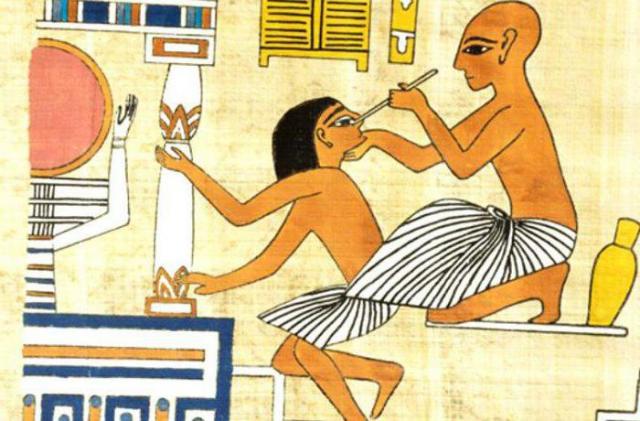
They even used Malachite (copper carbonate) as an eye paint. While we see it as "makeup" today, it was actually a functional medical tool. The copper content in the green eye paint protected them from the eye infections common in the dusty, fly-ridden Nile Valley.
The Sacred Resin: Nature's Super-Glue Beyond honey, the use of Frankincense and Myrrh wasn't just for perfume or mummification. These resins are packed with antimicrobial compounds. When used on surgical dressings, they acted as a "liquid bandage," preventing rot and gangrene (the "smell of death"). This is why even their battlefield medicine was lightyears ahead of the Roman or Medieval eras.
Why This Matters for the Modern Traveler When you stand in the Temple of Kom Ombo today and look at the surgical instruments carved into the stone, you aren't just looking at history—you are looking at the foundation of the ICU.
For the modern traveler, especially those seeking the "Boutique Egypt" experience, understanding this changes the way you see the ruins. You aren't just visiting graves; you are visiting the world's first research laboratories.
Conclusion: A Science of Survival The Pharaohs didn't survive by luck. They survived because they turned the Nile’s natural resources—honey, copper, and resins—into a sophisticated medical defense system. They understood the "invisible enemies" of the body long before the microscope was invented.
Next time you enjoy a spoonful of honey, remember: to an Ancient Egyptian, that wasn't just a sweetener. It was a life-saving miracle.





-webp.webp "Hilton")
-webp.webp "dusit")
-webp.webp "Marriott Hotels")
-webp.webp "Azimut Hotel")
-webp.webp "Golden Tulip")
-webp.webp "sheraton")
-webp.webp "westin hotel")
-webp.webp "Movenpick")
