
Unveiling the Mastery of Ancient Egyptian Art: A Journey Through Eternity
The first visual representation of Ancient Egypt emerges when you shut your eyes and begin to imagine the ancient civilization. The Great Pyramid of Giza stands as a high structure which rises up against the bright blue sky. The perfect death mask of King Tutankhamun serves as a hauntingly beautiful artifact.
The Ancient Egyptian art form represents one of the most typical artistic styles which has endured through time. This art form has maintained its power to attract archaeologists and historians and art enthusiasts for more than 2000 years. The Ancient Egyptians developed their artistic style for two main reasons. The Egyptians did not maintain art galleries and their artists painted tomb walls for purposes beyond mere decoration. The Ancient Egyptians used art to create practical works which they devoted to their religious beliefs by combining it with magical elements.
The complete guide will show us the historical development of Ancient Egyptian art while we discover its actual purpose and its binding regulations and its everlasting masterpieces.
More Than Just Decoration: The Purpose of Ancient Egyptian Art
To understand Ancient Egyptian art, we must discard modern art definitions. Artists in modern times create artworks to express their thoughts and showcase beauty and create emotional responses. The Ancient Egyptians created art for eternity.
1. Sustaining the Afterlife
Most of the surviving artwork from Ancient Egypt originates from tombs and temples. The Egyptians believed deeply in the afterlife, and they believed that a person's soul (the Ka) needed a physical vessel to return to after death. A destroyed mummy required a sculpted statue to function as a substitute resting place for the soul.
The tomb wall paintings served double purposes because they documented deceased people actual life events. The paintings functioned as magical blueprints. The ancient Egyptians believed that painting pharaohs who hunted in the Nile and servants who harvested wheat would create actual scenes in the afterlife, which would provide food and entertainment for the deceased.
2. Divine Propaganda and Cosmic Order
Art served as a tool to preserve Ma'at, which represents universal truth and cosmic balance and divine order. The pharaoh existed as a deity who protected Ma'at from the forces of chaos. The pharaoh always appeared in artistic representations as a powerful and victorious figure who experienced no human limitations. Traditional art shows Egyptian kings as neither old nor sick nor defeated. The artwork served as propaganda that presented a permanent image of strength.
The Golden Rules: Characteristics of Ancient Egyptian Art
Ancient Egyptian paintings and carvings which exist for more than 3000 years show one astonishing thing because their artistic style maintained constant throughout that time period. Egyptian artists maintained consistent artistic output because they worked under fixed guidelines which restricted their creative possibilities.
The Magic of "Frontalism" (The Composite View)
Have you ever tried to walk like an Egyptian? The composite view shows a person whose head faces to the side yet looks forward while his shoulders face directly ahead and his legs move to the side.
The artists used this painting technique because they wanted to display their complete understanding of human anatomy. The artists painted all human body parts because they wanted to show each body part through its most typical viewing position. The scientists wanted to make sure that the soul would have a complete body for its afterlife journey. The presence of one arm which the artist concealed behind the torso in the painting indicates that the subject will enter the afterlife with one missing arm.
Size Matters: Hierarchical Scale
In Egyptian art, the size of an artwork determines its importance to their culture. The pharaoh appears as the most prominent character in every scene because he is depicted as a giant who surpasses both his enemies and his subjects. His wife might be painted smaller, and his servants or defeated enemies would be drawn as tiny figures. The hierarchical scale used in this artwork instantly displays to viewers which figure possessed the highest authority in the universe.
The Power of Color Symbolism
Ancient Egyptian artists selected their color palette based on their understanding of color relationships. The Egyptians believed that every color possessed special magical powers which they used to create their sacred art.
Green: The color of all growing plants and newly emerging life. Osiris, the god of the afterlife, is famously depicted with green skin because he represents resurrection.
Gold: The color connects to the sun and the concept of eternal existence. The gods were believed to literally have skin made of gold, which is why pharaohs' death masks were crafted from it.
Blue: The color represents both the sky and the Nile River which symbolize creation and rebirth.
Red: A complex color. It could represent life and victory which blood color represents but it also served as the desert color which represented the destructive nature of the god Seth.
Black: The Egyptians considered black a positive color because it differed from modern death associations. The color black symbolized the Nile's life-giving fertile mud which emerged after the yearly flood.
The Mediums and the Masterpieces
The Ancient Egyptians developed their exceptional craftsmanship skills through their work with multiple materials. Their expertise in creating various materials extended from soft limestone and wood to the extremely hard stones diorite and granite.
Tomb Paintings and Reliefs
Artists used a grid system to ensure their proportions were perfectly perfect before they began carving or painting. The artists created elaborate relief sculptures on stone walls through their use of raised and sunken carving techniques. The painters created their art through the use of pigments which they produced by crushing minerals.
Statues and Sculptures
Egyptian statues demonstrate their characteristic style through their unbending body stance which faces forward. The statues required front view observation because their designers placed them in temple and tomb niches.
The Great Sphinx of Giza The ultimate symbol of royal power combines the human intelligence of a pharaoh who probably is Khafre with the lion's strength.
The Seated Scribe A beautiful exception to the rule of perfection. Scribes who held lower ranks than pharaohs received realistic depictions which included their actual body shape because they had sufficient wealth to afford good food.
Jewelry and Minor Arts
Egyptian jewelry served as more than decorative purposes because it functioned as a powerful defense mechanism. Amulets shaped like the Ankh (the symbol of life), the Djed pillar (stability), or the Eye of Horus (protection) were woven into necklaces, bracelets, and the wrappings of mummies. The artists used gold and lapis lazuli and turquoise and carnelian to make jewelry designs that still influence contemporary fashion designers.
Hieroglyphics: Where Art Meets Language
The discussion of Ancient Egyptian art requires the inclusion of their writing system. Hieroglyphics (which the Greeks called "sacred carvings") created a connection between visual art and written language. The letters represented miniature artistic creations which included a bird, a reed, a foot, and a sun.
The text existed together with the visual element as one complete entity. The hieroglyphs on statues reveal the identity of the subject while the paintings display text that functions as captions and spells and prayers. The Egyptians believed that writing a word created its power while linking it to an image made the word permanent.
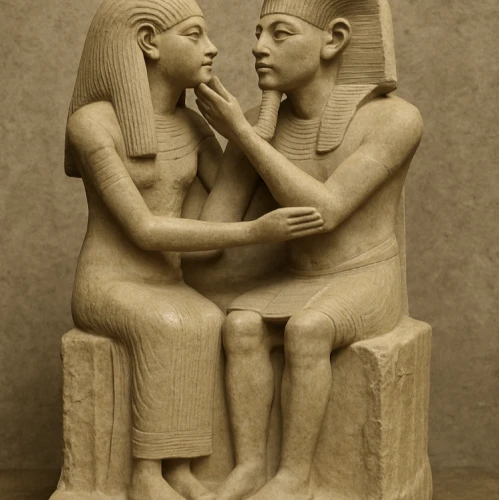
The Rebel Phase: The Amarna Period
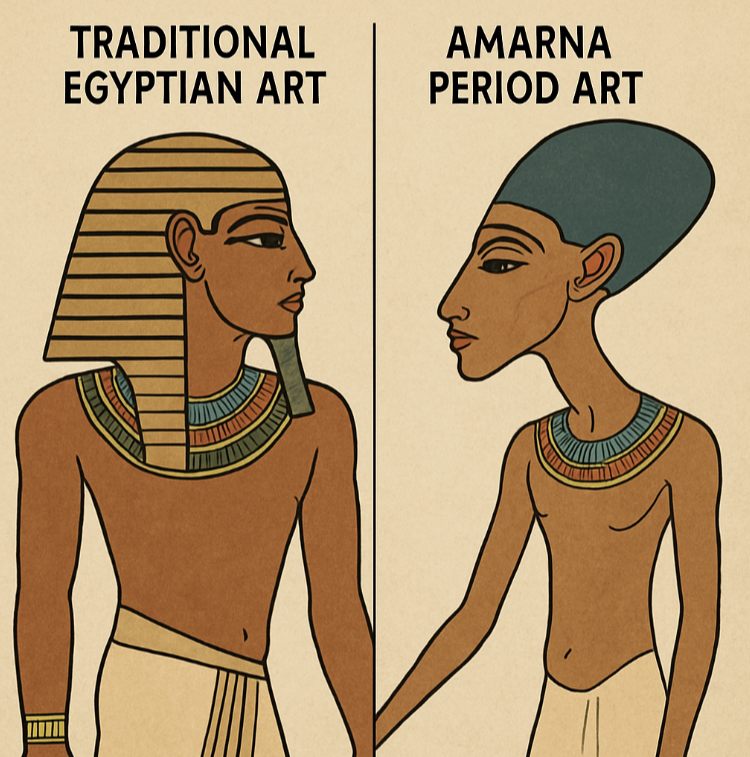
Egyptian art maintained its original style during three millennia of existence except for one extreme period. The New Kingdom period began when Akhenaten became pharaoh. He created a new religion which mandated that all worshipers should dedicate themselves to the Aten sun deity.
He established new artistic guidelines after he made his religious changes. The brief "Amarna Period" produced art which depicted human subjects in a detailed yet personal manner. Pharaohs were depicted as stiff, emotionless deities. Akhenaten was shown with an elongated face and a bulging abdomen and wide hips. The artwork shows him kissing his children and spending time with his famous wife Queen Nefertiti. (The stunning, incredibly realistic Bust of Nefertiti was created during this exact period). The Egyptians destroyed his statues after his death and resumed their previous customs.
The Eternal Legacy of Ancient Egyptian Art
Artists from Ancient Egypt created artwork that maintains its dedicated artistic mission. The work established everlasting existence because it did not intend to show a moments existence. The artists created their work through strict regulations which included bright colors and enormous dimensions to achieve victory over death.
The solution succeeded through this particular method. The pharaohs died and their empire disappeared into history yet their artistic creations granted them the eternal life which they wanted to achieve. Today, we still gaze into the painted eyes of their statues, read their sacred carvings, and marvel at a civilization that managed to carve its soul into stone.
Are you interested in studying ancient historical events? What is your favorite piece of Ancient Egyptian art—the towering pyramids or the golden masks or the intricate hieroglyphics? Please share your response in the comments section below.



-webp.webp "Hilton")
-webp.webp "dusit")
-webp.webp "Marriott Hotels")
-webp.webp "Azimut Hotel")
-webp.webp "Golden Tulip")
-webp.webp "sheraton")
-webp.webp "westin hotel")
-webp.webp "Movenpick")