
Top 10 Ancient Egyptian Artifacts Featuring the Ankh
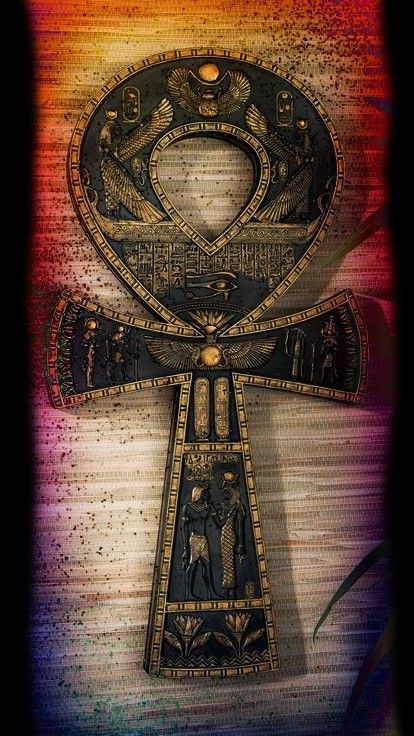
For the 2026 traveler, the Ankh is more than a logo for the ancient world; it is a recurring character in a 3,000-year-old drama. As you walk through the newly opened galleries of the Grand Egyptian Museum (GEM) or the historic halls of the Luxor Museum, the Ankh follows you. It appears in gold, in stone, in wood, and even in the shape of a mirror.
If you want to see the "Masterpieces of the Ankh," you have to know where to look. Here is a humanized countdown of the top 10 artifacts that best showcase the mystery, the art, and the daily reality of the "Key of Life."
1. The Ankh Mirror Case of Tutankhamun (GEM)
Perhaps the most famous Ankh in the world, this is a masterpiece of storytelling through design.
-
The Artifact: A wooden box overlaid with gold and inlaid with semi-precious stones, shaped exactly like a massive Ankh.
-
The Human Connection: It held the boy king’s bronze mirror. In ancient Egyptian, the word for "mirror" was also ankh. This was a visual pun: to look into the mirror was to see your own "life." In 2026, seeing this in the Tutankhamun galleries reminds us that even a Pharaoh’s morning routine was infused with sacred symbolism.
2. The Colossal Statue of Ramesses II (GEM Atrium)
As you enter the GEM, you are greeted by the 82-ton giant. Look closely at his right hand.
-
The Artifact: The King clutches a "cylindrical object" that is actually the handle of a massive Ankh (though the loop is often tucked against the leg).
-
The Meaning: It signifies that the Pharaoh is the sole "Holder of Life" for the nation. It isn't just an ornament; it is his scepter of authority. The sheer scale of this Ankh-grip communicates power in a way that words never could.
3. The "Breastplate" of Tutankhamun (GEM)
This pectoral jewelry is a riot of color—lapis lazuli, carnelian, and turquoise.
-
The Artifact: It features the goddess Mut and the falcon-god Horus, but at the very center, the King is being offered multiple Ankhs by the gods.
-
The Detail: Notice how the Ankhs are "strung" together like a necklace. It suggests that life isn't just one moment, but a continuous chain of breaths provided by the divine.
4. The Wall Reliefs of Amenhotep III (Luxor Temple)
In the "Birth Room" of Luxor Temple, the history of the Ankh becomes literal.
-
The Artifact: A series of wall carvings showing the divine birth of the King.
-
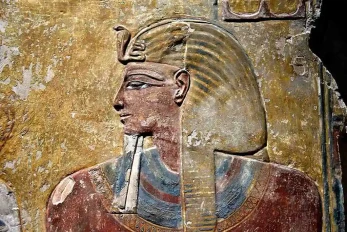
The Moment: You can see the god Amun-Ra holding the Ankh to the nose of the Queen mother. This is the most famous depiction of the "Breath of Life" ceremony. In the late afternoon 2026 sun, these reliefs glow with a depth that makes the "transfer of life" feel almost tangible.
5. The "Ankh-Shaped" Offering Table (Metropolitan Museum / Various)
Life in ancient Egypt was about sustenance.
-
The Artifact: Stone tables used for libations (liquid offerings), carved into the shape of the Ankh.
-
The Logic: Water or wine would be poured into the loop and flow down the stem. The symbolism was clear: the gods were pouring "Life" back into the earth. It is a beautiful example of how the symbol was integrated into functional, ritual objects.
6. The Throne of Tutankhamun (GEM)
On the backrest of this world-famous golden throne, the Ankh is a silent witness to a royal couple's intimacy.
-
The Artifact: Queen Ankhesenamun is shown anointing her husband. Between them, the rays of the Aten (the sun disc) descend.
-
The Human Touch: Each ray of sun ends in a tiny hand, and several of those hands are holding Ankhs to the noses of the King and Queen. It is the ultimate "solar battery" image—life flowing directly from the sun to the humans.
7. The Faience Amulets of the Third Intermediate Period (Egyptian Museum, Tahrir)
Not every Ankh was royal. The "People's Ankh" was often small and bright blue.
-
The Artifact: Thousands of tiny "Egyptian Blue" faience Ankhs used as jewelry or sewn into mummy wrappings.
-
The Reason: These were the "safety net" for the common person. Carrying a small Ankh amulet was like having a portable prayer for health and longevity. In 2026, the Tahrir Museum’s jewelry room remains the best place to see the sheer volume of these personal tokens.
8. The Statue of Senmut and Neferura (British Museum / Cairo Museum)
Senmut was the architect for Queen Hatshepsut. This "Block Statue" shows him holding the young princess Neferura.
-
The Artifact: Carved into the front of the block is a large, prominent Ankh.
-
The Narrative: In this context, the Ankh isn't just about "life," but about protection. Senmut is using the symbol to shield the royal child. It’s a very human image of guardianship.
9. The Papyrus of Ani (British Museum - Digital GEM Exhibit)
In the world’s most famous "Book of the Dead," the Ankh appears as a gateway.
-
The Artifact: Vibrantly painted papyrus scrolls.
-
The Scene: As Ani is led into the hall of judgment, the gods standing in the background almost always hold the Ankh. It acts as their "ID badge"—it proves they are beings of the eternal world, not the temporary one.
10. The Coptic Textiles with "Crux Ansata" (Coptic Museum, Cairo)
To see the "Final Chapter" of the Ankh, you must visit Old Cairo.
-
The Artifact: Linen and wool tunics from the 4th-6th centuries AD.
-
The Transition: Here, the Ankh has morphed. The loop is slightly more circular, and it is surrounded by Christian crosses. It is the visual proof of a culture in transition, refusing to let go of its most ancient symbol while embracing a new faith.
Comparison: How the Ankh Changes by Era
| Era | Ankh Usage | Main Material | Vibe |
| Old Kingdom | Formal & Minimal. | Heavy Stone. | Monumental. |
| New Kingdom | Personal & Narrative. | Gold & Lapis. | Intimate / Royal. |
| Late Period | Amuletic & Protective. | Faience (Blue). | Popular / Common. |
| Coptic Era | Merged with the Cross. | Textile / Wood. | Transitive / Faith-based. |
2026 Visiting Guide: How to "Hunt" for the Ankh
-
Look for the "Invisible" Ankhs: In many statues, the Pharaoh is holding a "Mehes" (a folded cloth). Some scholars believe this is actually a folded Ankh.
-
The "Under-the-Feet" Rule: In some reliefs, the Pharaoh is standing on a platform made of "Neb" (Lordship) and "Ankh" (Life) symbols. It means he is the "Lord of Life."
-
Photography Tip: When photographing Ankhs in 2026, try to capture them with the sunlight hitting them. These symbols were designed to be "activated" by light.
The Human Verdict
Seeing the Ankh in 10 different artifacts is like hearing the same word spoken in 10 different accents. In one, it’s a whisper of protection for a child; in another, it’s a roar of imperial power; in another, it’s a simple wish for a good night’s sleep.
The reason these artifacts resonate so deeply in 2026 is that they remind us that the ancient Egyptians weren't obsessed with death—they were obsessed with life. Every Ankh they carved was a protest against the idea that things have to end. When you stand in front of Tutankhamun's mirror case, you aren't just looking at a museum piece; you are looking at a 3,000-year-old "yes" to existence.


-webp.webp "Hilton")
-webp.webp "dusit")
-webp.webp "Marriott Hotels")
-webp.webp "Azimut Hotel")
-webp.webp "Golden Tulip")
-webp.webp "sheraton")
-webp.webp "westin hotel")
-webp.webp "Movenpick")