
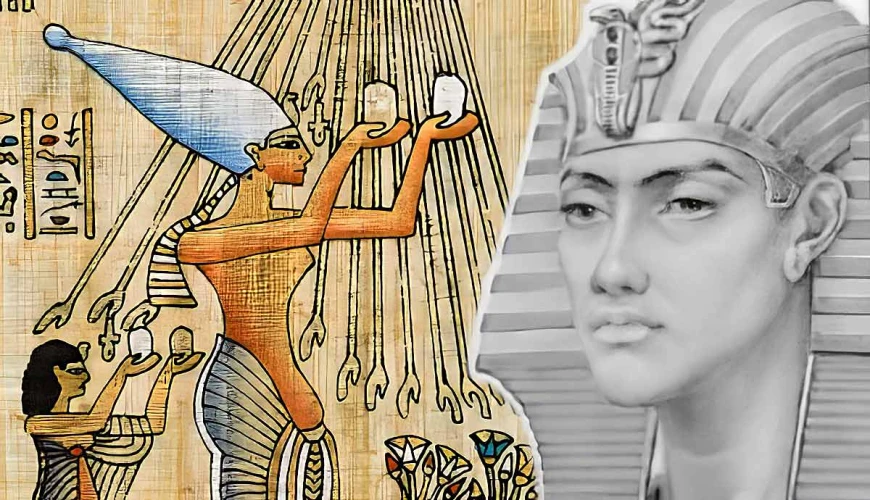
The Sun-King’s Rebellion: The Life, Art, and Erasure of Akhenaten
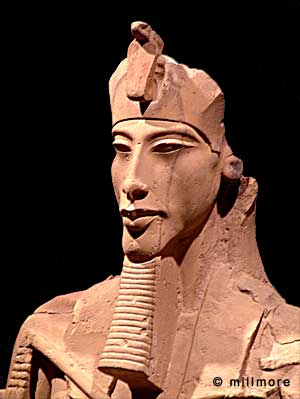
The Sun-King’s Rebellion: The Life, Art, and Erasure of Akhenaten
The victors of historical battles write historical accounts yet Ancient Egypt used their successors to remove actual historical records through direct carving. The three-millennium period of Pharaonic history shows Amenhotep IV better known as Akhenaten to the world as the most confusing historical figure.
Akhenaten who received the nickname "Heretic King" became the first king to create new laws when he broke existing ones. He established a new capital city through his actions while he dismantled one thousand years of religious customs and he introduced an artistic style which made all his predecessors appear as rigid sculptures. The evidence about his character presents two possibilities because he can be seen as either a visionary dreamer or a peaceful philosopher or a narcissistic tyrant who almost destroyed the Egyptian Empire.
The Prince Who Would Be a God
The Pharaoh Amenhotep IV began his rule during Egypt's most powerful period which lasted from 1353 BCE until his death. His father Amenhotep III (the "Magnificent") had passed down to him a realm which contained abundant gold treasures and maintained peaceful conditions and operated using advanced administrative systems.
The initial period showed no signs of change from regular operations. The young Pharaoh developed an increasing fixation on his duties. The Egyptian pantheon included numerous deities who appeared with crocodile heads and cat heads yet Akhenaten chose to study The Aten which represented the sun god's physical form.
The Great Pivot: From Amenhotep to Akhenaten The Pharaoh made an extraordinary decision during the fifth year of his reign. He changed his name from Amenhotep (Amun is Satisfied) to Akhenaten (Effective for the Aten). The change operated as a battle declaration which targeted Thebes' Amun priesthood.
"Only one God exists my father. I can approach him by day, and by night."
— This source presents an interpretation of Akhenaten's philosophical system.
The First Monotheist?
The first monotheist of the world remains a subject of historical arguments between scholars who study Akhenaten. Although he initially acknowledged the existence of multiple deities he later commanded that all their names should be destroyed from all Egyptian temples.
The comparison between Traditional Religion and Atenism shows the following differences which exist between both belief systems. The main God of Traditional Egyptian Religion worships Amun-Ra (The Hidden One) while Akhenaten's Atenism worships The Aten (The Sun Disk) as their main God. The primary representation of Traditional Egyptian religion uses human and animal hybrids while Akhenaten's Atenism displays a solar disk which has hands extending from its rays. The afterlife path requires complex journey through Osiris and Hall of Ma'at but people ignore this afterlife path because they concentrate on their present existence. People access God through priest hierarchies in traditional belief systems but they can reach God only through Pharaoh and his relatives in this system. The sacred spaces of temples contain inner sanctuaries which have a dark and enigmatic quality while the open-air altars receive direct sunlight throughout the entire day. The power play involved multiple power dimensions which reached their maximum point. Akhenaten eliminated all other deities which resulted in the firing of all priests because he redirected all temple wealth and land assets to the royal treasury.
Akhetaten: The City Built in a Hurry
Akhenaten required a complete transformation because he was not satisfied with the new religion he established. He established his royal court in a new location which he chose in Middle Egypt because he wanted to leave behind Thebes and Memphis. He founded the city under the name Akhetaten which people now refer to as Amarna.
The construction progress reached unbelievable levels. The Egyptian architects developed a new construction method which used Talatat blocks to build an entire city within several years. Talatat blocks consisted of lightweight standard limestone bricks which one person could easily transport.
At its peak, Akhetaten functioned as an active city which received bright sunlight throughout the day. The city contained broad streets and huge outdoor temples and beautiful green spaces. The "utopia" existed as a sand-based settlement which served the "Living Ma’at" (Truth) purpose.
The Amarna Style: Breaking the Mold
The statue of Ramses II presents a superhero appearance through his sculpture which shows him with perfect body proportions and a youthful look. The Akhenaten statue presents a visual experience which becomes increasingly strange for viewers.
The Amarna Style represents one of the most unique artistic movements throughout art history. The style developed through its departure from historical artistic practices which established strict rules to create visually accurate representations of nature. The artist used the following elements to create his work of art:
The artist used elongated skulls as a common feature to show his daughters in his artwork.
The artist represents Akhenaten with his typical androgynous body shape which includes wide hips and a prominent belly and a long thin face.
The Pharaoh shows domestic intimacy through his first public display of affection which includes kissing his wife and playing with his children and mourning a death. The gods who were worshiped in these temples appeared to the people as a divine family relationship.
Nefertiti: More Than a Pretty Face
The Great Royal Wife of Akhenaten must be discussed before his legacy can be understood. Her famous bust in Berlin has made her a global icon of beauty but her role was far more significant. She appears in multiple reliefs wearing the pharaonic crown which shows her hitting enemies who traditionally only kings would attack. Some scholars even believe she ruled as a co-regent or as a successor under the name Neferneferuaten.
The Empire Crumbles?
The historical events of Egypt were interrupted by Akhenaten's work on his sun hymns and his palace floor redesign projects. The Amarna Letters which were found at the site contain diplomatic documents that present a chaotic picture of international relations.
The Levant vassal kings sent messages to Akhenaten in which they requested military support and gold resources to fight against the expanding Hittite Empire. Akhenaten responded to requests from others only when he felt like it but his answers showed his lack of interest in the matter.
The result? Egypt started to lose control over its northern regions. The military system which included generals such as Horemheb grew more frustrated with their king who prioritized religious matters over his duty to protect their land.
The Great Erasure (Damnatio Memoriae)
Akhenaten died in his 17th regnal year, and the "Amarna Experiment" didn't survive much longer. The young Tutankhaten who was the son of Akhenaten or the brother of Akhenaten born under pressure from the ruling council changed his name to Tutankhamun and established Thebes as the new capital city.
The successors went beyond their initial plans. The successors wanted to erase Akhenaten from the historical records which they considered to be their ultimate objective.
The desert sands completely overwhelmed the city of Akhetaten.
Workers took apart all the Sun Temples.
The official King Lists removed all mentions of Akhenaten.
Later Egyptians referred to him as "the criminal of Akhetaten."
Why Does He Matter Today?
The period from 3,000 years ago lasted until 19th-century Amarna excavations which led to his return to public knowledge.
People have claimed him since researchers found him again:
The Psychoanalysts: Sigmund Freud became interested in him because he believed that Akhenaten's belief in one god created the first foundation of Jewish religion which Moses established.
The Artists: Modernists fell in love with the Amarna style’s fluidity.
The Romantics: People see him as a doomed visionary who tried to bring "light" to a dark, superstitious world.
The Verdict
Is Akhenaten a hero or a villain? His character appears to contain elements of both heroism and villainy. He became the first person to challenge the strongest institutions of his time, yet he ruled as a leader who disregarded his people's pain and the protection of his nation to pursue his religious beliefs.
Akhenaten stands as the most genuine Pharaoh because he displayed his stomach, showed his affection for his wife, and declared his need for only the visible light which he could see.
Did You Know?
The "Workmen's Village" provides our most valuable information about how common people lived their daily lives in Amarna. The King experienced a life of luxury while his workers who constructed the "Horizon" suffered from both extreme physical demands and high rates of malnutrition. The city of "Truth" maintained its reputation since actual conditions throughout the city remained rough.
What is your opinion? Did Akhenaten become a revolutionary genius or did he become a misguided fanatic?




-webp.webp "Hilton")
-webp.webp "dusit")
-webp.webp "Marriott Hotels")
-webp.webp "Azimut Hotel")
-webp.webp "Golden Tulip")
-webp.webp "sheraton")
-webp.webp "westin hotel")
-webp.webp "Movenpick")