


The Sacred Seats of Power: A Journey Through the Lost Capitals of Ancient Egypt
.jpg)
The people of Egypt today associate Cairo with the country because it acts as their primary modern urban center which combines ancient and contemporary elements. The history of Cairo extends back more than five millennia since it represents the current period of an ongoing historical narrative.
If you could travel back in time the "center of the world" would have looked different according to the century you visited. Ancient Egypt functioned as an empire which constantly evolved through its dynamic transformations. The Pharaohs established their royal residences according to the shifting power of the gods and the rise and decline of various dynasties. The builders established cities which functioned as sacred spaces to protect Ma'at the universal equilibrium between opposing forces.
The research will investigate the three main historical capitals of Ancient Egypt which include the Northern "White Walls" and the Southern "City of a Hundred Gates" and the temporary desert utopian community.
1. Memphis: The Anchor of the Two Lands
The city of Memphis which the legendary King Menes established during 3100 BCE served as Egypt's first official capital city after its unification. Its location at the Nile Delta's northernmost point marked the boundary where Upper Egypt's narrow valley met Lower Egypt's expansive fan-shaped territory.
The White Walls
The city now known as Memphis operated as the administrative center of the Old Kingdom which existed during the time when the great pyramid builders constructed their monuments. People who wanted to see the Pharaoh during the Giza Pyramid construction needed to go to Memphis.
The Heart of Ptah
Memphis operated as a spiritual center which extended beyond its taxation system and grain operations. The city served as the primary religious site dedicated to Ptah, who was worshiped as the craftsman deity that created the universe through his dreams. Visitors to the Mit Rahina open-air museum today can witness the giant fallen statue of Ramesses II and the Alabaster Sphinx, which still represent the ancient city that governed the world for more than one thousand years.
2. Thebes: The City of Gods and Gold
Thebes served as the spiritual core of Egypt because Memphis functioned as its central intellectual hub. Thebes emerged as the dominant city in the Middle Kingdom which reached its highest development during the New Kingdom when Tutankhamun and Ramesses the Great ruled.
The Wealth of an Empire
Thebesheld the title of the world's wealthiest city during the New Kingdom period. The Karnak Temple complex received tribute from Canaan's conquered territories and Nubia's gold mines which filled its treasury.
The Living and the Dead
Thebes was a city of two halves, divided by the Nile:
-
The East Bank: The city of the living, dominated by the massive temples of Karnak and Luxor, where the sun rose and the Pharaohs held court.
-
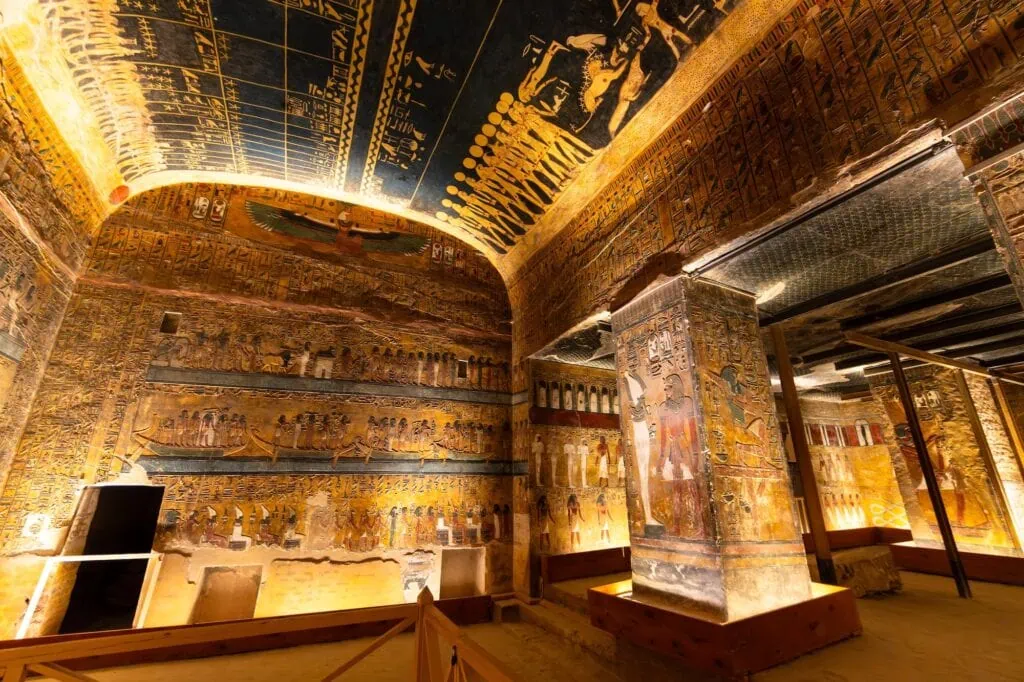
The West Bank: The city of the dead, where the sun set. This is where the Valley of the Kings and the Valley of the Queens are hidden in the limestone cliffs, guarding the golden secrets of the elite.
Even today, standing in the Hypostyle Hall at Karnak, it is impossible not to feel the sheer, overwhelming power that this capital once projected across the ancient world.
3. Akhetaten: The Utopian Rebel
Thebesheld the title of the world's wealthiest city during the New Kingdom period. The Karnak Temple complex received tribute from Canaan's conquered territories and Nubia's gold mines which filled its treasury.
A City of Light
The city of Akhetaten was constructed through complete development within a period of three years. The city functioned as a sunlit urban area which contained open temples that worshipped only the Aten deity. The artistic style of this location transitioned from its earlier state of precise perfection to exhibit unusual flowing naturalistic movement.
The Dust of History
Akhetaten ruled Egypt for a period shorter than twenty years. His son Tutankhaten who became known as Tutankhamun returned to traditional life after he was taken away from the desert city following his father's death. The ancient city of Akhetaten disappeared from existence when its stones were repurposed and its name vanished from king lists until archaeologists unearthed it again thousands of years later.
4. Pi-Ramesses: The Military Powerhouse
Ramesses II stands as the most renowned Pharaoh throughout all historical periods. He requested a new city to serve as his military power and Delta birthright demonstration. He constructed Pi-Ramesses (The House of Ramesses) in the northeast section of his kingdom close to present-day Palestine and Syria.
The Strategic Hub
The ancient city of Pi-Ramesses functioned as both a military installation and an international trading center. The city contained an extensive network of turquoise-tiled palaces which were connected to large military barracks and stables that could accommodate two thousand chariots. The Hittite wars which Ramesses conducted began at this location.
The Nile branch that supplied water to the city stopped flowing which led to the complete relocation of the city to Tanis where the city was transformed into a new capital during the Late Period.
5. Alexandria: The Mediterranean Gateway
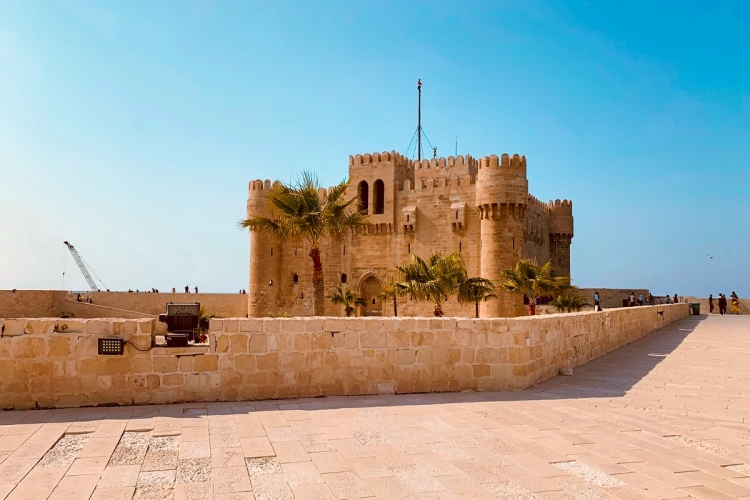
The final great shift in Egyptian capitals came not from a Pharaoh, but from a Macedonian conqueror. In 331 BCE, Alexander the Great founded Alexandria on the edge of the Mediterranean Sea.
Where East Meets West
The Ptolemaic dynasty which ended with Cleopatra VII ruled Alexandria as the global center of intellectual activities. It was home to:
The Pharos Lighthouse: One of the Seven Wonders of the Ancient World.
The Great Library: A repository of all human knowledge.
Alexandria existed as a Greek city in Egypt which constructed a shining marble city that connected Nile ancient customs with Rome growing dominance.
Why the Shifting Capitals Matter
You might wonder why the Egyptians couldn't just pick a spot and stay there. The Egyptian system of renewal explains why they needed to move their capital city.
The capital city needed to be relocated whenever a new dynasty began or a major religious transformation took place because this practice served as a universe "restart" mechanism. The Pharaoh used this power to establish control by transforming disorder into structured existence.
Memphis existed to promote national unity and serve as the country's founding site.
Thebes represented the combined powers of imperial might and religious commitment.
Amarna focused on social transformation through unique personal achievements.
Alexandria functioned as a worldwide center where people shared knowledge through cultural interactions.
Visiting the Capitals Today
The best way for today's travelers to understand Egypt involves walking through the ancient routes which connect its historical capitals.
The city of Luxor shows visitors the complete power which the New Kingdom reached during its peak time.
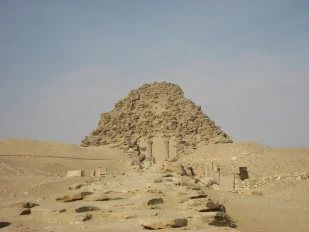
At Giza and Saqqara, you see the shadow of Memphis's architectural genius.
Alexandria displays its ancient educational atmosphere through the ocean breeze which brings salty air to its streets.
Ancient Egypt existed as multiple locations which functioned as extensive experiments to develop an everlasting civilization. The energy of the people who constructed these capitals continues to exist in the land even though their stone structures have decayed.
Which of these ancient capitals would you have wanted to live in? The military bustle of Pi-Ramesses, the artistic revolution of Amarna, or the golden luxury of Thebes?Please share your answer in the comments section.
Are you planning a trip to see these historical sites soon? If you need a more detailed itinerary focusing on a specific era, just let me know!




-webp.webp "Hilton")
-webp.webp "dusit")
-webp.webp "Marriott Hotels")
-webp.webp "Azimut Hotel")
-webp.webp "Golden Tulip")
-webp.webp "sheraton")
-webp.webp "westin hotel")
-webp.webp "Movenpick")
