


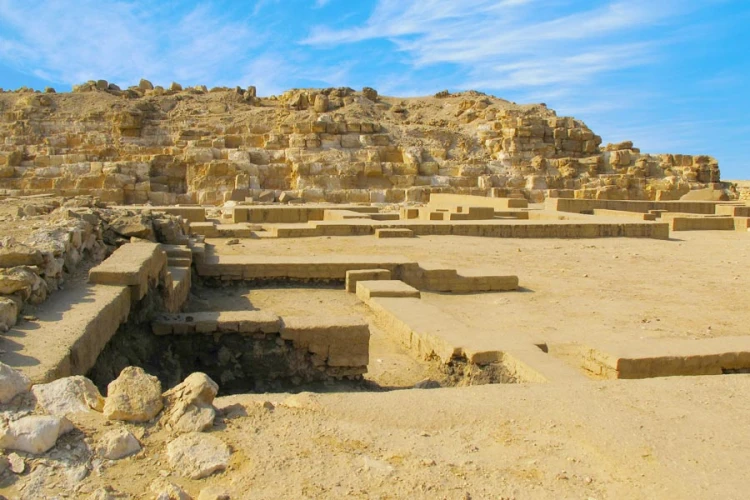
The Pyramid: Djedefre is pyramids in Abu Rawash is Egypt’s Secret
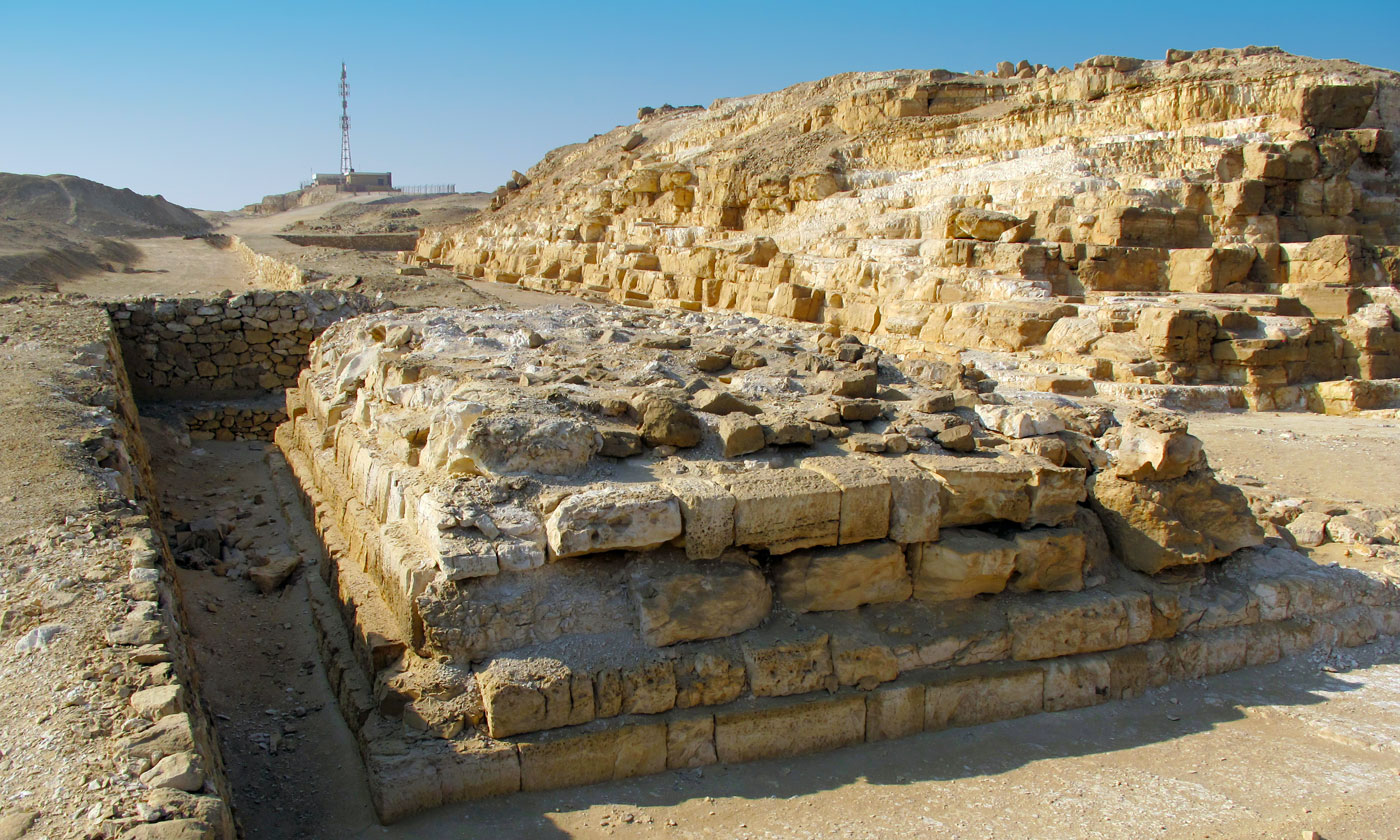
From the Giza Plateau, visitors can see Abu Rawash, which is a high limestone hill located eight kilometers to the north. Most tourists don't even glance at it. The visitors to this site because they focus all their attention on the Great Pyramid. The hill contains remnants of a story which outdoes all Hollywood scripts because it presents a more powerful dramatic narrative.
I’m talking about the Pyramid of Djedefre—the "Lost Fourth Pyramid."
The King Who Wanted to Touch the Sun
After the death of Khufu (the man behind the Great Pyramid), the throne didn’t go to the famous Khafre right away. The throne passed to his brother Djedefre who succeeded their father.
Djedefre showed rebellious tendencies. djed f ra chose to construct his pyramids on the tallest point of the region because his father used level land at Giza for his construction work. The reason exists that he became the first Pharaoh to completely embrace worship of the Sun God Ra. The hill he chose to build on served as his strategic method to create an architectural display which would enhance his personal prestige. The height of his pyramid matched his father's pyramid because both structures reached the same elevation point which occurred from the hill's natural height.
He didn't just want a tomb; he wanted to be the first one to greet the sun every morning.
The Mystery: Did it Crumble or Was it Stolen?
Historians treated Djedefre poorly for an extended period. They claimed he was a "usurper" who killed his brother and that his pyramid remained incomplete because of his unpopularity. Some people believed that his family destroyed the pyramid as an act of revenge.
The truth is much more tragic. The recent excavations established that the pyramid was complete and the pyramid's appearance was magnificent. The structure used enormous polished pink granite slabs as its outer covering which ancient builders considered to be their most expensive material.
So, what happened? The Romans happened.
This pyramid functioned as a mining site for approximately 3000 years. The granite worked as a valuable resource because of its high worth and the site offered easy access, which caused people to take apart the entire site over many years. The workers transported 300 camel-loads of stones from the site every single day. The construction materials of Djedefre's pyramid became the foundation for the modern city of Cairo which exists at present.
What’s Left to See? (And Why You Should Care)
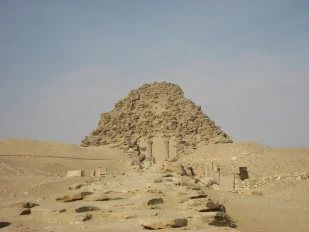
If you visit Abu Rawash today, you won’t see a towering triangle. You’ll see the "bones" of a giant. But honestly? It’s even cooler than Giza in some ways.
-
The Massive Shaft: Because the top is gone, you can look straight down into the burial chamber. It’s a 21-meter deep canyon cut directly into the mountain. You can’t see that kind of engineering detail at the Great Pyramid because the walls are still in the way.
-
The View: From here, you can see the entire history of Egypt lined up in a row—Giza, Saqqara, and Dahshur—all from a spot where you’ll probably be the only tourist around.
-
The Vibe: There’s a haunting silence in Abu Rawash. You can actually feel the weight of the 4,500 years that have passed.
Djedefre was a visionary who changed the religion of Egypt forever. His name might not be as famous as his father's but his decision to construct in Abu Rawash demonstrates his preference for observing from high points instead of conforming to popular trends.
Next time you’re in Egypt, don’t just look at the three big pyramids in the photos. Look north. There’s a king up on that hill waiting for his story to be told.
What do you think? If Djedefre's pink granite pyramid still existed today which pyramid would shine brighter the Great Pyramid of Giza or Djedefre's pyramid? Drop a comment and let’s talk!




-webp.webp "Hilton")
-webp.webp "dusit")
-webp.webp "Marriott Hotels")
-webp.webp "Azimut Hotel")
-webp.webp "Golden Tulip")
-webp.webp "sheraton")
-webp.webp "westin hotel")
-webp.webp "Movenpick")
