
The Priest, the Temple, and the Whispers of the Desert: Uncovering the Tomb of Petosiris
The Priest, the Temple, and the Secrets in the Sand : A Visit to the Tomb of Petosiris
When you think about Egyptian tombs, your mind probably jumps straight to the Great Pyramids , or the tucked away chambers in the Valley of the Kings. And, honestly who could blame you ? Those are the big ones. But if you go a few hours south of Cairo, down into Middle Egypt, you’ll find a spot called Tuna el-Gebel.
That’s where, in the middle of golden dust, with that dry desert heat pressing all around you, you end up running into something that’s oddly different. The Tomb of Petosiris. It doesn’t feel, like a gloomy dusty grave so much as a kind of link between two worlds that, just then were starting to trade small greetings, and shake hands.
A High Priest With A Vision
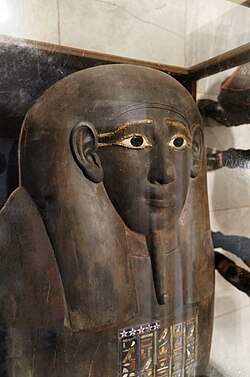
To understand the tomb, you kinda have to understand the man. Petosiris wasn’t a king, or a pharaoh, not really. He was the High Priest of Thoth, god of wisdom, writing, and time. He lived in Hermopolis Magna, a major city back then, about 2,300 years ago.
Try imagining living in a world that’s changing, like all the time. That was Petosiris’s life. The Greeks had arrived in Egypt under Alexander the Great, so yeah they brought their styles their art and even a different look at everything. The older Egyptian ways were still there, deeply rooted, and sacred, but you could feel that new current moving in.
Petosiris was the person stuck right in the middle of it, somehow. He was very devout, devoted to his rituals and traditions, still he was obviously a man of his age. And when it was time to plan, and set up his final resting place, he didn’t just put down a container. No, he shaped a full masterpiece.
A Temple for the Afterlife
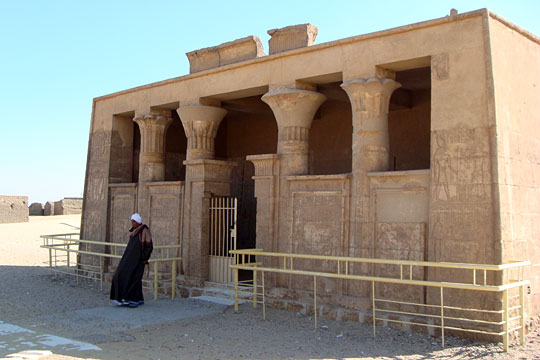
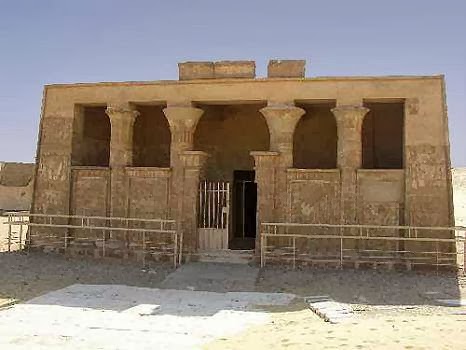
The first thing you’ll notice when you approach the tomb is that it doesn’t really look like a standard tomb. It looks more like a small temple, honestly. This was a bold choice in the first place. Back then, temples were usually reserved for the gods, not for mortals, so it stands out.
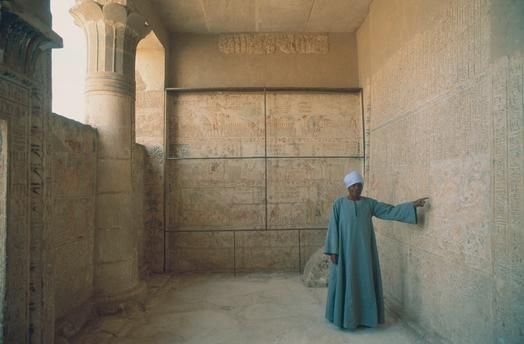
By building his tomb in this style, Petosiris was being incredibly clever. He created a pronaos, a beautiful pillared entrance hall, and it somehow feels both ceremonial and soft. It’s warm, it’s welcoming, and it’s surprisingly light. If you spent your life walking through dark, narrow burial shafts, then this place feels like a breath of fresh air.
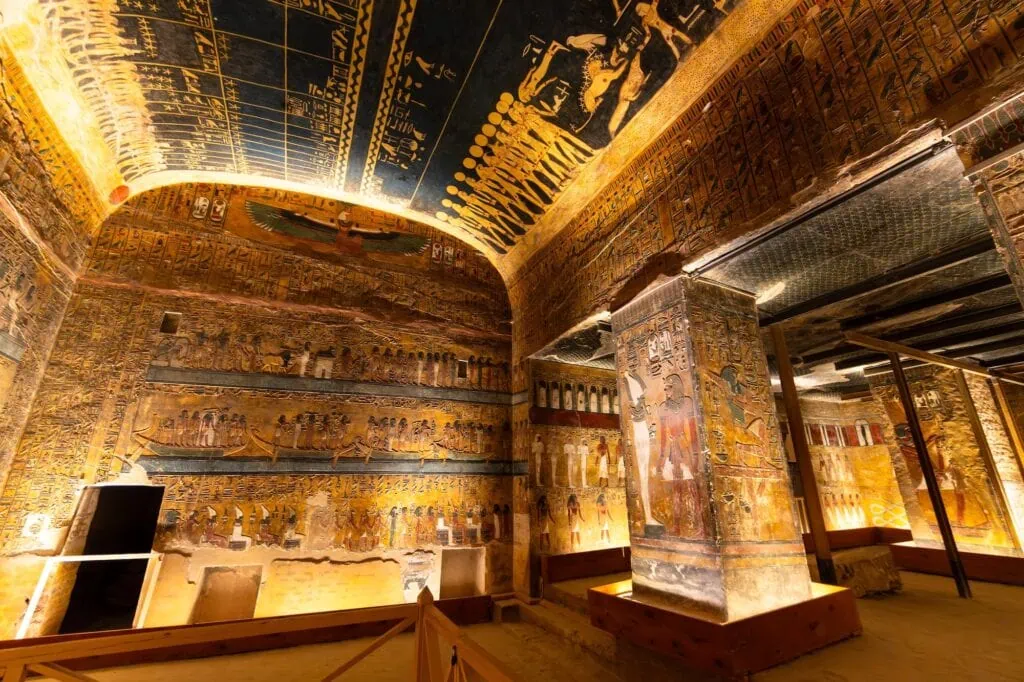
Once you step inside, you’re not met by terrifying monsters, or by heavy stone walls that press in on you. Instead, you’re met by scenes of everyday life, like it’s still happening somewhere, just quietly.
Life, Painted in Stone
When we’re staring at ancient art, most times you get stuck with stiff people, very rigid rules, like everything is locked in place. Yet in Petosiris’s tomb, there’s this small flicker of real humanity and it’s kind of hard to ignore, even if you try.
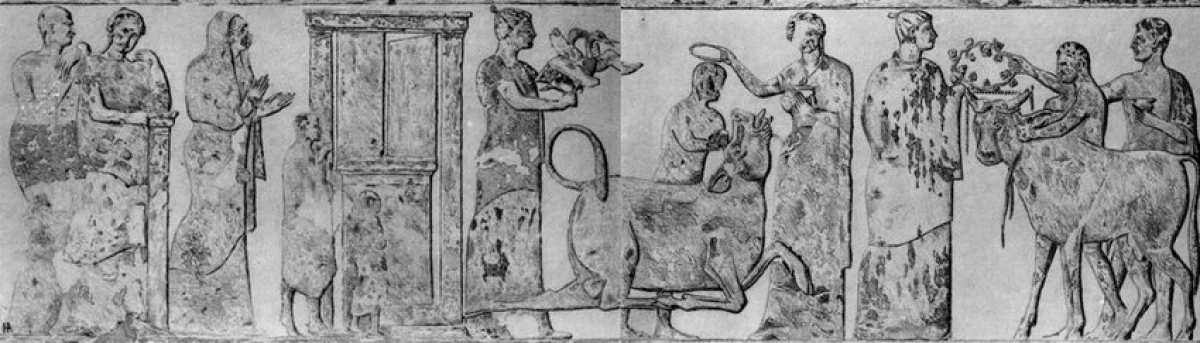
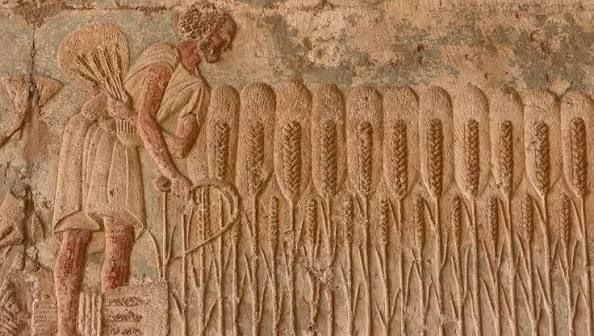
The walls are covered in detailed carvings. You can see farmers sowing grain, craftsmen working away at their benches, and people just going about their daily business. Grapes are being harvested, animals are being tended to, and then there are preparations for festivals, like it’s normal, like it’s just another season passing by, over two millennia ago.
And then, there’s the art style… the “Aha!” moment for anyone who’s into history. You can actually see the fusion happening right on the walls. Like, one figure might be drawn in the traditional angular Egyptian way, perfectly at home in the hierarchy of the gods. But right next to it, you’ll notice a face, or maybe a bit of clothing, that looks… well, more Greek. The faces feel softer, the eyes more expressive, and the way the fabric falls on the clothing feels like it had some Mediterranean influence, or at least it’s breathing that vibe.
It’s not merely a tomb; it’s like a living document, of two major cultures that learn how to share space, more or less, without fighting. This is really the tale of a man who held onto his ancient roots, yet he was not afraid, not even a little, to invite the new world in.
The Mystery of the City of the Dead
If you end up making the trek out to Tuna el-Gebel , don’t really pause at Petosiris only. The whole place , is kind of like a “City of the Dead” , in a broader sense.
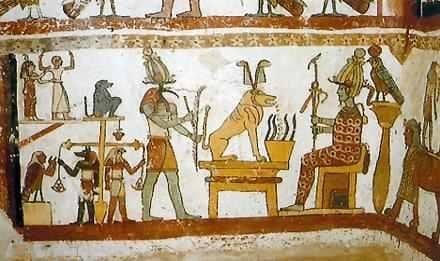
Right by the tomb, there are those enormous underground catacombs of the Ibis. For ages, pilgrims came through, to offer mummified ibises and baboons to Thoth. Honestly it kind of knocks you back a little, because you remember how faith and ritual were so central, to the people who crossed these sands day after day. It feels a bit eerie, sure. but it also gives you this clear sense of the raw scale of devotion that existed here.
The Tomb of Isadora is a place that people still talk about. They remember the story of Isadora, a woman who died in the Nile River. Her father did not like the man she loved. That is why she died. The Tomb of Isadora has poems from Greece carved into it. These poems are very sad and beautiful like a reminder of a life that was cut short.
When you visit the tomb of Petosiris, which's very formal and then you go to the Tomb of Isadora you start to understand. The Tomb of Isadora is not something you read about in books or see in a museum. It is about the people who lived a time ago. The Tomb of Isadora is about people who loved each other people who prayed and people who wanted to be remembered. The story of the Tomb of Isadora is a reminder that these people were real, like us. They had feelings just like we do. The Tomb of Isadora is an sad place and it makes you think about the people who came before us.
Why It Matters Today
It’s easy to think of Egypt as a place of masks and giant statues and then stop there.. Then you forget that underneath all that grandeur they were really just like us. They worried about their jobs raised their families and spent a lot of time stressing over things about their legacies.
Petosiris cared about what people would remember him for. He wanted to be known as a bridge builder, someone who respected traditions but also tried new things.
When you stand in his tomb surrounded by carvings of people doing things like working, laughing and living you get a strange feeling. It’s like you’re connected to them. The sun shines on the desert floor the wind blows some sand around. For a moment the thousands of years, between you and Petosiris seem to fade away.
Planning your visit
If you are in Egypt and you want to do something from what most people do here is a simple way to do it without being in a hurry or doing something foolish.
First go with a guide to Egypt. Egypt is a big place and having someone who really knows the stories behind the carvings on the walls makes a big difference, even more than you think it would. If you do not have a guide you will just see rocks, not the meaning behind them.
Second try to go at the time. The middle part of Egypt can get extremely hot. Go early in the morning. You will avoid the heat. Also see the nice morning light coming into the tombs big rooms with pillars and it is really nice.
Third do not just look quickly look carefully at the details. Take your time. Look at the faces of the people farming. Notice how the person who made the sculptures did the details on the jewelry and the tools. The interesting things about people are often in the details not in the big things that you notice first.
Finally bring a lot of water. Be patient. You are in the desert. The best things to discover are usually at the end of a long and rough road so keep going. It is okay to go. Egypt is a place, with a lot of things to see so take your time and enjoy it.





-webp.webp "Hilton")
-webp.webp "dusit")
-webp.webp "Marriott Hotels")
-webp.webp "Azimut Hotel")
-webp.webp "Golden Tulip")
-webp.webp "sheraton")
-webp.webp "westin hotel")
-webp.webp "Movenpick")