


The Lost Oasis of Wadi Sura: Inside the Cave of the Swimmers
Swimming in the Sand: The Mystery of Egypt's Cave of the Swimmers
Deep in the southwest corner of Egypt’s Western Desert, close to the border with Libya , there is a rocky sandstone highland people call the Gilf Kebir. It’s one of those ultra dry , stripped , and pretty merciless places on Earth. Rain basically almost never shows up , sandstorms redo the valleys, and in summer the heat can climb past with no real apology.
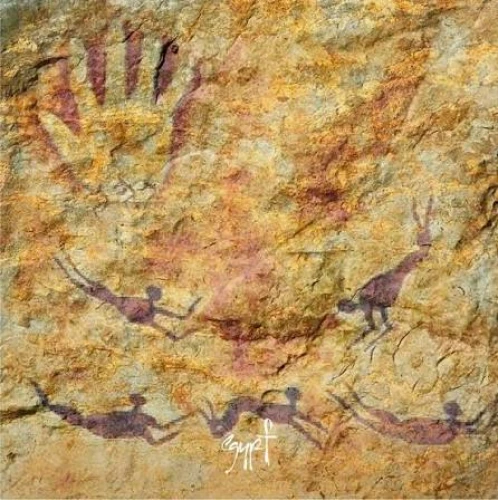
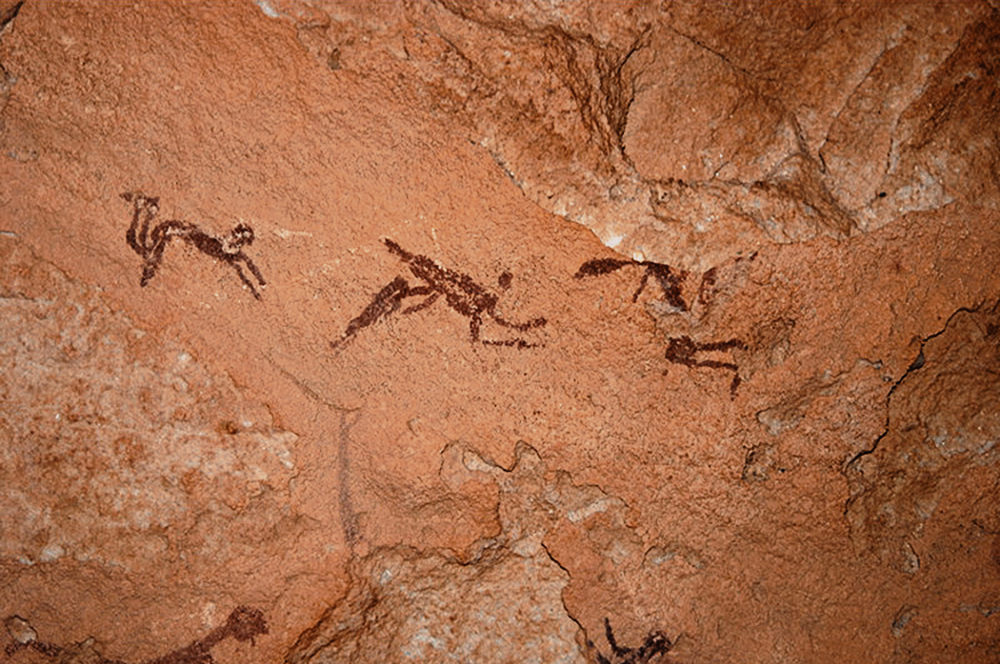
Still, inside a low rock shelter hidden in that bleak expanse, there’s a prehistoric “art gallery” that somehow says a very different thing. On the stone walls you can see small figures, hand-sized, with arms held out and knees slightly tucked.
They aren’t sprinting , and they aren’t scrambling either. Instead they look like they’re swimming.
This is the Cave of the Swimmers, a spot that changed how we think about the Sahara’s climate past, and it stays as a quiet , beautiful reminder of a world that was once greener.
1. The Discovery: A Search for a Lost Oasis
The cave kind of got pulled into the modern world’s focus in October 1933 by the legendary Hungarian explorer and aviator László Almásy. (If the name rings a bell, it’s mostly because Almásy’s life was a loose push for the romantic lead in the Oscar winning 1996 film, The English Patient, though the connection is kinda indirect.)
Almásy was stuck on this relentless search for the mythical Zerzura, the “Oasis of Little Birds”, a lost city that was said to be tucked deep inside the desert. But instead of stumbling into some city of gold and treasure, he found a tight ravine called Wadi Sura, or the “Valley of the Pictures”, which sounds poetic, but was still just a ravine in the end.
When Almásy stepped into the shallow sandstone shelter, he pointed his light around and the beam caught a canvas of red, white, yellow, and black pigments. There were dozens of floating, human like shapes painted there, and they were drawn next to giraffes, hippopotamuses, and antelopes, like the whole scene was trying to breathe.
Almásy then floated a theory that was radical, and frankly shocking for his era: the images weren’t merely symbols, they were realistic scenes of everyday living, evidence that the Sahara once was a lush, wet place where people could swim. His publishers at the time didn’t want to believe any of it, so they added these little footnotes in his books, in a way that distanced themselves from what he claimed.
2. When the Sahara Was Green
Modern geology and climatology have since proven Almásy 100% correct, well mostly I guess.
Somewhere around 10,000 to 5,000 years ago, North Africa went through a big climatic shift that people call the African Humid Period. Basically due to natural wiggles in Earth orbit, the monsoon rain bands moved way farther north than they sit today.
So during this “Green Sahara” interval, what we now call a dead desert was more like a wide fertile savanna
Lakes and rivers : important watercourses cut through the valleys, and huge lakes gathered across the lowlands .
Diverse wildlife : you could find elephants, giraffes, hippopotamuses , and lions , all of them doing well in the grasslands.
Human living: Neolithic hunter gatherers and pastoralists formed communities near the water, they fished they hunted, and they wrote down their days on stone.
And the paintings in the Cave of the Swimmers are thought to be roughly 8,000 to 10,000 years old, showing the “best of” moment when the land was green, livable, friendly , and all.
3. Decoding the Art: Are They Really Swimming?
While the title “Cave of the Swimmers” has caught the worlds attention, archaeologists and researchers are still sort of arguing, about what those figures really mean, or at least what they’re trying to show.
The literal read: leisure and daily life
One of the simplest ideas is that the Neolithic artists were depicting exactly what they saw. Since nearby lakes and seasonal river channels, called wadis, were brimming with water, cooling off and swimming would have fit right into everyday routines, specially in that summer heat.
The symbolic angle: souls and the afterlife
A different camp of anthropologists says the scenes could be more metaphorical. They point out that the so-called “swimming” figures are commonly shown stretched out, floating with these odd, headless creatures, and also alongside handprints. Because of that, some think the images represent the souls of the dead, drifting through a hidden spiritual realm. In a bunch of older cultures, water acts like a boundary, between the living and the departed.
So really, whether the motion is physical, or more of an inner, spiritual passing, you can not get around the fact that water-loving animals, like hippopotamuses, being painted on the walls, is a strong clue that the place was wet and humid.
4. The Fragile State of a Prehistoric Masterpiece
That very condition that kept the Cave of the Swimmers safe for thousands of years—its severe dry isolation— is now kinda under threat, you know.
After The English Patient hit in 1996, public curiosity jumped fast. Suddenly, daring travelers started doing that punishing, several-day off road march across the desert just to see the paintings up close. But, the rush of mostly unregulated sightseers has already started to weigh hard on the vulnerable place, and honestly it shows:
Physical Damage: People keep touching the walls, so the delicate pigments get worn away, and a few visitors have even knocked off thin bits of rock, treating them like souvenirs.
Water Splashing: In earlier times photographers would splash water onto the sandstone so the red pigments looked stronger for photos. That wetting then helped the salt inside the rock crystallize and split, cracking the painted surface.
Microclimate Shifts: The breath and sweat from big tour groups packed into the shallow cave adds moisture, and it speeds up the breakdown of the 10,000-year-old artwork.
Right now, conservation groups, international organizations , and the Egyptian government are trying to push tougher rules, train desert guides better, and reduce direct access, so this irreplaceable part of human history can remain intact for people down the line.
5. How to Experience the Prehistoric Sahara Safely
Heading out to the Gilf Kebir isn’t one of those casual Saturday trips. It’s more like a full-on self-sufficient ordeal, with battered 4x4 vehicles, military authorizations , seasoned desert route finders, and honestly weeks worth of provisions just to be realistic.
If you’re actually going to attempt this once-in-a-lifetime, goal-on-the-wall kind of expedition, then yeah, keep a few safety and conservation habits close:
Look, don’t touch: please don’t handle the painted surfaces. Oils from your skin work almost like a solvent and can, over time , permanently ruin the ancient pigments.
Keep your distance: don’t crowd into the shelter area. Too many bodies right there can raise humidity and then things start to worsen faster than you’d think.
Use secure booking paths: for a high-cost adventure at this level, make sure your specialized desert agency sends payments through encrypted and certified PCI-DSS Level 1 systems, like WeTravel, or through gateways run via Stripe. That approach helps keep your financial details tokenized, safe, while they also oversee those large, high-value deposits.




-webp.webp "Hilton")
-webp.webp "dusit")
-webp.webp "Marriott Hotels")
-webp.webp "Azimut Hotel")
-webp.webp "Golden Tulip")
-webp.webp "sheraton")
-webp.webp "westin hotel")
-webp.webp "Movenpick")
