
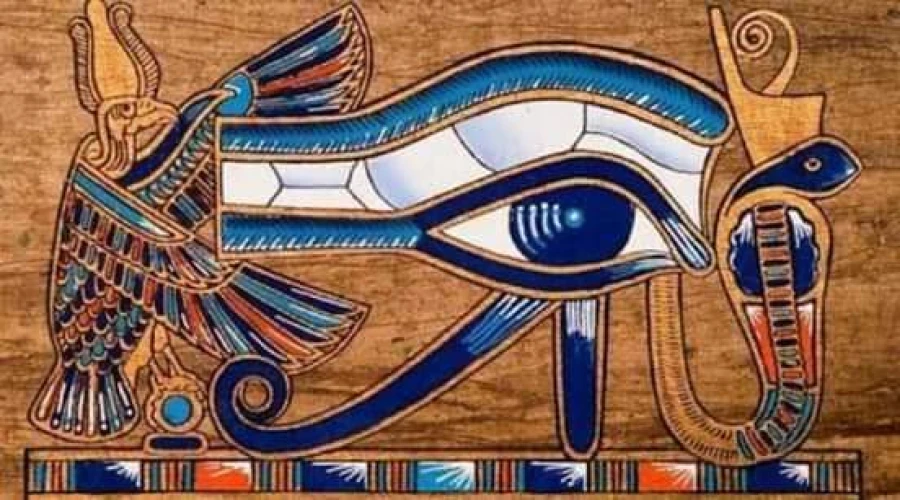
Horus: The Falcon God, Sovereign of the Skies, and Protector of the Pharaonic Throne
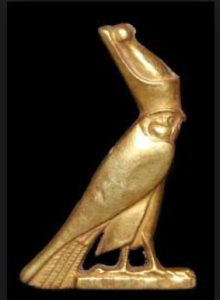
Horus: The Falcon God, Sovereign of the Skies, and Protector of the Pharaonic Throne
An in-depth exploration of the deity who defined Egyptian Kingship for over three millennia.
Introduction: The Living God of the Nile
Horus occupies a central position in the intricate and mystical religious traditions of Ancient Egyptian beliefs. The Egyptian state existed through Horus whose power extended beyond his role as the sky god and sun deity. The ancient Egyptians regarded Horus as the divine model which their Pharaohs should follow from the Pre-dynastic period until the last days of the Ptolemaic Kingdom. The study of Horus characterizes Egyptian culture because it demonstrates their need for social structure and their dedication to family ties and their conviction that light would always defeat darkness.
Our complete guidebook will lead us through the Delta marshes and Upper Egypt battlefields and the Edfu temple to determine why Horus has become the most famous protector of the Nile Valley.
1. The Divine Lineage: The Myth of Isis and Osiris
The tale of Horus starts with a tragic event which established the Egyptian belief about life after death. Osiris the first Egyptian king and Isis the magic goddess had him as their son. The world entered a state of chaos after Set the god of chaos murdered and dismembered Osiris his brother. Set took control of the throne which resulted in a time of oppressive rule and dark times.
Isis used her magical abilities to collect her husband's body parts which she used to temporarily bring him back to life so they could have Horus. Horus was born in secret at the Nile Delta marshes of Khemmis and he grew up in concealment. His childhood period which showed his weakness was described as "Harpocrates" which showed his silent waiting time until he could recover his royal birthright. The myth had a strong impact on Egyptian people because it showed that even the strongest king must go through difficulties before he can attain supreme power.
2. The Contendings of Horus and Set: The 80-Year War
Horus faced Set in a duel before the gods of the Ennead when he became an adult. The two parties engaged in a legal dispute which escalated into a war that persisted for eighty years. The family dispute evolved into a philosophical battle between Ma'at which represents Order and Justice and Isfet which stands for Chaos and Injustice.
The battles featured unique combat styles which included fighters who changed into hippopotami and competed in dangerous magical duels. Set used his strength to rip off Horus's left eye during a battle between them. Thoth the deity restored Horus's eye which became known as the Wadjet or Eye of Horus. The eye developed into a worldwide emblem that represented healing and sacrifice and protective powers. The gods reached a decision which declared Horus as the rightful King of the Two Lands and they exiled Set to the desert where he became the storm god of overseas territories.
3. The Pharaoh as the "Living Horus"
Horus brought about his largest effect through his transformation of Egypt's political system. The Pharaoh functioned as both a divine ambassador and the Living Horus embodiment. The king's "Ka" (spirit) became the dwelling place of Horus after his coronation. The Pharaoh received both divine authority to rule and sacred duty to preserve national peace through this process.
The "Horus Name" stands as the earliest component of the royal titulary because it functions to establish the Egyptian Pharaoh's identity. The king's name appeared in inscriptions within a rectangular frame called Serekh which depicted the palace facade and had a falcon hovering above it. The king died and "flew into the horizon" to unite with Osiris while his successor assumed the role of Horus. The Egyptian state enjoyed thousands of years of stability through this process which created a smooth transition between rulers.
4. Architectural Grandeur: The Temple of Edfu
The Temple of Edfu provides contemporary travelers and historical researchers with a direct link to this deity. The Edfu temple stands as the most intact religious structure among all Egyptian temples which exist today. The temple functions as a "stone library" for Horus mythology because it was constructed during the Ptolemaic period on top of much older temple foundations.
Highlights of the Edfu Complex:
The Pylon reaches a height of 36 meters. The entrance displays enormous sculptures which show the Pharaoh defeating his enemies while Horus stands guard as the divine protector of sacred territory. The entrance to the hypostyle hall is protected by two ancient statues which depict Horus and are made from black granite while he wears the Double Crown which represents Upper and Lower Egypt. The inner part of the enclosure wall contains detailed carvings which show the ritual drama of Horus defeating Set who appears in the form of a hippopotamus. The festival was held every year to honor the state's victory over its enemies.
5. Astronomical and Mathematical Significance
Horus was a god of the sky and his eyes represented the two most important celestial bodies. His right eye was the Sun (which people usually linked to Ra) and his left eye was the Moon. The mythical story of Thoth tearing and healing his eye explained the moon's waxing and waning cycle.
The ancient scribes used "Eye of Horus" fractions to measure grain and land according to their mathematical system. Each part of the eye represented a fraction ($1/2, 1/4, 1/8$, etc.). The daily life of Egyptians displayed their dedication to the cult of Horus because his worship extended from royal administration down to temple offering calculations.
6. Horus in Modern Tourism and Culture
The Egyptian tourism sector uses Horus as their primary representative because he currently serves this role. The EgyptAir logo features his image as a soaring falcon which represents safe flight operations through his aerial expertise. Your travel company New Travel Dynamics needs to use Horus as their main advertising tool to promote their Nile cruise and cultural tour business. He represents the "Golden Age" of Egypt that every traveler seeks to witness.
The visitor experience at the Temple of Kom Ombo begins with a private tour while the sunrise visit to Philae uses The story of Horus provides the narrative backbone for the visitor's experience. He represents strength because he survived death and became whole again which connects with all travelers who experience his story.
Conclusion: The Eternal Guardian
Horus exists as an eternal symbol because he represents three fundamental human values which include the pursuit of justice and the protection of family ties and the authority that comes with leadership. He functions as the protective watcher who safeguards the Nile waterway because he ensures that Egypt's spirit will endure as long as the sun continues to rise. Standing before his granite statue at Edfu, one sees more than an ancient artifact because the viewer sees the moment when "Majesty" first came into existence.


-webp.webp "Hilton")
-webp.webp "dusit")
-webp.webp "Marriott Hotels")
-webp.webp "Azimut Hotel")
-webp.webp "Golden Tulip")
-webp.webp "sheraton")
-webp.webp "westin hotel")
-webp.webp "Movenpick")