

Ancient Egyptian Principles of Maat: The Sacred Law of Balance, Truth, and Cosmic Order
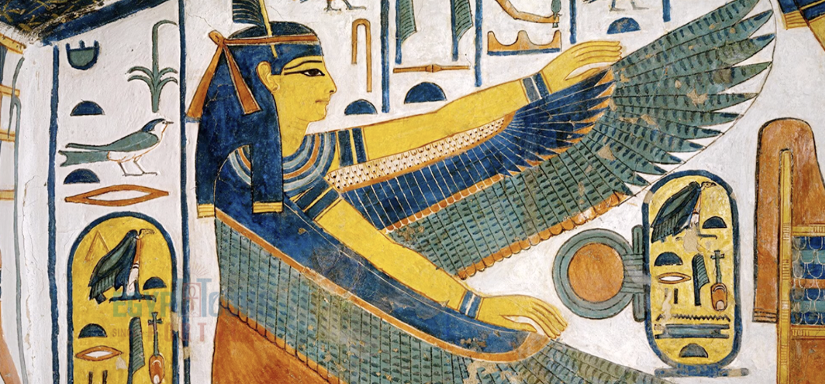
Maat: The Sacred Architecture of the Ancient Egyptian Soul
Exploring the 42 Principles of Balance, Truth, and Universal Order
Introduction: The Foundation of a 3,000-Year Legacy
When we gaze upon the Great Pyramids or the sprawling complexes of Karnak, we often find ourselves asking: What kept this civilization so stable for three millennia? While their engineering was peerless, the true mortar that held Ancient Egypt together wasn't made of lime and sand—it was made of Maat.
Maat is perhaps the most significant yet misunderstood concept of the ancient world. It was not merely a religion or a set of rules; it was the "operating system" of the universe. To understand Maat is to understand the very heart of the Nile Valley, and perhaps, to find the missing equilibrium in our own modern lives.
I. Defining the Indefinable: What is Maat?
In the ancient Egyptian language, Maat is a word that defies a single-word translation. It encompasses Truth, Justice, Balance, Harmony, and Cosmic Order.
-
The Personification: In Egyptian iconography, Maat is depicted as a graceful goddess wearing a single ostrich feather on her head. This feather, known as the Shuti, represents the "weight" of morality. Unlike other birds, all of an ostrich's feathers are of equal length and weight—a perfect symbol for absolute equality and fairness.
-
The Cosmic Function: Before the world began, the Egyptians believed there was only Isfet—chaos and darkness. When the creator god rose, he established Maat to bring structure. Maat is what keeps the stars on their paths, ensures the sun rises every morning, and dictates the predictable flooding of the Nile. Without Maat, the universe would literally dissolve back into nothingness.
II. Maat and the Pharaoh: The First Social Contract
In many ancient cultures, kings were seen as absolute tyrants. However, the Egyptian Pharaoh had a specific, heavy burden: He was the servant of Maat.
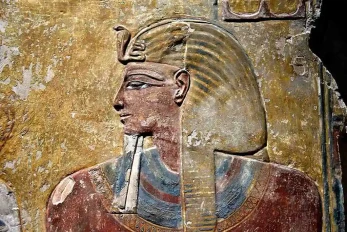
The Pharaoh’s primary job description was "to uphold Maat and repel Isfet." If the crops failed, if the borders were breached, or if the courts became corrupt, it was seen as a failure of the King to maintain the cosmic balance. In temple reliefs, the King is frequently shown offering a small figurine of the goddess Maat to the higher gods. This act symbolized that the King’s greatest gift to the divine was not gold or incense, but a well-governed, just society.
III. The 42 Declarations of Innocence: A Code of Ethics
Long before the Ten Commandments or the Magna Carta, the Egyptians followed a sophisticated ethical code known as the 42 Declarations of Innocence (found in Chapter 125 of the Book of the Dead).
These were not "shalt nots" imposed from above, but rather a "negative confession" intended to show that a person lived in harmony with the world. Some of the most striking declarations include:
-
Social Responsibility: "I have not caused pain to others. I have not made anyone weep."
-
Integrity: "I have not told lies. I have not acted with deceit."
-
Environmental Stewardship: "I have not polluted the waters of the Nile. I have not dammed running water."
-
Economic Fairness: "I have not added to the weight of the balance, nor have I lightened the scales."
This code reveals a society deeply concerned with the "vibration" of their actions. Every word spoken and every deed done was believed to either strengthen or weaken the fabric of the universe.
IV. The Psychostasia: The Hall of the Two Truths
The most profound philosophical contribution of the Maat concept is the Weighing of the Heart ceremony.
In the afterlife, the deceased was brought before Osiris and a scale. On one side sat the heart (Ib), which the Egyptians believed was the record of a person's life and character. On the other side sat the Feather of Maat.
-
The Light Heart: If the heart was in perfect balance with the feather, the person was declared Ma'a Kheru (True of Voice) and entered the eternal Paradise of the "Field of Reeds."
-
The Heavy Heart: If the heart was heavy with the "weight" of guilt, cruelty, or chaos, it was consumed by Ammit (the Devourer), representing total spiritual extinction.
The Philosophy: This wasn't about "sin" in the modern sense; it was about Density. A heart heavy with regret, hatred, or lies cannot "float" into the higher realms of existence. Purity was defined as being "light as a feather."
V. Maat in Science and Art: The Precision of Order
Maat wasn't just for the soul; it was for the mind. We see Maat in:
-
Architecture: The staggering precision of the pyramids—aligned to the cardinal points within fractions of a degree—is a physical manifestation of Maat. Any deviation was a violation of order.
-
Medicine: Egyptian doctors believed health was a state of balance. Disease was seen as an "excess" or "deficiency" (an imbalance of Maat) in the body.
-
Law: Judges were known as "Priests of Maat." They wore gold pendants of the goddess to remind them that their verdicts must reflect the cosmic truth, regardless of the wealth or status of the litigants.
VI. The Modern Relevance: Why We Need Maat in 2026
We live in an age of "Isfet"—fragmentation, misinformation, and ecological crisis. Maat offers a timeless remedy:
-
Radical Accountability: In a world where it is easy to hide behind screens, Maat asks us: Is your heart light? Are your actions contributing to the balance of your community?
-
Eco-Spirituality: The Egyptian reverence for the Nile as a part of Maat is the ultimate lesson in sustainability. We cannot be "in balance" if our environment is in decay.
-
Inner Equilibrium: Modern psychology often focuses on "self-care," but Maat suggests that true peace comes from "Self-Alignment"—aligning our personal desires with the greater good.
Conclusion: The Eternal Echo
The pyramids may eventually crumble into the sand, but the concept of Maat is indestructible. It is a reminder that the universe is not a chaotic accident, but a structured masterpiece where every individual plays a role.
By seeking truth over convenience and harmony over conflict, we honor the ancient wisdom of the Nile. In the end, we all face the same question the Egyptians asked five millennia ago: When the time comes to stand before the scales, will your heart be lighter than a feather?


-webp.webp "Hilton")
-webp.webp "dusit")
-webp.webp "Marriott Hotels")
-webp.webp "Azimut Hotel")
-webp.webp "Golden Tulip")
-webp.webp "sheraton")
-webp.webp "westin hotel")
-webp.webp "Movenpick")