
Ancient Egyptian Festivals and Beliefs: Defeating Chaos Through Sacred Rituals
.jpg)
Cosmic Warfare: The Temple as a Fortress Against Chaos
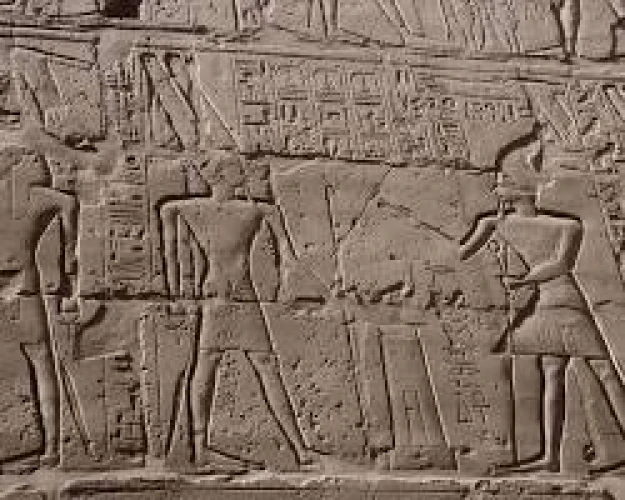
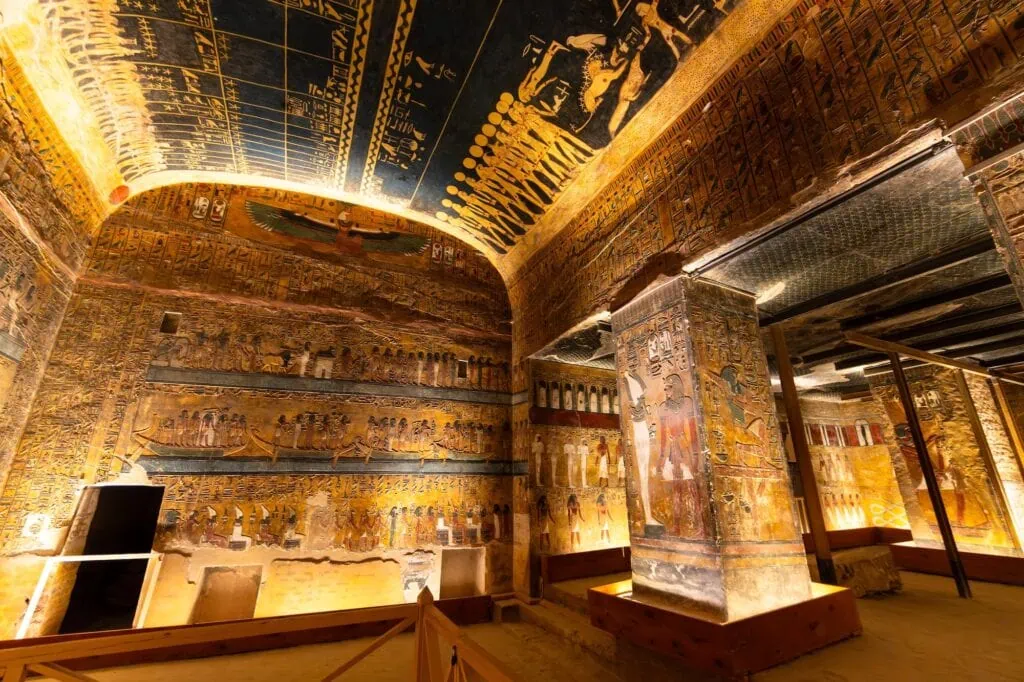
FEASTS proffered after the earlier one had been removed to be consumed by the priests. The Ancient Egyptians were obsessed with the idea that the world was created out of chaos and an ordered way of life had only been established with immense difficulty. For them the obscure forces of chaos still existed and would overwhelm their world if the correct rites and rituals were not performed daily in the temples. Equilibrium was maintained with a great struggle and only the gods by their ceaseless efforts preserved the existence of the universe. The temple was the house of the gods; the function of the building and the priestly personnel was to protect the gods from attacks by hostile forces, and to keep them in a state in which they could carry out their cosmic tasks successfully. The temple was built of stone because it was the hardest material known to them. Ceilings were decorated with the goddess Nut and stars and deccans representing the sky. Frpm the floor the columns sprang like the marsh plants and vegetation from which they had once been created, while the walls were decorated with reference to the creation myths, and the endless struggle between good and evil. The daily rituals carried out in the temple were linked with the ritual to the dead. All offerings were termed the greatest offering of all:
'the Eye of Horus'. Evil forces were strongest at night when the greatest precautions had to be taken. Only the rising of the new sun symbolised the triumph of the sun god Rec over the chaos of darkness. The sky itself was insecure and supported on four pillars, therefore a special festival of 'the Raising of the Sky' had to be held annually, as at Esna and elsewhere.
The Opening of the Mouth: Animating the Divine
The 'Opening of the Mouth' ceremony animated statues, reliefs of gods, animals and men, as well as restoring life to the dead. It was performed on statues in the 'Rooms of Gold', the sculptors' work-shops, and on mummies in 'the Tent of Purification', the embalming tent. Additionally, this ceremony was carried out in the temples, to reanimate the statues of the gods and the images upon the walls after the building of the temple, and annually after its spring clean and redecoration. If this were not done the gods would not be able to receive the offerings made to them, nor act defensively on the people's behalf. The ritual entailed touching the face with a flint instrument, which was forked at one end, and with an adze, a magic rite that must have originated with instruments used in the prehistoric period. In addition, an ox was killed, and the right foreleg, where the physical force was thought to reside, was raised towards the figure to be reanimated.
Public Processions and the Grand Calendars of Feasts
Feasts. In the daily service to the god the public had no part: in fact access to the inner parts of the temple was forbidden to the laity. They were permitted to penetrate to the forecourt and to the corridors surrounding the building, where they could spend the night in those temples devoted to healing. Otherwise the public could only par-ticipate in the great festivals. Each temple had a calendar of feasts and festivities of which a shortened version seems to have been inscribed in the hypostyle hall. The full text, written on parchment or papyrus, would have been kept in the library of the temple archives. In each temple the principal gods were taken in procession several times· a month either round the town, or to visit neighbouring temples, usually by river. Some of the feasts only lasted a few days, but the great national ones could extend for 28 PRIESTS 39 or 30 days; many of them were closely connected with agriculture, and the fertility of the fields. One of the chief festivals was the Feast of Opet, held in Thebes during the second month of the Season of the Inundation. At this feast Arnun processed by boat from Karnak to the Luxor temple, accompanied by the boats of Mut and Khonsu. Other important festivals were the New Year Feast, the Coming-Forth of Min at harvest time, the Raising of the Sky, the Feast of the Potters Wheel (connected with Khnum}, the Feast of Sokar and the Feast of the Valley, both connected with the Necropolis.
Mythic Miracle Plays and the Whispers of the Oracles
As well as feasts and festivals certain temples re-enacted miracle plays every year: for instance the Birth of Horus at Dendarah, the Contendings of Horus with Seth at EdfU, or the Death and Resurrec-tion of Osiris at Abydos. Another was the Coronation Play, which is even earlier. This gave an account of the ritual of the crowning of the king. An oracular service was also provided, either at the temple or when the travelling statues were being carried through the streets, and petitions were presented. The answers were usually a simple yes or no. The animal cults, such as those of the Apis and Mnevis bulls, also specialised in oracles, as did the special gods of the necropolis such as Amenhotep I and Ahmose Nefertari. They were worshipped by the workers in the necropolis who lived in the workmen's village at Deir al-Madinah on the West Bank at Thebes




-webp.webp "Hilton")
-webp.webp "dusit")
-webp.webp "Marriott Hotels")
-webp.webp "Azimut Hotel")
-webp.webp "Golden Tulip")
-webp.webp "sheraton")
-webp.webp "westin hotel")
-webp.webp "Movenpick")