


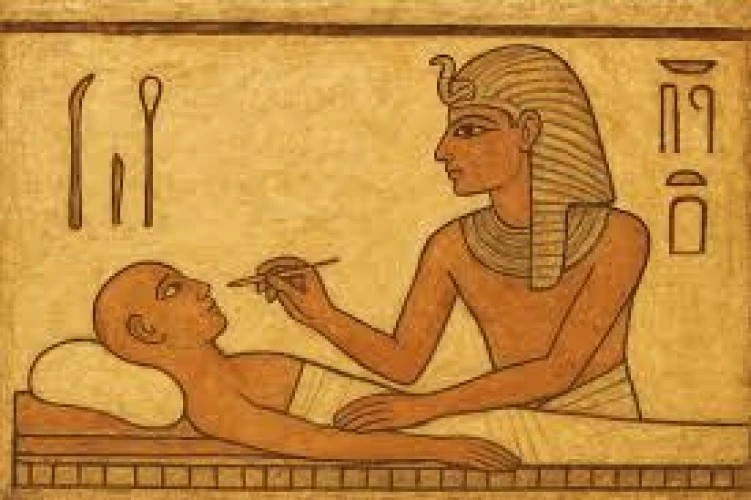
Chisel, Stone, and Survival: The Shocking Reality of Ancient Egyptian Brain Surgery
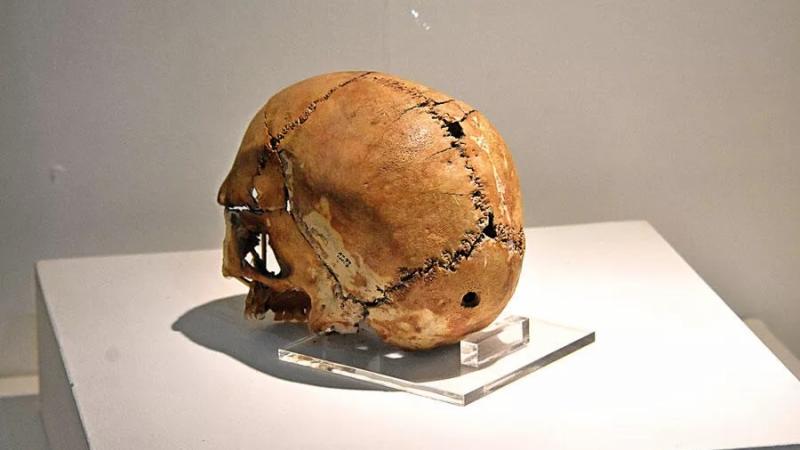
Introduction: Beyond the Limits of Imagination If someone told you that a doctor was going to drill a hole into your skull using nothing but a bronze chisel and a stone mallet, you would likely assume it was a death sentence. Yet, thousands of years ago, on the banks of the Nile, this was a reality. But here is the most shocking part: many of the patients survived.
"Trepanation"—the process of removing a piece of the skull to access the brain—is one of the oldest surgical procedures known to man. But while other cultures did it for ritualistic "demon release," the Ancient Egyptians approached it with the cold, calculated precision of a modern neurosurgeon.
The "Why" Behind the Hole: Medical Necessity In the bustling construction sites of the Pyramids or the chaotic battlefields of the New Kingdom, head injuries were common. Falling limestone or a blow from a mace often led to "depressed skull fractures."
The Egyptian Swnw (physicians) realized that when the bone pressed against the brain, the patient suffered from seizures, paralysis, or agonizing pressure. Their solution? Open the skull. According to the Edwin Smith Papyrus, they didn't just guess; they diagnosed. They looked for signs of "throbbing" under the bone and decided whether the patient was "treatable" or not.
The Procedure: A Test of Steel and Skill Imagine the scene: No general anesthesia, no sterile electric drills. The tools were simple but effective:
-
The Bronze Chisel: Sharp, sturdy, and heated in fire to reach a state of "primitive sterility."
-
The Scraper: Used to slowly wear away the bone in a circular pattern to avoid sudden "plunging" into the brain tissue.
-
The Stone Mallet: Used for precise, controlled percussion.
The surgeon would carefully navigate the "dura mater"—the thick membrane protecting the brain. Their goal was to remove the pressure-causing bone fragments or drain a hematoma (blood clot) without nicking the brain itself.
The Evidence of Survival: The Bone Tells the Truth How do we know they survived? The answer is written in the bone. When a person dies during or immediately after surgery, the edges of the skull opening remain sharp and jagged.
However, archaeologists have discovered numerous Egyptian skulls where the edges of the surgical hole are smooth and rounded. This is a biological process called "remodeling." For the bone to smooth over, the patient had to live for months, or even years, after the operation. In some cases, the hole had almost completely closed with new bone growth—a miracle of ancient recovery.
The Post-Op Care: The Egyptian Secret Sauce Survival wasn't just about a lucky cut; it was about the "aftercare." The Egyptians were masters of the bandage. They used linen soaked in frankincense, myrrh, and honey. * Honey acted as a natural antibiotic seal.
-
Resins acted as antifungal agents.
-
Linen wraps kept the site protected from the harsh Egyptian dust.
This combination prevented the dreaded "hospital fever" (sepsis) that killed millions in Europe as late as the 19th century.
A Legacy Written in Stone When you visit the medical reliefs at the Temple of Kom Ombo, or look at the surgical kits in the Luxor Museum, you realize that these were not "primitive" people. They were pioneers. They viewed the human body as a complex machine that could be repaired.
They understood that the head was the seat of the "internal pulse," and they had the courage to intervene when life was on the line.
Conclusion: The Architects of the Human Body The next time you look at the Great Pyramid, remember that the same civilization that could align stones with the stars could also navigate the delicate structures of the human skull. The "Chisel and Stone" were not just tools of construction; they were tools of life.






-webp.webp "Hilton")
-webp.webp "dusit")
-webp.webp "Marriott Hotels")
-webp.webp "Azimut Hotel")
-webp.webp "Golden Tulip")
-webp.webp "sheraton")
-webp.webp "westin hotel")
-webp.webp "Movenpick")
