


Unlocking the Mystery of the Ancient Egyptian Block Statue: Art, Magic, and Eternity
The visitor sees the dimmed incense smoke-filled corridors of Karnak Temple which existed in ancient Thebes during the period of its original construction. The space around you includes massive statues that show pharaohs walking forward and gods with animal heads and queens who wear golden decorations. The temple courtyards reveal an unexpected discovery that you can find by examining the hidden spaces. The artist created statues that show men sitting on the ground who wear complete body cloaks that transform their bodies into simple solid cube shapes.
Welcome to the captivating world of the Ancient Egyptian Block Statue.
People who do not possess special training will view these statues as a lazy artistic choice which sculptors used to avoid the detailed work of creating arms and legs. The statement shows complete opposite truth. The block statue exists as an exceptional work which combines ancient Egyptian religious beliefs with practical architectural elements and deep religious meaning. The work demonstrates how ancient artists created powerful spiritual effects through their use of basic design elements.
Let's explore the secrets, hidden meanings, and legacy of an artistic invention that is one of the most intriguing aspects of ancient Egyptian society.
What Exactly is a Block Statue?
The exploration of the ""why"" requires first understanding the ""what."" A block statue is a specific type of memorial sculpture that first appeared in ancient Egypt. The statue shows a male figure who sits in a squatting position on the ground. The subject sits with his knees bent to his chest and his arms resting on his knees.
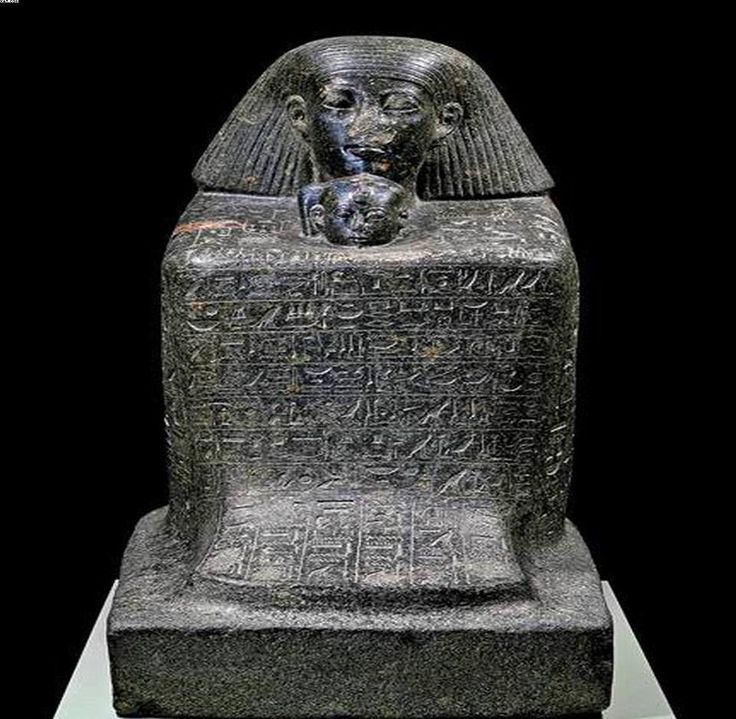
The statue's main characteristic exists in its clothing. The figure is usually shown wearing a wide cloak that wraps tightly around the entire body, enveloping the torso, arms, and legs. The smooth solid stone block reveals only the subject's head and sometimes his hands or feet.
The result creates an abstract cubic shape which exists as an outcome. Egyptian art normally features detailed striding figures which appear in sharp contrast to this work. The simple block object contains an entire universe of significance.
The Dawn of the Block: Origins in the Middle Kingdom
The story of the block statue begins during the Middle Kingdom, specifically around the early 12th Dynasty (approx. 1991–1782 BCE). This period marked a significant transformation of Egyptian cultural traditions. After the First Intermediate Period brought political disorder to Egypt the nation achieved its first unification while religious beliefs experienced widespread democratic acceptance.
Before Middle Kingdom times only the pharaoh and his closest family members received the assurance of everlasting life after death. However Middle Kingdom times brought high-ranking officials scribes priests and noblemen the ability to secure their own eternal life. The temples required them to create physical forms of themselves which needed to be installed there.
The block statue creation process began. The invention functioned as a tool for ancient Egyptian workers who belonged to the upper class rather than for royal use. The system permitted non-royal individuals to maintain eternal existence within sacred spaces of the gods while they participated in daily altar food offerings.
Form Meets Function: The Genius of the Design
The block shape provides an optimal solution for its selection process. The block statue displays its exceptional value through its practical design which successfully meets both the requirements of its patron and the limitations of stonework.
1. The Ultimate Canvas for Hieroglyphs
The ancient Egyptians considered statues to be more than artistic creations because they served as sacred vessels which housed the Ka, which represented the eternal life force of a person. The survival of the Ka depended on people who would continue to keep its memory alive. The priests of the temple used the entire surface area of the cloaked block statue for their writing because it provided them with an ideal space to carve their hieroglyphic inscriptions.
The texts served decorative purposes but contained the following information.
2. Durability for Eternity
Egyptian statues were designed to exist for endless time periods. The statues with outstretched arms and staff weapons and walking positions with visible leg parts proved to be extremely delicate. Sculptors created stone wrist and ankle joints that would break easily under weight or during movement.
The block statue solved this engineering nightmare. The sculptor achieved complete protection of the figure through his sculpting process which created a solid stone cube. The block statue remained unbreakable because its materials included both soft limestone and extremely tough granite and diorite and basalt. The building functioned as a stone fortress which existed to guard the inner spirit for everlasting time.
Deep Symbolism: More Than Just a Rock
The ancient Egyptians preferred to do everything because they believed their actions would bring them magical benefits and religious advantages. The block statue is perhaps one of the most spiritually loaded shapes in their entire artistic repertoire.
The Primordial Mound
The ancient Egyptian creation myths state that before the existence of the world, nothing existed except for the dark chaotic waters which the ancient Egyptians called Nun. The primordial mound emerged from the watery depths as the first thing to appear. This mound was the birthplace of the gods, the sun, and all life.
The block statue design intentionally replicates the shape of the primordial mound. An Egyptian official who commissioned a block statue used this act to show his belief that he occupied the central point of the universe.
The Promise of Rebirth
Observe the figure's posture from a close range. The body shows a fetal position which includes knees drawn upward to the chest and head positioned above the body. The situation has developed into a sequence of events which leads to this outcome. Ancient Egyptians believed that death marked the beginning of existence in a different form. The statue owners used their fetal body position to show that they continuously experienced rebirth and resurrection. The deceased will use the cloak as their holy transformation which will enable them to enter the afterlife.
The Guardian of the Temple
The squatting posture served as a typical resting position used by guards and gatekeepers throughout ancient Egypt. The officials used a block statue of themselves which they placed in a temple courtyard to demonstrate their eternal role as humble servants who protected the god's sanctuary. The position showed complete respect through its expression of silent devotion.
A Masterpiece in Focus: Senenmut and Princess Neferure
The block statue first appeared during the Middle Kingdom period but reached its highest point of popularity and artistic development during the New Kingdom period which lasted from approximately 1550 to 1070 BCE. Sculptors during this time period began creating new artistic forms which included complex sculptural designs that featured multiple artistic elements.
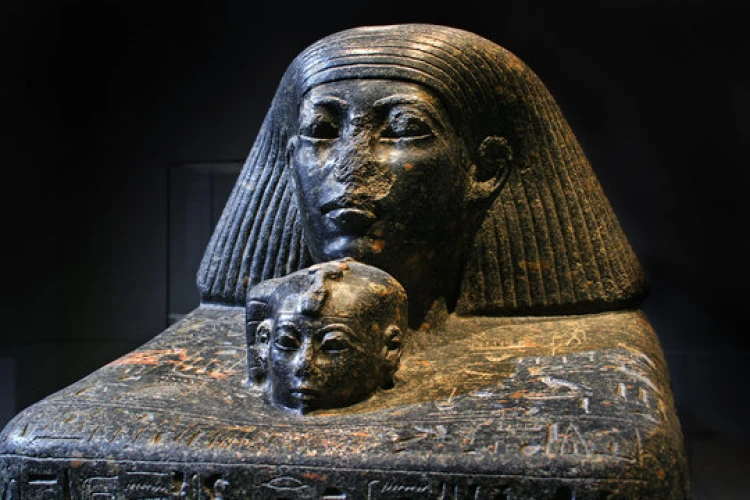
The block statue which most people consider to be the most famous and emotional example belongs to Senenmut who worked as an architectural designer throughout his career and held high-ranking government positions during his service to the female Pharaoh Hatshepsut.
Senenmut received responsibility for Hatshepsut’s only daughter Princess Neferure through his role as her caregiver and educator. To create a lasting bond between them, Senenmut ordered the creation of multiple block statues. Senenmut appears in these remarkable artworks which show him wearing the traditional block cloak while a small sculpted head of the young princess emerges from the block sculpture at a point right below his chin.
The magnificent new version of the block statue became a new protective symbol which showed paternal love for his child. The cloak has now transformed into a complete protective cover which Senenmut uses to safeguard the royal child and his protective role as her guardian makes him feel extreme pride.
The Late Period: A Renaissance of the Block
The historical periods of Egyptian unrest caused a brief decline in block statue popularity which reached its greatest peak during the Late Period (approx. 664–332 BCE).
The statues achieved their highest degree of abstraction when artists applied extreme polishing techniques during this period. Artists in the Late Period selected extremely tough black stones which included greywacke and basalt as their preferred materials. The artists developed their work to create an abstract design which used the human body as a physical base that supported the head. The late statues acquired more extensive inscriptions which covered almost all stone surface areas transforming the statues into detailed historical repositories.
The Ptolemaic and Roman periods introduced Greco-Roman artistic styles which depicted human figures with realistic motion and strong muscles thus causing the block statue to become extinct.
The Enduring Legacy of the Block Statue
Your journey through the Egyptian exhibition spaces of the Louvre and the British Museum and the Grand Egyptian Museum at Giza will show you numerous silent statue figures that remain in their seated postures.
People walking in that area will not notice those statues because their attention gets drawn to the shiny gold objects and the large sphinx statues. The block statue reveals the fundamental beliefs that formed the ancient Egyptian worldview. Their expertise enabled them to create results that combined everyday needs with deep spiritual understanding. The artists created a stone block sculpture which they transformed into an everlasting object that allowed its user to express themselves while existing as a physical entity who would achieve eternal existence.
The ancient Egyptian block statue stands as a beautiful reminder that sometimes, the most powerful statements are the quietest ones. The complete philosophy of the civilization which viewed death as the dawn of everlasting existence resides in this compact form which contains all its essential elements.
Have you seen an exhibit of something like a block statue with the same, rather than differently carved hieroglyphs on the walls?



-webp.webp "Hilton")
-webp.webp "dusit")
-webp.webp "Marriott Hotels")
-webp.webp "Azimut Hotel")
-webp.webp "Golden Tulip")
-webp.webp "sheraton")
-webp.webp "westin hotel")
-webp.webp "Movenpick")
