
-webp.webp)
Ancient Egyptian Afterlife Beliefs: From Pyramid Texts to Ushabti Figurines
.jpg)
From Pyramid Chambers to the Book of the Dead
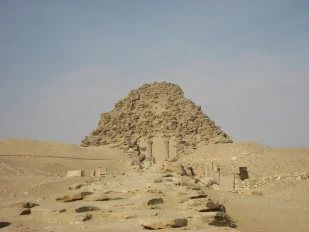
The two main deities of the Pyramid Texts are Rec and Osiris, originally only the king benefitting from the spells, hymns, prayers and methods used to get from this world to the Afterlife. With the increase in power of Osiris, this idea of a passage to the Afterworld became available to anyone who knew the right answers, and could perform the correct rituals. In the Middle Kingdom the texts ceased to be written on the walls of the pyramid chambers and were inscribed on the actual coffins. Though they are virtually the same, the lack of space necessitated shortened versions, these in the main being prayers to Osiris and Anubis and a list of the principal offerings. By the New Kingdom the texts had been transferred to papyri which were buried with the dead in the coffin and were called the Book of the Dead. There was a choice as to which chapters to include with the body, though there were some that were essential for all. Some of the Books were called by other names-'That which is in the Am-Duat', 'The Book of the Gates', 'The Book of the Caverns', 'The Litany of Rec· and 'The Book of the Divine Cow'. This religious literature is some of the most difficult of all Egyptian writings to understand. In some cases the texts were placed on the walls of the Royal Tombs, or on the shrines if present, as in the case of Tutankhamun.
Anatomy of the Soul: The Ba, the Ka, and the Shining Akh
The Egyptians had no concept entirely comparable to that expressed by the word 'soul', but they believed that there were a variety of spiritual entities which belonged to each person. There was the Ba or Bai, represented as a human-headed bird which could move in and out of the tomb at will. The Ka was the double, born when a man was .born and dying when he died, and represented by two raised arms. was officially for the man's Ka that all the funerary equipment in a tomb was provided, including the food and drink, and the sepulchre was known as 'the house of the Ka'. In addition to these two assets was the Akh. This was the indestructible entity of the person and represented by a bald ibis in the hieroglyphs, which also meant 'to shine' or 'be bright', so that the dead were often regarded as the shining ones. The texts inform us that 'just as the body belongs to earth so the akh belongs to heaven'. The idea of the ka has persisted into modem Egyptian folklore, in that everybody has a double. They are now regarded as rather mischievous or evil spirits who cause loss and difficulties to an individual, are particularly active with young children, and are blamed for many of the ordinary mishaps that occur. Other elements such as the name of a man, and his shadow, were also important parts of his personality. In the
Miniatures of Daily Life: The Evolution of Tomb Models
Pre-dynastic period the Egyptians buried food and objects in the grave with their dead and weapons with the men, ornaments with the women, but in the Old Kingdom they buried models of servants who by magic would be enabled to do the work in the Afterworld. In the Middle Kingdom instead of single models of bakers, brewers, grinders, etc., elaborate models of granaries, ships, kitchens, houses, carpenters' shops and weavers' houses were placed in the tomb, all filled with people doing the necessary tasks. By the New Kingdom they still made model boats, but they were empty, being manned by 42 PRINCIPAL DEITIES · an invisible crew.
Ushabti Servants and the Magic of Infinite Offerings
In the same way in the Middle Kingdom they began to make shawabty figures, models representing the deceased, made of day or wax and later also of stone or more often of faience. These were inscribed with a part of Chapter VI of the Book of the Dead which would enable the figure to do any work that the dead man would be called upon to do in the Afterwcrld, such as clearing sand, moving stone from the East to the West Bank, or digging canals. The weighing of the heart from the Book of the Dead of the Priest-King Herihor and Queen Nodjmet who are seen before Osiri.s (21 Dyn.) (Trustees of the Briti.sh Museum) Originally only one of these figures was placed in the tomb, but later the numbers increased and as many as 400 have been four.d. Some of the figures carried baskets and hoes, others had whips and acted as overseers. Some of these in the royal tombs were made in the likeness of the deceased, but many others were bulk produced and just inscribed with the name and titles of the deceased. The texts on the walls of the private tombs from the 3 Dyn. onwards listed the basic unit requirements of the dead man as 1000 of bread, 1000 of beer, 1000 of linen, etc., which by magical means were supposed to transform themselves into the actual objects


-webp.webp "Hilton")
-webp.webp "dusit")
-webp.webp "Marriott Hotels")
-webp.webp "Azimut Hotel")
-webp.webp "Golden Tulip")
-webp.webp "sheraton")
-webp.webp "westin hotel")
-webp.webp "Movenpick")