


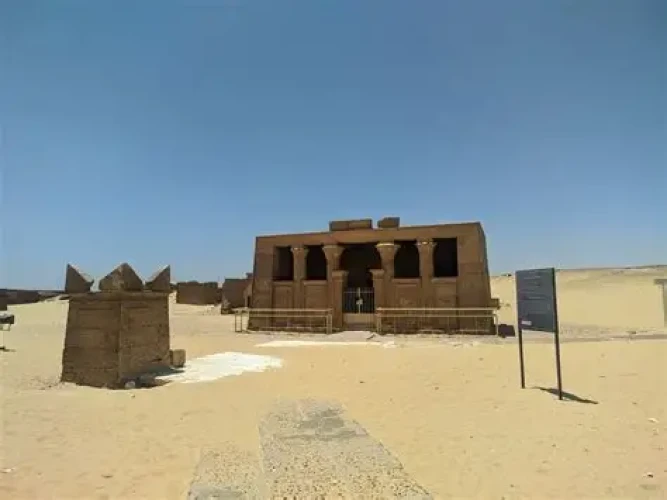
A Tale of Two Worlds: The Hybrid Art of the Tomb of Petosiris
People who visited Tuna el-Gebel necropolis during 300BCE would experience an unusual electric sensation that filled the atmosphere. The Pharaohs Empire entered into chaos after Alexander the Great began his military campaign. The ancient Nile customs now established diplomatic relations with the Greek southern European mountain terrain.
The Tomb of Petosiris preserves this "cultural handshake" in its most beautiful form. Petosiris became our spiritual companion for 2026 because he shows how different cultures merge through music and food and fashion in the modern globalized world. The High Priest of Thoth functioned as more than a religious leader because he established a fresh cultural identity through his duties.
The Tomb of Petosiris functions as a burial location that contains a "Tale of Two Worlds" which displays Egyptian rigid perfection through its stone elements and Greek realistic depiction through its paint elements.
1. Who was Petosiris? The Man in the Middle
Petosiris held the powerful title of High Priest of Thoth in the nearby city of Hermopolis. He lived through a historical period which experienced two major changes the Persian occupation ended and the Ptolemaic (Greek) era began.
Petosiris constructed this tomb as his personal burial site but he dedicated it to function as a family chapel. The inscriptions speak of his father and brother, showing a deeply human desire to be remembered alongside those he loved.
As a priest of Thoth (the god of wisdom and writing) he dedicated himself to acquiring knowledge through his priestly duties. He perceived beauty in traditional Greek customs and he chose to design his afterlife path according to his actual existence as he lived in a world which had evolved beyond Egyptian culture.
2. The Exterior: A Temple in Disguise
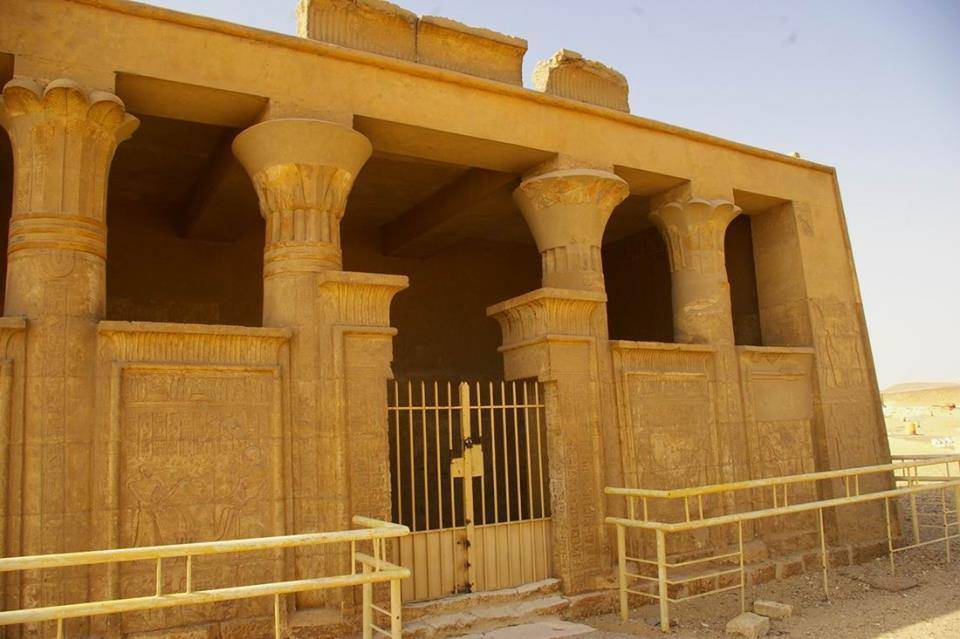
The tomb appears to be a complete Egyptian temple which has been designed as a miniature temple. The structure includes a "pronaos" which serves as an outer hall that contains columns and adjacent to it stands a holy space. The "hybrid" nature of the site begins to reveal itself to visitors who approach the site.
The Columns of the building show Greek architectural design through their column arrangement which creates a stoalike atmosphere for people who enter the building.
Petosiris's tomb stands open to visitors because it operates differently from most concealed Old Kingdom burial sites. The structure exists as a public attraction which architectural beauty was created for people who wanted to see Hellenistic public buildings.
3. The Art: Egyptian Souls in Greek Clothing
The outer hall walls of "A Tale of Two Worlds" create its most magical experience. The two cultures will begin their dance after they finish their demonstration of standing together.
The Fashion Revolution: Look closely at the figures harvesting grain or working in the metal shops. Their outfits show the traditional Egyptian "side-profile" stance yet display their actual clothing. The people do not wear the traditional linen kilts which require stiff postures. The people wear Greek-style clothing which includes flowing pleated tunics and robes.
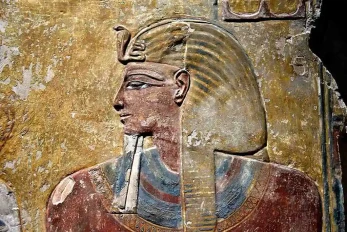
The Hair and the Face: Egyptian art used idealized facial features to create perpetual facial representations. The Tomb of Petosiris contains Greek-style hairstyles that appear curly and voluminous while their eyes present a human gaze that defines them as actual portraits instead of abstract symbols.
The Fluidity of Movement: Egyptian artworks create a visual effect which shows people remaining in one position at the same time. The workers use Greek-style movements to lean and reach and bend their bodies. Ancient gods appeared to take their first breath before they began to move.
4. Daily Life: The Human Heart of Tuna el-Gebel
The tomb shows its most humanlike feature through its work-related activities. The inner chambers exist to honor gods and the afterlife, while the outer walls function as a tribute to the breathing people.
The Metalworkers: The artisans show their skills by smelting gold and silver while their muscles are tensed and their tools appear so detailed that a 2026 jeweler would know them.
The Wine Press: The grape harvest unfolds through its dynamic scenes which display their activity. The viewer experiences the complete sensory experience of the fermenting juice together with the sounds of workers who are crushing the grapes. For Petosiris "eternity" beyond chanting hymns brought him happiness through his work achievements.
The Farming Cycle: The priest establishes his permanent connection to Egyptian territory through these visual displays. The Nile continued to rise and the wheat maintained its growth regardless of whether a Persian King or a Greek General occupied the throne.
5. The Inner Sanctuary: The Return to Tradition
The Greek influence starts to disappear as you advance further into the tomb. The essential Egyptian space contains the sarcophagus burial area.
Why the Change? The statement reveals a human characteristic which describes Petosiris. He adopted the contemporary Greek fashion because it served his public duties and established his worldwide reputation. The ancient traditions of his forebears became his path, which he followed to find Osiris during his personal life.
The Best of Both Worlds: He didn't see it as a contradiction. He combined modern existence with ancient values.
6. The 2026 Context: Tuna el-Gebel’s Living Legacy
The present day 2026 visitors to the tomb discover that Petosiris was a visionary. Tuna el-Gebel functions as a cemetery which also demonstrates how humans have adapted throughout history.
The Nearby Catacombs: The tomb access point leads to extensive underground tunnels which contain Ibis and Baboon mummies. The combination of Petosiris personal tomb which shows human characteristics with the extensive animal worship area shows the complete range of Egyptian religious beliefs from that time period.
The tomb demonstrates that different cultures can work together to create more beautiful things than they can achieve through separate existence. The message shows important value in present times.
7. The Masterpiece of Transition
The Tomb of Petosiris serves as the definitive artistic masterpiece which represents the Greco-Roman artistic tradition in ancient Egyptian history. The site creates a duality which begins to fade away until it creates a continuous state of existence.
Petosiris chose to wear Greek robes for his Egyptian god service which demonstrated to the world that people can change their identities. He demonstrated to us that people can respect their cultural background while they live in contemporary times. He created more than a tomb because he established a connection which linked two separate places.
The murals at Tuna el-Gebel present more than a window to ancient Egyptian history. The modern world originated from this moment which shows how color and movement and cultural fusion create a complete humanexperience of the past.



-webp.webp "Hilton")
-webp.webp "dusit")
-webp.webp "Marriott Hotels")
-webp.webp "Azimut Hotel")
-webp.webp "Golden Tulip")
-webp.webp "sheraton")
-webp.webp "westin hotel")
-webp.webp "Movenpick")
