


Why Koshary Is Egypt’s National Dish: History, Flavors, and How to Eat It Like a Local
.webp)
The Beautiful Chaos of Koshary: Why a Carb-Loaded Mountain Is Egypt’s Most Famous Dish
If you pull up a plastic chair at a bustling street corner in downtown Cairo, the first thing that grabs you really isnt the pyramids, not even the loud honking car horns. Its more like a distinct, rhythmic metal-on-metal thing, like, a frantic drum circle maybe. But no, it is the sound of a fast moving chef in a crisp white apron, slamming a heavy metal spoon against the sides of big aluminum bowls. He is scooping layering, sort of assembling Koshary (pronounced KO-sha-ree). And within like five seconds, he nudges a steaming, mountain sized bowl across the Formica counter to you.
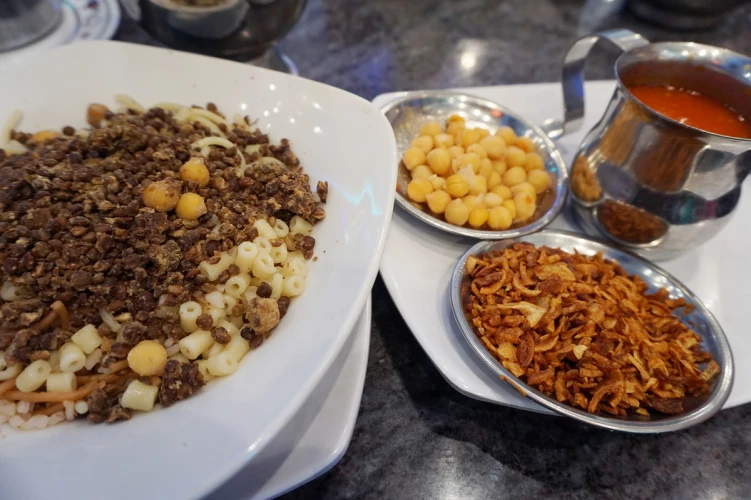
For the uninitiated traveler, Koshary looks like one of those glorious carbohydrate fever dreams, or a kitchen experiment that somehow decides to work out in the end. It is a dense, multi layered plate, with short macaroni, broken spaghetti, fluffy white rice, and earthy black lentils. That whole base is then, pretty much completely drowned in a rich, spiced tomato sauce, followed by a tangy garlic vinegar dressing, and on top you get plump chickpeas, plus a generous, sweet tumble of ultra crispy fried onions (warda, or “roses,” as locals call them).
Still, somehow, even with no meat, no high end luxury ingredients, and a look that feels almost chaotic in a good way, Koshary stays the undisputed king of Egyptian food. It is the unofficial national dish, eaten by millions every single day—from elite corporate executives in bright glass high-rises to construction workers on dusty streets, way down in Alexandria.
So how did this humble, meatless carb bomb turn into the biggest culinary symbol of Egypt? The answer is not some mysterious trick. It is a fascinating, very human story with global trade, economic survival, colonial history, and this odd national knack for taking simple stuff and making it pure comfort.
1. A Passport on a Plate: The Global Accidental Roots of Koshary
One of the greatest ironies about Egypt’s most famous dish is that the core stuff isn’t really native to the Nile Valley, not at all. Koshary is basically a beautiful historical accident and, honestly, it feels like it was cooked up by the rough currents of international trade migration, and yes the colonial empires that kept passing through Egypt over, let’s say the last two centuries.
If you want to trace where Koshary comes from, you almost have to look thousands of miles to the east, toward India. In the 19th century, India was under British colonial rule, while Egypt was some kind of key strategic hub, for the British empire, along those trade routes heading toward Asia. British troops, plus Indian merchants moving through the Suez Canal brought along a traditional comforting dish from home: Khichdi, a simple slow-cooked staple made of rice mixed with yellow lentils.
So when that idea of combining rice and lentils washed up on the busy docks of Alexandria ,and then also onto the markets of Cairo, the Egyptian community didn’t just accept it. They embraced the concept, but they also decided it needed more edge, more personality… something extra.
Around the same time, Egypt had sizable, lively communities of Italian immigrants who handled local bakeries and groceries. The Italians introduced pasta to the local taste. The moment Egyptian cooks saw that Indian rice-and-lentil base they thought “Why not add macaroni?” And then pretty quickly—like before anyone even fully stopped talking—the Mediterranean love for garlic, teamed with tomato sauce, got ladled right over the top.
After that, the finish was very familiar from the Middle Eastern side of things. Chickpeas showed up, plus crispy deep-fried onions, that kind which crackle when you bite.
By the early 20th century, what started as a multicultural fusion wasn’t just a temporary mash-up anymore. It got fully adopted, reworked, and basically claimed by Egyptian streets. It wasn’t Indian, British, or Italian anymore; it was given a roaring, unmistakable Egyptian soul, and everyone acted like it was always theirs.
2. The Great Democratic Equalizer of the Egyptian Street
To really get why Koshary takes up this permanent, sacred place in Egyptian hearts, you kind of have to look past the flavor stuff and also see what it does socially. Koshary is, honestly, the ultimate democratic dish . In a world that’s often split up by social class, money status, and personal background, Koshary becomes this shared space where everyone is, for the most part, completely level.
Walk into any well known Koshary spot—like Abou Tarek right in the center of Cairo— and just look around the dining room. You’ll spot a wealthy businessman in a proper suit sitting straight beside a taxi driver, who is beside a university student, doing finals practice, and then beside them, a foreign backpacker. Nobody gets a “special” plate, they’re all digging in from the same kind of metal bowl and using the same type of plastic squeeze bottles for spicy sauce. Even the price feels almost unbelievable, because the meal is huge and filling, but still modest.
Koshary can stay this way because it leans hard on shelf stable, low cost plant based building blocks like beans, grains, pasta, and onions. So over time it has stayed affordable even when life gets messy. In periods of economic strain, inflation, or political change, Koshary works like a steady, comforting barrier, the kind that keeps people from falling into hunger. It gives strong energy and real stomach comfort for very little money, almost like a small victory for domestic food reliability and working class dignity.
3. The Art of the Customizable Flavor Symphony
On paper, mixing pasta, rice, and lentils feels like it should be absurdly heavy, maybe even kind of bland. But the Koshary trick is that it has this… neat little design, not just of flavors but of textures that play off each other, and honestly it’s super adjustable. And when you get a bowl of Koshary, the cooking isn’t really “done” yet, like the last bit of the magic gets passed straight to you, the diner
Every Koshary table in Egypt has two essential liquid potions sitting there in old-school glass bottles, like theyre waiting for you:
The Da’ah: a sharp, slightly cloudy dressing made from crushed garlic, white vinegar, cumin, lemon juice, and salt.
The Shatta: a bold, bright red oil steeped with crushed dried chili peppers, it kind of demands attention
You start by pouring the Da'ah, tangy and loud, over the top. It slices right through the heavy starchiness of the pasta and rice, and suddenly the whole thing wakes up with a crisp, acidic push. Then you add the Shatta a little at a time, drop by drop, so the heat lands exactly where you want it, not one degree more
After that, you grab a solid spoon and do the real finishing work. You stir in the crispy fried onions, those sweet crunchy bits, into the softer rice. You blend the lentils, earthy and faintly nutty, with the smooth macaroni. You spread the tomato sauce around, the one that smells strongly of cumin, so it coats the pile in a steady way. Then every bite turns into this changing back-and-forth—crunch then softness, zing then fire, savory then a hint of sweetness. It’s basically a full sensory jolt, hidden inside what looks like just another starch plate, but once you mix it properly it stops being simple
4. The Meatless Masterpiece: Naturally Vegan and Universally Welcomed
Long before all that modern wellness talk, plant-based diets, and sustainability became kind of global buzzwords, Egypt had already sort of nailed the ultimate vegan comfort food. With Koshary, there’s absolutely no meat, dairy, or animal fats in the traditional recipe (it’s typically made with clean vegetable oils), so it ends up feeling naturally inclusive.
And that plant-based side of things, well it matters a lot in Egypt’s distinct cultural mix. For Egypt’s big Coptic Orthodox Christian community, fasting seasons are pretty serious year round , with meat and dairy totally off limits, and Koshary becomes this beloved, deeply filling staple. At the same time, for the Muslim majority, it’s inherently Halal and easy to share, without debate. In practice it just crosses those religious lines with this effortless calm, pulling the whole nation together under one common kitchen umbrella.
Insider Tips for the Ultimate Koshary Experience
If you’re a traveler, about to go for your first real bowl of Egyptian Koshary, you might want to keep a few very “in the moment” insider notes, so you can eat like, honestly like a true Cairene without overdoing it at the start:
First, Master the Shatta… careful. That chili oil (Shatta) from proper street stalls is kinda legendary for a reason. It hits fast, and it can be way too fierce if you pour it like you’re rehearsing for a dare. Just add a few drops, mix it around good , then taste, and only then add a little more. Slowly, you know, so your palate doesn’t burn out on the first spoon.
And please don’t skip the whole Dessert tradition thing. After you’ve survived the starch, garlic, and spice in a big Koshary bowl, locals usually handle it with a palate cleanser you can get right there. Ask for a small plastic cup of Roz Bel Laban (creamy, chilled Egyptian rice pudding) at the counter. It’s sweet, cold, and the milk effect cools everything down in your mouth, plus it helps settle your stomach like, immediately.
Also, pick the High-turnover type of place. Forget the bland hotel buffets. Instead, find standalone, multi-story Koshary spots where metal spoons are clattering all day, and people are lining up , like the door is practically part of the menu. When turnover is high, the fried onions stay shatteringly crisp, and the pasta stays properly hot.



-webp.webp "Hilton")
-webp.webp "dusit")
-webp.webp "Marriott Hotels")
-webp.webp "Azimut Hotel")
-webp.webp "Golden Tulip")
-webp.webp "sheraton")
-webp.webp "westin hotel")
-webp.webp "Movenpick")
