

Where Did Jesus Go in Egypt? Discover the Holy Family Route
Introduction to the Holy Family’s Journey
The story of Jesus Christ traveling to Egypt is one of the most profound moments in Christian history. The journey which the Virgin Mary and Saint Joseph took to Egypt during the Flight into Egypt established Egypt as a holy site which attracts millions of believers from all around the world.
The journey which the Holy Family took across Egypt differed from most biblical stories which focus on one specific location. The Holy Family traveled through cities, villages, deserts, and along the Nile, leaving behind a spiritual trail which today forms one of the most important pilgrimage routes in Christianity.
Why Did Jesus Come to Egypt
The Holy Family escaped from Jericho because they wanted to avoid King Herod's threat according to the Gospel of Matthew. Egypt served as a refuge because it represented both safety and protection and divine guidance.
The event holds significant spiritual value for people who observe it. The work demonstrates faith and trust and survival during dangerous situations. The Christian travelers who follow this journey gain more than historical site visits because they discover an important message that remains relevant through time.
The Holy Family Route: A Sacred Path Across Egypt
The Holy Family Route leads to multiple sites which people believe the Holy Family visited during their time in Egypt. The route extends from the northern Nile Delta region to Upper Egypt which creates a broad path that spans multiple territories.
The path has continuous operation which defines its special character as its main feature. The complete road experience functions as a storytelling process which unfolds through its different stages. The journey has specific points which show the different stages of the trip from travel stops to safe havens and travel points.
The route operates as one of the most extended pilgrimage paths in the world which attracts visitors who want to experience both spiritual connections and learn about historical events.
Coptic Cairo: The Spiritual Heart of the Journey
The route's most essential destination leads to Coptic Cairo which serves as its key point. The area functions as the main center of Christian heritage in Egypt because it contains some of the world's most ancient churches.
According to Coptic tradition the Holy Family used Coptic Cairo as one of their residence locations during their time in Egypt. The area contains protected religious sites together with historic churches and spiritual locations which have maintained their original state for hundreds of years.
The narrow paths of the area create an intense experience which displays how historical events and religious beliefs have shaped the current state of the space. Visitors can explore churches built over ancient foundations which enhances their authentic experience of the journey.
The Journey Through the Nile Delta
The Holy Family used the Nile Delta as their travel path to reach Cairo. The fertile area offered vital resources which included water and shelter to become their main route during travel.
Some locations on the route remain unknown to most people while they maintain their essential role in the complete travel path. The two locations show how the Holy Family traveled through their first military campaign which involved actual battle.
Upper Egypt: The Most Sacred Destinations
The Holy Family traveled southward through Upper Egypt until they reached their destination which included Minya and Assiut. The route includes these areas which serve as the most sacred sites throughout its path.
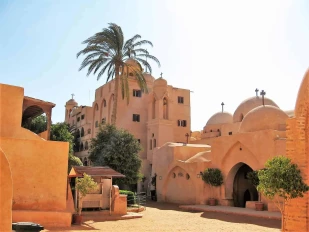
The atmosphere in Upper Egypt differs completely from the atmosphere in Cairo. The area remains peaceful because it has fewer people and more natural surroundings. The area contains several sites which include caves and monastereries that people believe served as hiding places for the Holy Family.
This particular section of the pilgrimage route enables most pilgrims to experience their most intense spiritual connections. The peaceful surroundings and preserved traditions create an environment that encourages reflection and contemplation.
Sacred Sites and Living Traditions
The Holy Family Route presents pilgrims with multiple sacred locations which include churches and monasteries and natural sites. The Coptic Orthodox Church maintains many of these sites as active worship centers.
The journey becomes special through its unbroken tradition of belief which has been maintained throughout history. The visitors experience an ongoing cultural practice which has existed for almost two millennia.
Each site along the route contributes to a larger story which shows how the Holy Family's journey created Christian traditions in Egypt.
The Spiritual Meaning of the Route
The Holy Family Route serves as a pilgrimage path which unites historical elements with spiritual elements that demonstrate human faith and strength together with God's protective power. Travelers who use this path find it helps them restore their religious beliefs while gaining better comprehension of Christian doctrines.
The journey demonstrates how Egypt functions as a refuge destination. The message of hospitality and protection which exists today makes the experience between people and things both meaningful and relevant to modern times.
Exploring the Route Today
The Holy Family Route provides modern access through scheduled tours which guide visitors to important sites while maintaining their comfort throughout the tour. The travel package provides complete assistance to passengers through guided tours and transportation services and lodging facilities which enable them to travel without difficulties.
The expert guides who lead tours provide essential explanations about each site's importance, which creates a connection between historical facts and spiritual significance for travelers. The complete journey experience gets improved through this process, which enables visitors to understand the full depth of their pilgrimage experience.
Best Time to Visit the Holy Family Route
The Holy Family Route in Egypt can be best explored between October and April. The time period between October and April provides more pleasant weather conditions which make it easier to travel especially to outdoor locations and distant areas.
The upcoming season requires advance planning because it draws numerous people who wish to visit the area. The process of making reservations in advance provides customers with improved choices and enables more efficient management of their activities.
A Journey of Faith and Discovery
The path of Jesus Christ in Egypt leads to a travel experience which offers visitors a historical and spiritual and cultural experience of great significance. The Holy Family Route reveals its sacred history through Coptic Cairo and its peaceful landscapes which stretch from Minya to Assiut. The Holy Family pilgrimage route provides an exceptional opportunity for visitors who want to explore Christianity through its historical and religious elements.




-webp.webp "Hilton")
-webp.webp "dusit")
-webp.webp "Marriott Hotels")
-webp.webp "Azimut Hotel")
-webp.webp "Golden Tulip")
-webp.webp "sheraton")
-webp.webp "westin hotel")
-webp.webp "Movenpick")