
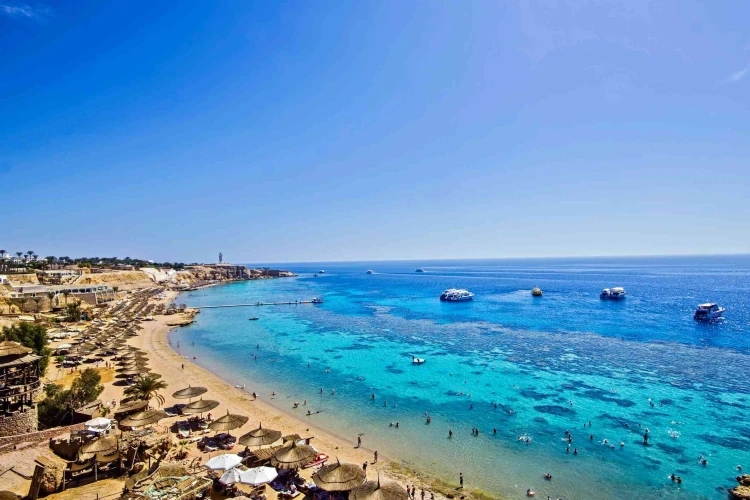
What to Know Before Traveling to Egypt for the First Time
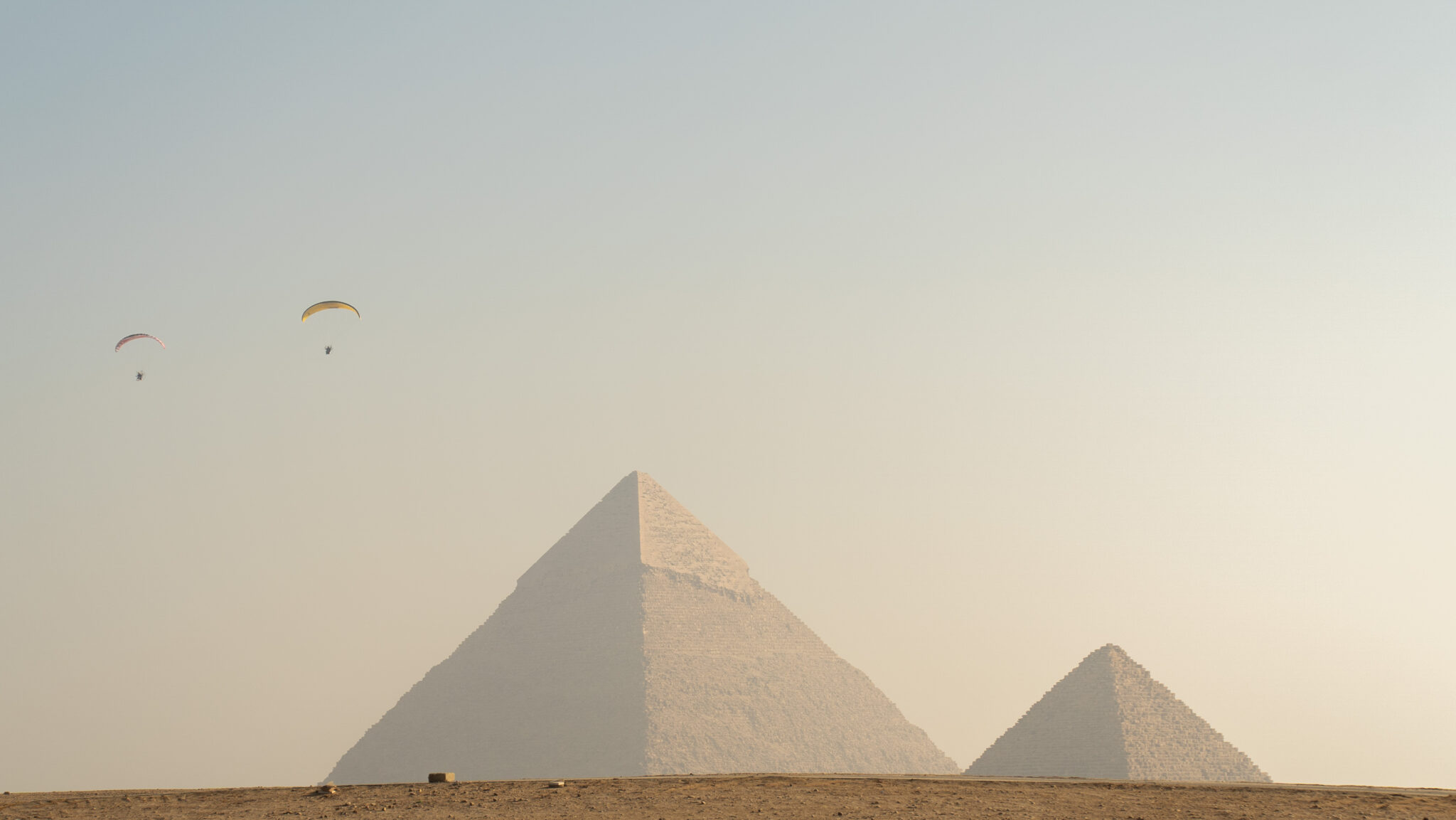
Egypt is one of those countries that arrives larger than you expected. You think you know it from the images — the Pyramids, the Nile, the desert horizon — and then you land, and the actual country reveals itself to be something far more layered, more alive, and more genuinely surprising than any image prepared you for.
Traveling to Egypt for the first time is not a complicated undertaking. The country has been welcoming foreign visitors for centuries and has built a tourism infrastructure that handles international travelers well. But like any destination with real character and depth, Egypt rewards those who arrive with some preparation. The smoother your practical knowledge, the more attention you can give to the country itself rather than to avoidable confusion. What follows is an honest account of what is genuinely worth knowing before you go.
Getting There
Entry, Visas, and Arrival
Most nationalities can enter Egypt through one of two straightforward routes. The first is a visa on arrival, available at the international airports in Cairo, Hurghada, and Sharm El Sheikh — you pay at a bank window before passport control, collect a stamp, and proceed. The second is Egypt's e-visa system, which lets you apply online in the days before your trip and receive approval that you present digitally at the border. The online route is worth using simply because it removes one queue from the arrival process, and the end of a long international flight is not the ideal moment to be standing in a visa line trying to find local currency.
Before any of that, check your passport carefully. Egypt requires at least six months of validity remaining from your date of entry, and this is enforced consistently. It is the kind of detail that is easy to overlook during the excitement of planning a trip and genuinely painful to discover at check-in. Sort this out well before you travel rather than on the morning of departure.
Travel insurance deserves more than a brief mention. Egypt's resort areas and major cities have competent private hospitals and clinics that deal with tourists regularly. The issue is not the quality of care — it is that healthcare operates on a payment-first basis, and costs without insurance cover can mount quickly. Take out comprehensive travel insurance before you leave, read what it covers for the activities you are planning, and keep your policy details somewhere you can access them without an internet connection.
The Practicalities
Money, Transport, and Daily Life
Egypt uses the Egyptian pound, and understanding how the payment landscape works will save you friction across the entire trip. Major hotels, larger restaurants, and established tour operators accept credit and debit cards without any difficulty. Beyond that, cash is what the country runs on. Local taxis, market vendors, smaller restaurants, dive centers, and the everyday transactions of travel all operate in cash. Carrying a reasonable amount of local currency at all times is less a preference than a practical necessity, and running out at the wrong moment — at a market stall, trying to pay a driver, attempting to tip a guide — is the kind of minor disaster that a little planning prevents entirely.
Currency exchange offices in town consistently offer better rates than the desks inside airports. The sensible approach is to change a small amount on arrival to cover your immediate needs — transportation, tips, a first meal — and convert the rest once you have settled somewhere and can make a more considered exchange. This is a habit that takes no real effort and makes a genuine difference over the course of a week-long trip.
On the subject of tipping: Egypt has a deeply embedded tipping culture that first-time visitors sometimes find disorienting. It is called baksheesh, and it is not an optional courtesy — it is a meaningful part of how service workers across the hospitality industry supplement their income. Hotel staff, restaurant servers, taxi drivers, guides, and anyone who provides you with a direct service will expect to be tipped. Approaching this with generosity and matter-of-factness, rather than treating each interaction as a negotiation, will make your experience considerably more relaxed and your relationships with local people considerably warmer.
Getting around within Egypt is uncomplicated once you understand the options. In resort cities, taxis are plentiful and widely used. The protocol is consistent: agree on a destination and a fare before you get in, not after. Ride-hailing apps operate in the main tourist cities and are worth downloading before you arrive — they give you a fixed fare upfront, which removes the negotiation entirely and suits first-time visitors who have not yet developed a feel for standard local rates. For travel between cities, private transfers, intercity buses, and domestic flights are all available depending on your destination and how much of the journey you want to be part of the experience.
Culture and Context
Understanding Egypt Before You Arrive
Egypt is a Muslim-majority country with traditions of hospitality, religious observance, and social warmth that shape daily life in ways that are not always immediately visible to first-time visitors. The resort zones along the Red Sea coast operate under a relaxed, internationally accommodating atmosphere, and visitors will feel entirely comfortable in beach attire by the pool or on the seafront. But Egypt beyond the resort perimeter is a different environment, and the visitors who understand this distinction from the beginning have a more genuine and more rewarding experience.
Dressing modestly when you leave the hotel zone is not a complex requirement — it simply means covering your shoulders and knees in markets, on city streets, when visiting mosques or temples, and in any setting that is not explicitly a beach or pool. A lightweight scarf or cover-up takes up virtually no space in a bag and transforms your reception in local environments. Egyptian people notice this kind of consideration and respond to it with a warmth that more than repays the minor inconvenience of packing one extra item.
Photography is an area where first-time visitors frequently make avoidable mistakes. The instinct to photograph everything in a country this visually extraordinary is completely understandable. The important thing to know is that photographing people without asking their permission first is considered rude, and in some contexts — near military installations, government buildings, or certain religious sites — it can create more serious complications. The habit of asking before you shoot takes very little time and generates goodwill that changes the quality of the images you come home with, not just the social dynamic in the moment.
If your visit falls during Ramadan, approach it as an opportunity rather than an inconvenience. Eating, drinking, and smoking in public during daylight hours is disrespectful to fasting Muslims, and adjusting your behavior accordingly is a simple act of consideration. In return, the evenings during Ramadan — when the fast breaks and the streets come alive with families, food, and celebration — offer a glimpse of Egyptian social life that most tourists never see. The country is different during Ramadan, and different in ways that are, with the right attitude, genuinely memorable.
Egyptian hospitality is one of the most genuine you will encounter anywhere in the world. The warmth that ordinary people extend to visitors — the offer of tea, the unsolicited help with directions, the conversation started with nothing but curiosity and good humor — is not a performance. Receive it honestly and you will find that Egypt opens up to you in ways that no guidebook can fully anticipate.
Health and Wellbeing
Staying Healthy Throughout Your Trip
Water is the most fundamental health consideration for any first-time visitor to Egypt. Tap water is not safe to drink anywhere in the country — this applies equally to the resort areas and the cities. Bottled water is inexpensive, widely available in supermarkets and convenience stores, and needs to become a reflexive habit from your first morning. The same caution extends to ice in drinks at informal establishments, raw vegetables in settings where hygiene is uncertain, and fruit that has been pre-cut and left out in the heat. None of this requires excessive anxiety — it requires the same common sense that applies in any hot country.
The Egyptian sun deserves particular respect. Between April and October especially, the intensity of ultraviolet radiation is considerably greater than most European visitors are accustomed to, and burning happens faster than intuition suggests. On open boats, the breeze keeps the body cool while the sun works unimpeded from above and reflects upward from the water simultaneously. During morning snorkeling sessions, the water provides its own cooling effect that masks how much sun exposure is accumulating on exposed skin. Apply proper sun protection before any outdoor activity, reapply frequently, and cover up during the peak midday hours rather than testing your skin's limits.
Stomach complaints are a possibility in any country with a different food environment from your own, and Egypt is no exception. The risk is considerably lower in well-established resort restaurants and higher in informal settings where food handling standards are less consistent. Freshly cooked food from busy local establishments is generally very safe — and often genuinely delicious. Where caution applies is with food that has been sitting out, particularly in heat, and with water used in preparation at places that are not set up to handle international visitors. Most travelers complete a trip to Egypt with no digestive issues whatsoever. The ones who encounter problems are usually the ones who took unnecessary risks in the first few days before they had adjusted to the environment.
The Mindset
How to Approach Egypt as a First-Time Visitor
Learn a few words of Arabic before you arrive. Thank you — shukran. Hello — ahlan. Please — min fadlak. The effort required is ten minutes, and the response these words generate when used naturally in conversation with Egyptian people is entirely disproportionate to the effort. Egyptians are genuinely moved when visitors try with the language, even imperfectly, and those few words open up interactions that polite English simply does not reach.
Adjust your relationship with time. Egypt operates on a rhythm that is more elastic than Northern European or North American schedules tend to allow for, and first-time visitors who arrive with packed itineraries and low tolerance for the unexpected will spend a meaningful portion of their trip frustrated by something that is not a problem but simply a different way of being. Things take longer than estimated. Plans shift. Conversations happen in the middle of errands and cannot easily be cut short because someone is in a hurry. Accepting this early — treating it as texture rather than obstruction — transforms the experience completely.
Leave the resort at least once. This is the single most important thing a first-time visitor to Egypt's beach destinations can do, and a surprisingly large number of tourists never manage it. A single afternoon in a local market, one meal at a family-run restaurant away from the hotel strip, one walk through the older part of the city — any of these will give you something genuine to take home that no poolside day ever could. Egypt is an extraordinary country when you make contact with it directly. The resort is a comfortable base; the country is what you came for.
"The travelers who get the most from Egypt are not the ones who planned the most carefully. They are the ones who remained curious when the plan changed."
Finally, carry your expectations loosely. Egypt will almost certainly not match the version of it you constructed in your imagination — it will be stranger, louder, more contradictory, more beautiful in unexpected places, and more challenging in unexpected moments than any prior conception of it allowed for. This is not a disappointment. It is the country revealing itself to be a real place rather than a postcard, and real places, when you engage with them honestly, are always more interesting than the image.
First-time visits to Egypt have a way of becoming the beginning of a longer conversation with the country. People come back. They come back because of the light on ancient stone at dawn, because of a conversation they had with a stranger that they still think about, because the Red Sea showed them something they had not seen anywhere else. Whatever draws you there the first time, travel with curiosity and without too many assumptions. Egypt will show you something genuinely its own — and it will do so on its own terms, in its own time, and with a generosity that tends to linger well after the flight home.



-webp.webp "Hilton")
-webp.webp "dusit")
-webp.webp "Marriott Hotels")
-webp.webp "Azimut Hotel")
-webp.webp "Golden Tulip")
-webp.webp "sheraton")
-webp.webp "westin hotel")
-webp.webp "Movenpick")