


-webp.webp)
The Mystery of the Ankh: What Did it Really Mean?
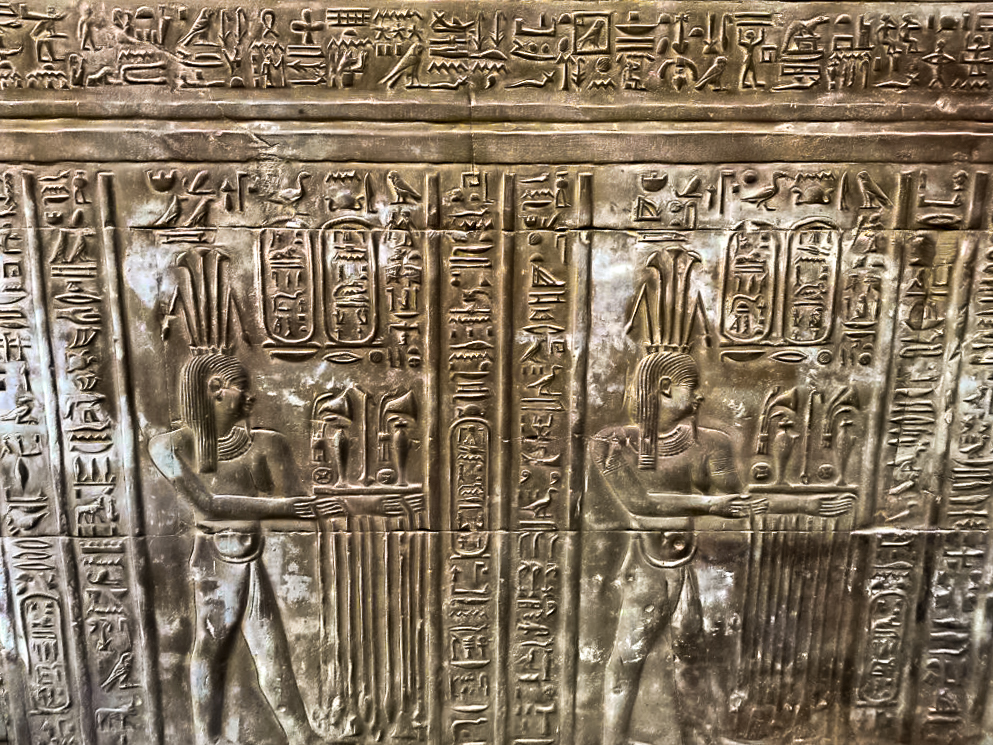
It is the most recognizable silhouette in the history of human civilization. You see it everywhere in Egypt: clutched in the hands of stone gods on the walls of Karnak, hanging from the necks of shopkeepers in the Khan el-Khalili, and glowing in the neon signs of Cairo’s trendy boutiques. The Ankh—that elegant, loop-headed cross—is the visual heartbeat of ancient Egypt.
But for the traveler, the Ankh can become so common that it loses its edge. We see it, we snap a photo, and we move on to the next carving. But what does it actually mean? Why were the ancient Egyptians so obsessed with this specific shape? And why, 3,500 years later, are we still drawn to it?
If you are traveling through the Nile Valley in 2026, understanding the Ankh isn't just an academic exercise—it is the key to unlocking the way the ancient world looked at the concept of "life."
1. The Anatomy of the Eternal
The Ankh is often called the "Key of the Nile," and visually, it lives up to the name. To the ancient eye, it wasn't a static image; it was a map of existence.
-
The Loop: The oval at the top is widely believed to represent the sun rising over the horizon, or perhaps the womb. It is the infinite—the cycle of the heavens that has no beginning and no end.
-
The Crossbar: This represents the horizon, the earth, and the division between the male and female principles. It is the plane upon which we humans walk.
-
The Stem: The long vertical bar represents the path—the road of the Nile, the spine of the body, and the journey from the mundane world into the afterlife.
When you look at the Ankh, you aren't just looking at a symbol for "life." You are looking at the union of the earthly and the divine. It is the moment the sun touches the horizon. It is, in the most literal sense, a graphic representation of the life force itself.
2. The "Breath of Life": The Ritual of the Ankh
This is the part of the mystery that most visitors miss. In the temples, you will rarely see an Ankh just "standing alone." It is almost always being held.
Look closely at the wall reliefs, particularly at sites like Luxor Temple or Philae. You will see the god Anubis or Horus holding the Ankh, not by the stem, but by the loop, and pressing the crossbar directly to the nose of the Pharaoh.
This wasn't a magical wand; it was a respiratory device. The ancient Egyptians believed that the "breath of life" (ankh) was a tangible substance that flowed from the gods to the King. By holding the Ankh to the nose, the god was physically transferring vitality, endurance, and eternal consciousness into the Pharaoh. It was an act of "re-charging." When you are standing in those dimly lit chambers, realize that you are looking at the ancient equivalent of an electrical plug; they believed they were plugging the King directly into the divine grid.
3. The Origins Debate: What is it?
If you ask ten Egyptologists what the Ankh originated as, you will get ten different answers. Part of the mystery is that the ancient Egyptians themselves didn't seem to write down "what it was." It was so fundamental, so taken for granted, that it didn't need an explanation.
-
The Sandal Strap Theory: The most popular archaeological theory is that the Ankh began as a sandal strap. If you look at the shape of an ancient Egyptian leather sandal, the loop goes around the ankle, and the straps bind it to the foot. It’s a humble origin, but a powerful one: the sandal represents the path, and the strap represents the life that walks it.
-
The Divine Union Theory: Others argue it is a stylized union of the male (the vertical bar) and female (the loop) anatomy, representing creation and birth.
-
The Nile Knot Theory: Some suggest it represents the knot of the goddess Isis, symbolizing the binding force that holds the river and the land together.
The truth? It is probably all of them. The ancient Egyptian mind was comfortable with "multi-layered" meanings. A symbol didn't have to be just one thing. It could be a sandal, a womb, and a sunset all at once.
4. The Ankh in the Afterlife: The Passport to Eternity
The Ankh’s role didn't end at death; that was where it truly began. In the Book of the Dead, the deceased is judged by Osiris. If the heart is lighter than the feather of truth, the person earns the right to enter the "Field of Reeds."
The Ankh is the visual representation of that right. You will see it painted on the walls of the tombs in the Valley of the Kings, essentially acting as a "Life Visa." It was the guarantee that even though the body had failed, the breath continued. It is why you see it clutched in the hands of the dead in coffin paintings—they were literally taking their "life" with them into the next world.
5. Why the Ankh Still Resonates in 2026
In an era of hyper-rationality and digital screens, the Ankh feels like an anomaly. It is "primitive" technology, yet it feels more "human" than a microchip.
When you see a traveler in Giza today wearing an Ankh, they are reaching for something that has been lost in the modern world: a physical connection to the concept of vitality. We have "health trackers" and "wellness apps," but the Ankh was the world’s first wearable tech. It was a constant reminder that life is a cycle, that you are part of the divine, and that the breath in your lungs is a gift from the infinite.
6. Summary: The Ankh at a Glance
| Aspect | The Ancient Reality | The Modern Interpretation |
| Primary Meaning | "Life" (specifically: eternal vitality). | Resilience, hope, and connection. |
| Ritual Usage | Held to the nose (The "Breath" transfer). | A symbol of "tuning in" to one's purpose. |
| Symbolic Origin | Likely a sandal strap (The Path). | A union of male/female/infinite. |
| Location | Tomb walls, amulets, and temple reliefs. | Jewelry, fashion, and cultural identity. |
7. Buying the "Right" Ankh: A Note for the 2026 Traveler
If you want to take an Ankh home with you, don't settle for the mass-produced plastic ones that feel like toys.
-
Look for Weight: A real, quality Ankh (whether silver, gold, or stone) should have some heft. It should feel like it matters.
-
Look for Hand-Crafting: In the souqs of Cairo or Luxor, look for the workshops where you can see the metal being hammered or the stone being carved. The "imperfections" in a hand-hammered Ankh are what make it real.
-
Ask the Story: Ask the jeweler, "What is the meaning behind this specific design?" A true craftsman will have an answer. If they just say, "It's for luck," keep walking. You want the Ankh that comes with a story.
Final Reflections
When you are walking through the temple of Medinet Habu or the Temple of Kom Ombo, try this: don't just take a photo of the Ankh. Find one carved in the wall, reach out (if permitted) and trace the loop with your finger.
The mystery of the Ankh isn't a flaw in the historical record; it is the reason we are still talking about it. It is a symbol that forces us to ask the most human question possible: What does it mean to be alive? The Egyptians didn't just ask that question—they carved the answer into the stone, hoping that 3,000 years later, someone like you would stop, look, and finally understand.



-webp.webp "Hilton")
-webp.webp "dusit")
-webp.webp "Marriott Hotels")
-webp.webp "Azimut Hotel")
-webp.webp "Golden Tulip")
-webp.webp "sheraton")
-webp.webp "westin hotel")
-webp.webp "Movenpick")
