
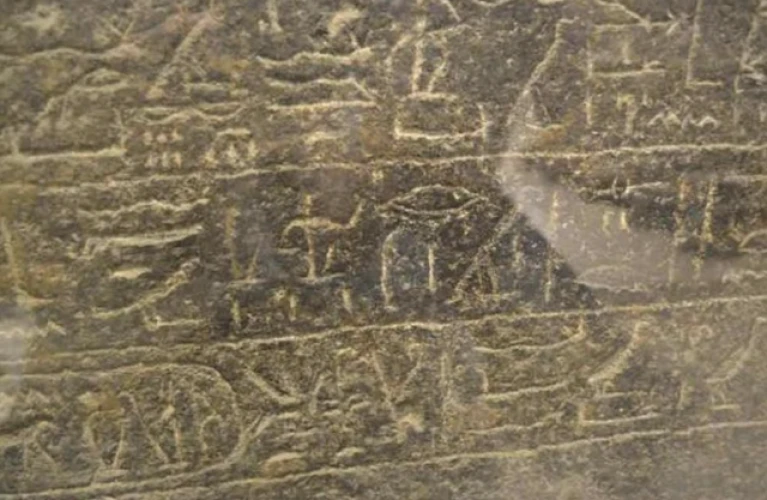
The Merneptah Stele: Uncovering the "Israel Stele" at the Egyptian Museum
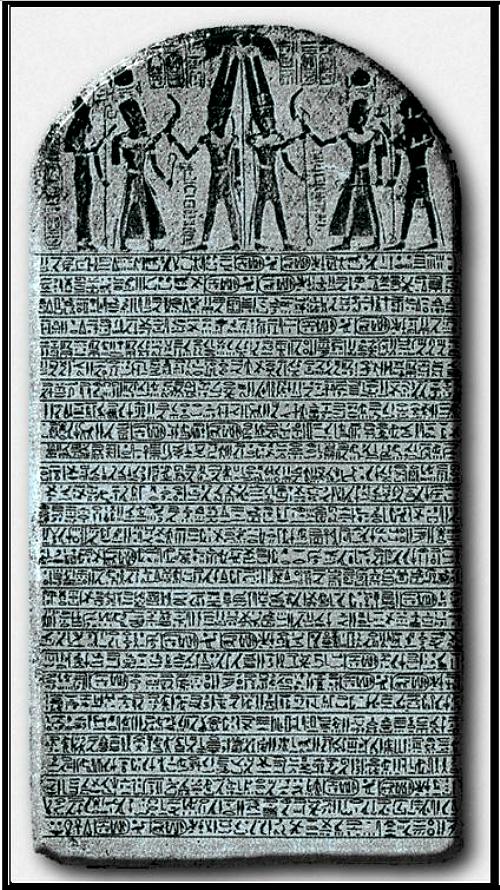
The Merneptah Stele: Uncovering the "Israel Stele" at the Egyptian Museum
The Egyptian Museum in Cairo offers visitors an extraordinary experience which surpasses all other global attractions. International visitors are most attracted to the golden funerary mask of Tutankhamun and the majestic royal mummies. The museum contains thousands of valuable artifacts which include a massive dark granite slab that people treat with special honor. The object lacks gold embellishments and it does not bear the sculpted form of a deity. The surface of the object displays complete coverage with precisely carved hieroglyphic symbols.
The Merneptah Stele has achieved recognition among historians and archaeologists under the name of the Israel Stele.
The monument rises more than ten feet in height and contains one of the most significant historical inscriptions which researchers have ever found. The text presents an intriguing view of New Kingdom military power and ancient Near East territorial disputes and the single sentence which has generated scholarly arguments for hundreds of years.
History enthusiasts who plan to visit Egypt should learn about the massive stone slab so they can observe it differently during their visit. Here is everything you need to know about the Merneptah Stele.
The Man Behind the Monument: Who Was Pharaoh Merneptah?
Your training includes information until the month of October in the year 2023. The stele requires us to study the life of its commissioning man. The ruler Merneptah served as the thirteenth child of King Ramesses II. Merneptah could not ascend to the throne until his sixties because his father who reigned for 67 years had reached an advanced age.
The transition to governing an empire after Ramesses II who established extensive achievements proved difficult. The Late Bronze Age period of stability began to break down because of worldwide changes. The period between 1213 BCE and 1203 BCE which marked Merneptah's rule required him to protect Egypt against an invasion from foreign powers.
The western region posed the most significant danger to security. The Libyans formed a large alliance which included a secretive group called the "Sea Peoples" to conduct a powerful invasion of the western Nile Delta. Merneptah confronted his enemies during the vital Battle of Perire. The Egyptian forces defeated the enemy although they faced overwhelming difficulties which protected their territory and prevented the empire from experiencing its total destruction.
A Monument Recycled: The Creation of the Stele
The Merneptah Stele exhibits one unexpected element of its physical construction process. The giant black granite slab exists as a permanent structure because Merneptah's team failed to extract it from the quarry. Merneptah followed the typical practices of his era when he transformed a pharaonic monument which had been created for Amenhotep III who had ruled a century before.
Merneptah's craftsmen turned the giant stone which they had to work on. The team created a new front face after maintaining the original back design which showed Amenhotep's work. The team created a beautiful poetic description of Merneptah's great military achievements.
The stele's upper section contains a half-moon-shaped arch which shows exquisite artwork. It shows Amun-Ra who serves as the chief deity of gods standing at the central point. The pharaoh Merneptah appears in the painting to receive the khopesh directly from Amun-Ra who presents it as a sign of his divine recognition and complete victory over all his adversaries.
The Discovery by Sir Flinders Petrie
The stele remained lost to time until the year 1896. Sir William Matthew Flinders Petrie, a brilliant and meticulous British archaeologist, was excavating the ruined mortuary temple of Merneptah on the west bank of the Nile at Thebes (modern-day Luxor).
The massive granite block appeared during the temple excavation work which Petrie and his team conducted at their first courtyard. The sand and debris removal process allowed Petrie to see how well the hieroglyphic inscriptions had been created.
Petrie enlisted the assistance of Wilhelm Spiegelberg, a German philologist, to conduct text translation right there in the field. The inscription's last lines revealed a name to Spiegelberg which made Petrie stop moving. The name discovered by Petrie represented a first-time discovery which had never been found on ancient Egyptian monuments. Petrie reportedly turned to his team and boldly stated, "This stele will
Translating the Text: The "Israel" Inscription
The Merneptah Stele contains more than 90 percent of its content as a poetic tribute to the pharaoh's triumph against the Libyan forces. The account demonstrates how the enemy faced total destruction while the Libyan leader escaped and Egypt experienced complete peace after its borders achieved safety.
The final three lines of the stele serve as the element that established its international recognition. The text shows the eastern border military operation that crossed into Canaan through its last lines which begin from the western border of the territory. The text presents a collection of defeated cities and their respective populations to demonstrate that Merneptah controlled territories which extended to every direction.
The final stanza translation presents the following content.
The princes are prostrate, saying, "Peace!" The Nine Bows people stay silent because they refuse to raise their heads. The Canaan has been plundered into every sort of woe The Canaan has been plundered into every sort of woe: Ashkelon has been overcome; Gezer has been captured; Yano'am is made non-existent. The land of Israel lies destroyed while his descendants have vanished; Hurru has lost her husband because of Egypt.
The name "Israel" appeared in the middle of a list which mentioned Canaanite city-states that had been defeated. The single line which exists from 1208 BCE is the earliest documented extra-biblical reference to Israel.
The Hidden Meaning in the Hieroglyphs
The significance of this inscription becomes clear through examination of the ancient Egyptian writing system which demonstrated how they wrote their word. The Egyptian hieroglyphic writing system uses specific symbols at the end of words called "determinatives." The symbols function as pronunciation guides which enable readers to identify the word's grammatical category.
The scribe used the city-state or foreign land determinative symbol after he carved the names of Ashkelon Gezer and Yano'am. The scribe used a different determinative when he carved the word "Israel." The man and woman symbols appear above three plural lines. In ancient Egyptian grammar the determinative does not refer to an established nation because it designates two groups: foreign peoples and nomadic tribal groups.
This small grammatical element functions as an important historical evidence for historians. The evidence shows that the group which became known as Israel existed in Canaan during 1208 BCE as a semi-nomadic pastoral community instead of an established kingdom. The evidence creates an essential reference point which helps people understand both the ancient Near East timeline and the start of biblical stories.
Experiencing the Stele in Cairo
The Egyptian Museum in Tahrir Square, Cairo, provides an important experience when visitors see the Merneptah Stele. The display presents two historical periods which include the final years of the Egyptian New Kingdom and the first appearance of a group that changed the course of world history.
Unlike the smaller, more delicate artifacts encased in glass, the sheer size and commanding presence of the stele demand your attention. You can clearly see the intricate artistry of the hieroglyphs and trace the very lines that Sir Flinders Petrie rushed to translate over a century ago.
Planning Your Journey
Egypt is a land where history does not just live in books; it towers over you in stone. As you look forward to the 2026, 2027, and 2028 travel seasons, making sure your itinerary captures both the famous highlights and the deeply significant artifacts like the Israel Stele is crucial for a truly enriching experience.
For our international visitors joining us from the United States, the United Kingdom, and around the globe, navigating the vastness of the Egyptian Museum with expert insight makes all the difference. If you are ready to craft a bespoke, deeply immersive Egyptian journey—whether that includes a specialized tour of Cairo's antiquities or a luxurious, slow-paced Dahabiya Nile cruise—reach out to the team at New Travel Dynamics. You can explore our itineraries on our website at dynamics-travel.com or send us an email to begin designing your perfect adventure.




-webp.webp "Hilton")
-webp.webp "dusit")
-webp.webp "Marriott Hotels")
-webp.webp "Azimut Hotel")
-webp.webp "Golden Tulip")
-webp.webp "sheraton")
-webp.webp "westin hotel")
-webp.webp "Movenpick")