


-webp.webp)
The Forbidden Leaf of Pharaohs: History, Folklore, and the Magic of Egyptian Molokhia
Molokhia: The Velvety Green Soup That Defines the Soul of Egyptian Cuisine
If you slip into an Egyptian apartment building around two o’clock on a hot Friday afternoon, you really don’t even need to look at a calendar to figure out what day it is. You just take a deep breath, like right away.
Because floating through open windows, down the stairwells, and out into the sun drenched streets is this aroma so intoxicating, so intensely savory, that it kind of snaps you in place. It is the smell of a mountain of crushed garlic and earthy coriander sizzling away in pure golden clarified butter. And then—seconds later, a dramatic , loud hiss bounces around like it’s coming from everywhere , a dozen different kitchens basically.
This is the Tasha, the sacred, roaring climax of cooking Molokhia (pronounced muh-lo-KHEE-ya).
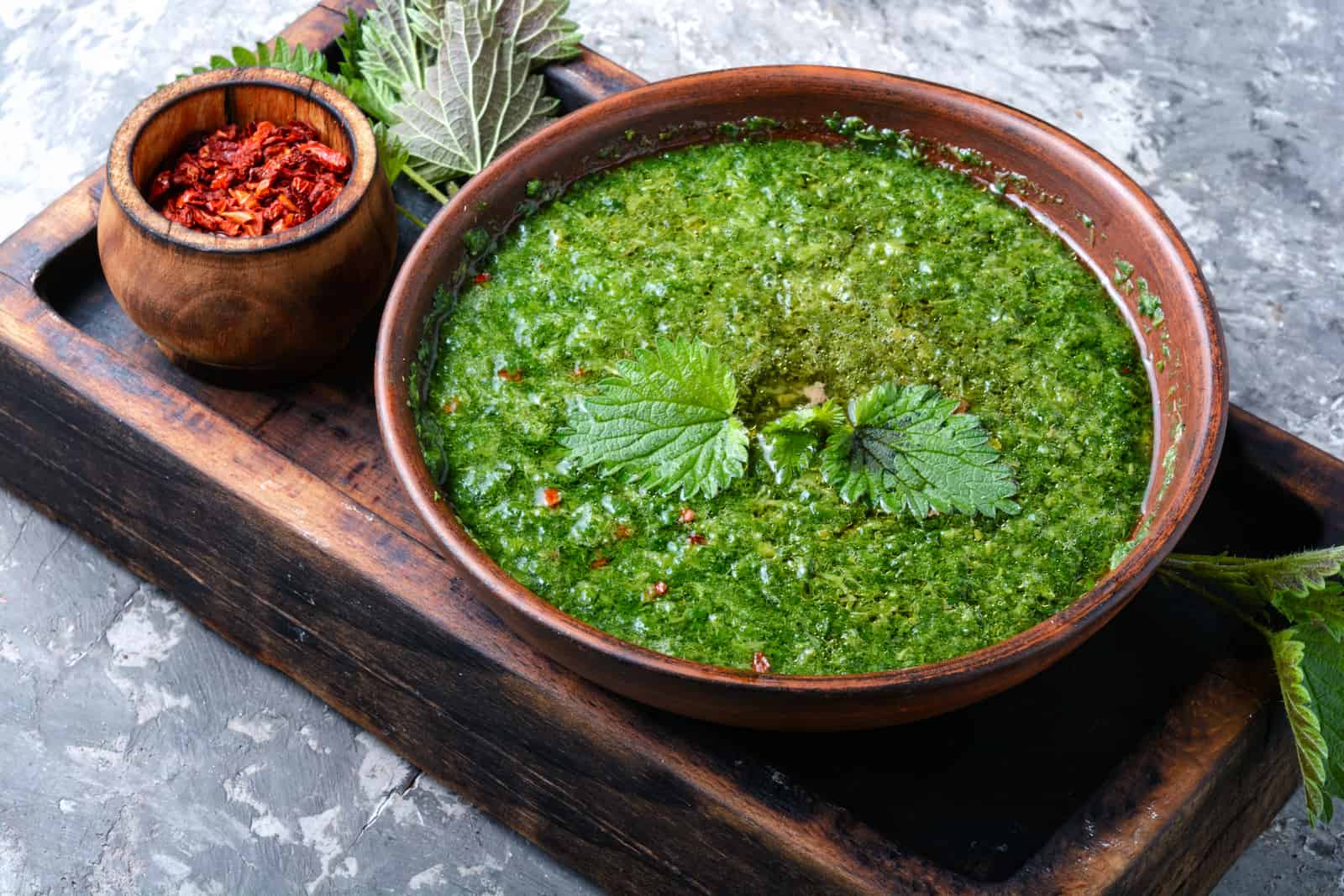
To an outsider, especially some foreign traveler who thinks they already know food, Molokhia can feel like a bit of a visual shock. It’s a thick deeply green, and distinctly viscous soup, served piping hot in traditional earthenware bowls. It doesn’t resemble a classic Western broth, and it doesn’t really behave like a velvety European cream soup either. Instead, it has this unique silky stretch, that stubbornly refuses to be compared, it’s just its own thing.
Still, to every Egyptian person alive, whether they grew up in a small village along the banks of the Nile or they’re in some high end corporate office in London, Molokhia is the ultimate taste of home. It’s the kind of dish that pulls up strong emotional nostalgia, like a culinary masterpiece that outlasted the rise and fall of dynasties, and it stays the undisputed heartbeat soup of Egypt.
1. The Forbidden Leaf: The Royal and Rebellious History of Molokhia
Like almost everything else in the Nile Valley, Molokhia comes with a side order of grand history and colorful folklore… somehow, you feel like it belongs there. This soup is made from the leaves of Corchorus olitorius , which in English is called jute mallow, or also Jews’ mallow.
Now, there’s an ancient legend, not perfectly neat but still pretty clear. The plant is said to have first grown wild along the fertile, muddy floodplains of the Nile. For centuries, everyday people stayed away from it, thinking it was a poisonous weed, a real nasty bit of plant life. Then, during the New Kingdom , an Egyptian pharaoh fell gravely sick with a severe stomach trouble. The royal physicians , in total desperation, prepared a warm, comforting broth from these finely minced green leaves. The king drank it, got that miraculous recovery, and right away declared the plant a royal treasure, like done deal.
Even the name kind of tells the whole thing. It comes from an ancient phrase Mulokia, which is said to translate literally to “that which belongs to the royals.” So for generations , ordinary citizens were strictly prohibited from eating it , because it was a luxury reserved only for the divine rulers of Egypt, not for anyone else, apparently.
The Midnight Ban of the Mad Caliph
Centuries later, in the Fatimid Dynasty at the end of the 10th century, Molokhia kinda became the center of this weird political scandal. The eccentric, and famously jumpy Caliph Al-Hakim bi-Amr Allah issued this broad royal decree, basically forbidding the eating of Molokhia across the whole empire, like it was some serious thing.
Now, sure some historians insist that he banned it because he thought it had strong aphrodisiac power, you know, something that would distract his subjects from… whatever. But other people mutter a totally different story, that he just disliked the dish a lot and couldn’t tolerate the idea of his people enjoying something he didn’t, simple as that.
And honestly, that’s pretty human, the ban made Egyptians love it even more. They prepared it in secret, turning the chopping of green leaves into a calm kind of tasty domestic mutiny. Then once his reign was over Molokhia came back out in public and , pretty fast, it ended up solidifying its spot as the go to, democratic comfort food for everyone.
2. The Art of the (Khart): Why Mechanics Matter
You can’t really make authentic Egyptian Molokhia with some modern electric food processor , or a blender. If you do, any self respecting Egyptian grandmother will, you know, politely but firmly show you the door like yeah this is not happening in her kitchen anymore.
If you toss fresh Molokhia leaves straight into a mechanical blender, those fast spinning blades smash up the leaf cells. Then way too much water and heat gets released at once. So the soup ends up losing that lively jade green look, it turns bitter too, and it splits, meaning the dense green mash will sink to the bottom of the pot, and you’re left with this sort of watery broth sitting on top… kind of sad really.
Instead, Molokhia creation depends on a beautiful physical rhythm ritual, and it uses this traditional tool called a Makhrata.
The Makhrata is a heavy, double handled, crescent shaped steel blade. The chef takes the fresh green leaves off their stalks, washes them carefully, then spreads everything out on a big clean cloth to dry fully in the shade. When the leaves are dry, they get gathered and piled on a large wooden board.
Then the cook grabs the two handles of the Makhrata and rocks that curved blade back and forth over the leaves in a hypnotic sort of steady motion. Rock rock, chop chop. Little by little, the leaves go from whole foliage down to tiny uniform green bits. This hand method chops without bruising, it keeps the essential juices intact, and that’s what leads to the signature silky thickness once those greens go into the hot broth.
3. The Tasha and the "Gasp": The Soul in the Pot
So the base of a magnificent Molokhia is basically this rich, intensely flavorful, well-seasoned bone broth… you know, traditionally it’s done by slow simmering chicken, rabbit, or beef bones, with cardamom, mastic, onions, and bay leaves. The rabbit one (Molokhia bil-Araneb, some people treat it like the absolute ultimate luxury deal) is… well, it’s something else.
Then the minced green leaves get whisked gently into that simmering broth over a low flame, but here’s the thing, at this stage the soup feels kind of incomplete, like it forgot the most important part. Like it’s missing its soul.
And that soul arrives via the Tasha. In a separate, small frying pan, the cook melts a generous dollop of pure Egyptian ghee (samna). After that they add this absurd amount—like a literal mountain—of finely crushed fresh garlic, then a massive spoonful of dry ground coriander seeds too. The whole pan gets swirled and tended, continuously, over the fire until the garlic turns into this shimmering golden brown, and the kitchen fills with this fierce, almost heavenly smell. Very dramatic, but also very real.
Ok then comes the moment. The sizzling, bubbling garlic oil gets poured straight into the deep green pot of Molokhia, and it hits with this roaring, volcanic hiss, like the soup suddenly woke up.
And this is where the Myth of the Shah'ah (The Gasp) comes in. Deep-rooted Egyptian kitchen tradition says that at the exact split second the hot garlic oil touches the green soup, the cook has to take this sudden sharp dramatic gasp of air—called the Shah'ah.
Now ask ten different locals why they do it, and they will all laugh and tell you the same story: it’s an old superstition that kinda translates energy into the pot. If you don’t gasp, they say the spirits will frown, the garlic won’t “marry” with the leaf, and the Molokhia will ruin. Modern science might roll its eyes, sure, but the Shah'ah is still there, still lovingly performed, a kind of beautiful universally practiced bit of performance art, and somehow it adds that pure human love, plus fun, to the whole cooking process.
4. How to Feast on Green Gold: The Two Elite Techniques
When Molokhia lands on the dinner table, it is usually sitting there with a mountain o f fluffy white rice topped with crispy vermicelli (Roz bil-Sha'reya), plus a platter of roasted chicken or rabbit, and then a side of pickled tomatoes or eggplant that tastes like garlic and lime, kind of sharp but mellow at once.
As a traveler, you end up with two separate, culturally okay ways to handle your bowl, even if you do it a bit differently each time.
Technique A: The Rice Bed
This is the everyday home method. You take a generous scoop of the hot vermicelli rice, and you kind of spread it out across your plate, evenly ish. Then you use a deep ladle and pour a generous amount of that thick green Molokhia right over the rice, so it becomes this cozy green cover. After that you take a spoon, scoop up a bite of the soaked rice along with a piece of tender roasted chicken, and you eat it— just let the rich garlicky mix do its thing.
Technique B: The "Deer’s Ear" Flatbread Dip
For the street food lovers, and the kinda purists too, Molokhia is supposed to be eaten with Egypt’s legendary whole wheat flatbread, Eish Baladi. You just tear off this little triangular wedge of the warm chewy bread, then kinda… with your thumb and first two fingers, you fold the corners inward, to form this sturdy small pouch shape people call Ozn El-Ghazal (the deer’s ear).
Then you dip that bread-pouch straight into the earthenware bowl of Molokhia, and you scoop up a thick velvety layer of the green soup, no hesitation. The soup’s elasticity really sticks, and it clings so nicely to the rough, bran coated texture of the bread. One second it’s simple, the next it’s an immediate burst ,of savory garlic sweet coriander and a deep rich broth.
Insider Tips for the Culinary Adventurer
Rabbit is the Regal Choice: While chicken Molokhia is sort of the daily standard, if you really want the absolute pinnacle of this whole culinary art, go find a traditional restaurant that serves Molokhia bil-Araneb, (Molokhia with Rabbit) . Rabbit meat is naturally lean, and there’s a gentle sweetness to it, plus its bones will give you this remarkably rich, gelatinous broth that just fits too well with the jute mallow leaf.
The Secret Acid Lift: Always keep an eye out for a small bowl of lemon wedges, or sometimes you’ll see a light vinaigrette made with vinegar and finely chopped red onions sitting on the table. If you squeeze just a few drops of fresh lemon juice straight into your bowl of Molokhia right before eating, it cuts through the richness of the ghee , and that garlic too. The whole flavor profile gets brighter, like instantly.
A Natural Nutritional Powerhouse: Beyond how it tastes, Molokhia is an absolute superfood, truly. The jute mallow leaf is packed to the brim with iron, calcium, potassium, and vitamins A, C, and E. It’s incredibly calming for the digestive system, and it gives you an immediate, clean hit of energy, almost like a reset button.




-webp.webp "Hilton")
-webp.webp "dusit")
-webp.webp "Marriott Hotels")
-webp.webp "Azimut Hotel")
-webp.webp "Golden Tulip")
-webp.webp "sheraton")
-webp.webp "westin hotel")
-webp.webp "Movenpick")
