
The Five Days of Nut: How the Egyptian Calendar Was Born
In the modern world, we complain about "Leap Years" and the clunky way our calendar tries to keep up with the sun. But for the ancient Egyptians, the calendar wasn't just a grid of numbers—it was a fragile peace treaty between a cursed goddess and a gambling god.
If you are visiting Egypt in 2026, you are standing in a land that functioned on one of the most sophisticated time-keeping systems in human history. But at the heart of that system lies a story of rebellion, a game of high-stakes board games, and five "lost" days that changed the world forever. This is the human story of the Five Days of Nut.
1. The 360-Day Curse
In the beginning, the Egyptian year was a perfect circle. There were 12 months, each with 30 days, totaling 360 days. It was neat, mathematical, and according to the sun god Ra, it was complete.
However, Ra was a jealous ruler. When he discovered that the sky goddess Nut and the earth god Geb were deeply in love and intended to have children, he was struck by a prophetic fear. He feared their children would eventually overthrow him. To prevent this, Ra laid down a terrifying celestial decree:
"Nut shall not give birth on any day of any month of any year."
Because the year was strictly defined as 360 days, Ra believed he had effectively locked the door to the future. Nut was trapped in an eternal pregnancy, unable to bring her children into a timeline that had no room for them.
2. Enter Thoth: The Cosmic Gambler
Nut turned to Thoth, the ibis-headed god of wisdom, magic, and writing. Thoth was the "architect of time," and he saw a loophole in the very fabric of reality. He knew he couldn't break Ra's curse directly, but he could expand the year.
Thoth approached Khonsu, the Moon god. In those days, the moon’s light was as bright as the sun’s. Thoth challenged Khonsu to a series of games of Senet (the world’s oldest board game, which you can still see carved into the stones at the Temple of Kom Ombo today).
The stakes were high: Thoth wanted a portion of the moon’s light. Being the god of wisdom, Thoth won time and time again. By the end of the match, he had won enough moonlight to create five extra days.
Because these five days were "won" from the moon and not part of the original 360-day solar year created by Ra, they existed outside the calendar. They weren't part of any month. They were "intercalary" days—a glitch in the system that allowed Nut to bypass the curse.
3. The Five Children of the "Days Upon the Year"
Nut used these five magical days (known in Greek as the Epagomenal Days) to finally give birth. Each day brought a new deity into the Egyptian pantheon, and in 2026, we can still trace the personalities of these gods through the temples that bear their names:
-
Day 1: Osiris – The god of the afterlife and rebirth. Born to bring order to the human soul.
-
Day 2: Horus the Elder – The sky god and protector of the Pharaohs.
-
Day 3: Set – The god of chaos, storms, and the desert. Fittingly, he was said to have "burst" from his mother's side.
-
Day 4: Isis – The goddess of magic, motherhood, and healing. The most beloved of the Egyptian deities.
-
Day 5: Nephthys – The goddess of mourning and the night, the "Mistress of the House."
By the end of the fifth day, the Egyptian family tree was complete. The world now had gods to manage death, magic, kingship, and chaos. But the calendar had changed forever; the year was now 365 days long.
4. The Human Experience of the Five Days
For the average Egyptian living along the Nile 3,000 years ago, these five days weren't just a myth—they were a time of profound transition.
-
The Days of Limbo: Because these days didn't belong to any month, they were considered "dangerous." The boundaries between the world of the living and the world of the gods were thin.
-
The "Year’s End" Festival: People didn't usually work during these five days. Instead, they focused on rituals to ward off the chaos of Set and celebrate the birth of Osiris and Isis. They wore amulets (often featuring the Ankh or the Eye of Horus) to protect themselves during this period of "unstructured" time.
-
The Sothic Cycle: In 2026, we understand the science behind this. The Egyptians realized that even with 365 days, the calendar still slipped slightly. They eventually tied their calendar to the rising of the star Sirius (Sothis), which heralded the flooding of the Nile.
5. Why This Matters for the 2026 Traveler
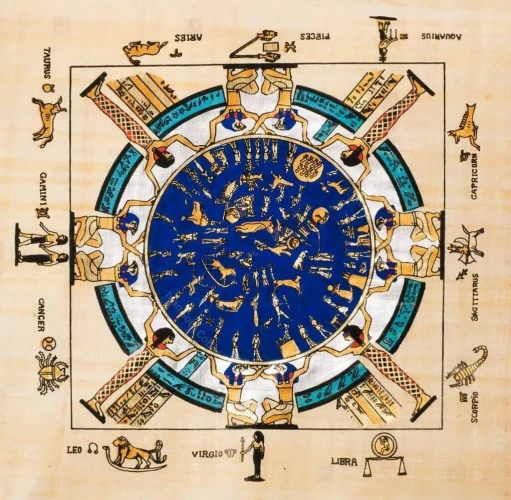
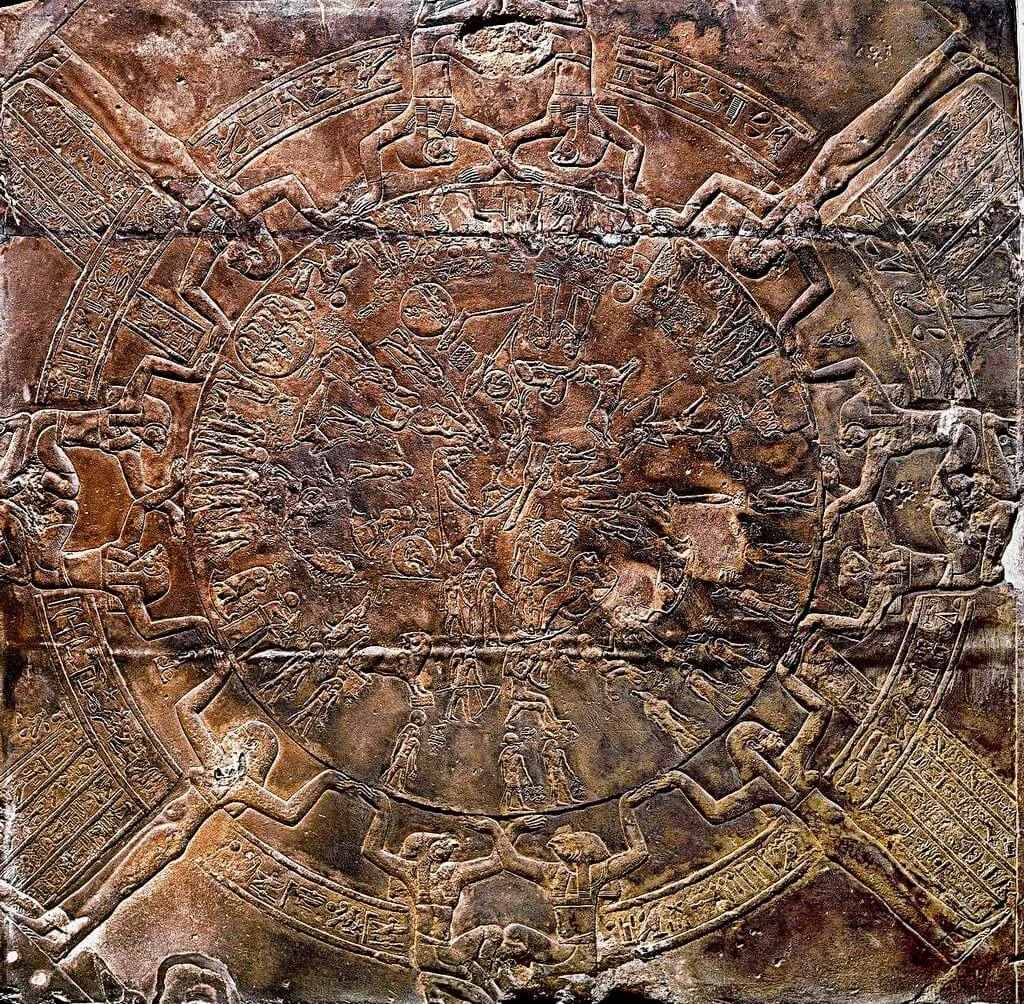
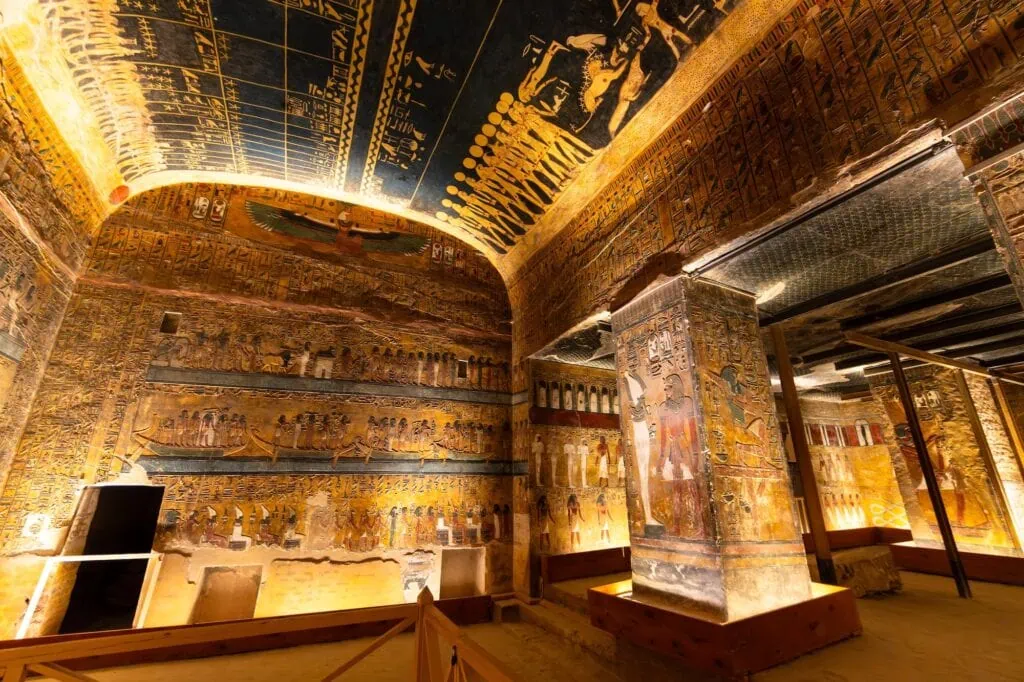
When you visit the Temple of Dendera or the Temple of Edfu this year, look at the ceilings. You will see the goddess Nut stretched out, her body a map of the stars.
| Element | The Mythic Meaning | The Scientific Reality |
| Nut's Body | The Sky Mother. | The Milky Way galaxy. |
| The 5 Days | The Loophole of Thoth. | Correction for the Earth's orbit. |
| Moonlight Bet | The loss of lunar brightness. | The waning of the lunar cycle. |
| Osiris' Birth | The start of "Civilization." | The arrival of the Nile flood season. |
Understanding the "Five Days of Nut" changes how you look at the ruins. You realize that the temples weren't just buildings; they were clocks. The Egyptians built their entire society around the idea that time was a living thing that had to be managed, respected, and occasionally outsmarted.
6. A "Humanized" Lesson from the Myth
The story of the Five Days of Nut is ultimately a story about human ingenuity. It’s about the idea that even when the "system" (represented by Ra) seems rigid and impossible, there is always a way for wisdom (Thoth) and love (Nut) to find a loophole.
It reminds us that our modern lives, governed by seconds and minutes on a digital screen, are rooted in a time when humans looked at the moon and the stars and saw a family drama. We are still living in the "extra time" that Thoth won for us.
7. How to Celebrate the "Extra Days" in Egypt Today
If you are lucky enough to be in Egypt during the transition of the seasons, take a moment to "step outside the calendar" just like Nut did.
-
Play a Game of Senet: You can find modern replicas in the markets of Cairo. As you move your pieces across the board, remember that you are playing the same game Thoth used to win the light of the moon.
-
Watch the Moon over the Nile: In Aswan, where the air is clearest, look at the moon and realize it is slightly "dimmer" because of Thoth’s ancient winnings.
-
Reflect on Rebirth: The five days were about bringing something new into a world that said "no." Ask yourself: what new idea or "child of the spirit" are you trying to bring into your own life this year?
The Final Verdict
The Egyptian calendar is a masterpiece of human thought, but it began with a mother's love and a god's wit. The "Five Days of Nut" teach us that time is not just a measurement of the sun—it is the space we create for life to happen.
In 2026, as we rush through our 365 days, perhaps we can learn from the ancient Egyptians and take a few "Epagomenal" moments to simply exist outside the schedule, under the protective arch of the sky.





-webp.webp "Hilton")
-webp.webp "dusit")
-webp.webp "Marriott Hotels")
-webp.webp "Azimut Hotel")
-webp.webp "Golden Tulip")
-webp.webp "sheraton")
-webp.webp "westin hotel")
-webp.webp "Movenpick")