
The Cave of Dreams: Hidden Frescoes and Ancient Wisdom at Deir El-Surian
.webp)
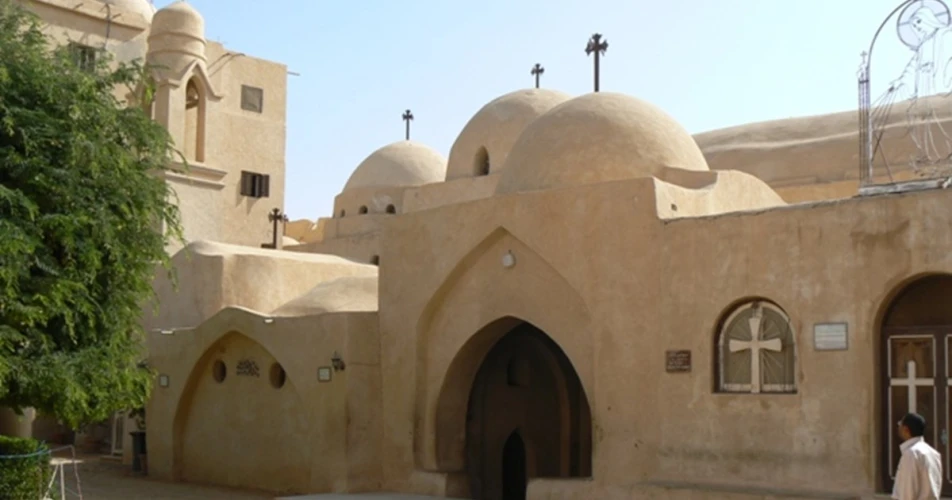
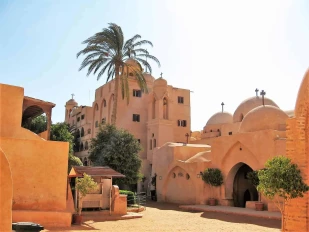
The fortress of faith which exists in Wadi El Natrun has maintained its existence for more than 1,500 years. The Monastery of the Syrians which people call Deir El-Surian exists as a structure that connects Egyptian and Levantine cultures while preserving important Christian artifacts and texts.
The human presence at Deir El-Surian through its entire existence until 2026 shows how people want to safeguard their essential values because we now experience quick changes in digital technology and temporary fashion trends. The site has served as a writing center for monks who dedicated their lives to creating handwritten copies of manuscripts while artists created sacred artwork that remained concealed for almost 1,000 years. The "Cave of Dreams" represents a location where humans maintained their inner light of knowledge throughout all time.
1. A Tale of Two Lands: The Syrian-Egyptian Fusion
The monastery founded its first existence in the 6th century when monks who faced a theological dispute required new living space. The 8th century marked the start of its exceptional period which occurred after a group of Syrian monks acquired ownership of the property.
Deir El-Surian functioned as a rare "multicultural" center for several centuries. Coptic monks from the Nile Valley lived side-by-side with Syrian monks from Mesopotamia. Egyptian desert austerity combined with Eastern mystical traditions to create a special atmosphere.
The Fortress of Peace: The monastery appears as a large protective wall which defends its residents against Bedouin attacks. The inhabitants dedicated their lives to prayer and study instead of preparing for war inside those protective barriers.
2. The Library: The World’s Oldest Time Capsule
Deir El-Surian is legendary among historians as the home of one of the most important ancient libraries in existence. The site used to provide the most extensive collection of Syriac manuscripts which existed anywhere in the world.
The Hidden Treasure: European scholars who visited the monastery during 18th and 19th centuries found thousands of ancient manuscripts which had been hidden inside the cellar known as the "oil cellar". The British Library and the Vatican currently possess these ancient scrolls which include some of the oldest scrolls that date back to the 4th century.
A Humanized Record of Knowledge: The monks preserved works on Greek philosophy, medicine and science that had been translated into Syriac. The "Dark Ages" period shows us that the desert monasteries functioned as the most brilliant centres of education which preserved human knowledge during worldwide destruction.
3. The Frescoes: Miracles Emerging from the Plaster
The Church of the Virgin at Deir El-Surian contains one of the most impressive art restoration projects which has emerged during the 21st century. For almost eight centuries the monastery concealed its most exquisite treasures behind plain gray plaster which covered all its beautiful elements.
The 10th-Century Reveal: The 1990s marked the beginning of restoration work which discovered hidden frescoes that remained buried beneath layers of soot and dirt until present day. The colors which include lapis lazuli blues deep earthy reds and shimmering golds appear fresh because they maintained their original appearance during the extended period of coverage.
The Annunciation: The Virgin Mary and the Angel Gabriel appear in one of the most renowned frescoes. The artistic style demonstrates extreme complexity which presents emotional artistic expressions that surpass common artistic expression from that historical period.
The Artist's Heart: Viewing these paintings provides a fully human experience. The ancient artist from one thousand years ago used brushstrokes to show his attempt at depicting divine wonder within an isolated desert church during nighttime.
4. The Door of Prophecies: A Puzzle in Wood
The wooden screen which functions as an iconostasis shows artistic mastery through its 10th-century design.
The door contains multiple small panels which form its structure and are decorated with ivory inlays. The door features panels which display different geometric designs and a cross pattern.
The panels show seven distinct periods which cover the entire existence of the Christian Church from its apostolic beginnings to the final judgment. The sculpture acts as a "silent sermon" which presents human beings attempt to represent all human history through a single door.
The door design required precise execution because the monks had to complete their work using only their existing knowledge. The monks practiced their religious beliefs through their work activities according to the monks' definition of work.
5. The Tree of Saint Ephrem: A Living Legend
The churchyard features an enormous ancient tamarind tree which tells a story that embodies the "humanized" nature of the building.
The Staff that Grew: Legend states that Saint Ephrem the Syrian entered the monastery and put his staff down against the wall. The staff became a tree which still provides shade because of his extraordinary grace.
The Symbol of Roots: The tree stands as the core truth of Deir El-Surian which shows that we can create lasting beauty when we establish our "roots" in a place dedicated to faith and study despite facing desert conditions.
6. Why Deir El-Surian Matters in 2026
The Power of Slow shows that the monastery was built on the concept of stability. The monks have dedicated their entire existence to their cell for 50 years which they use for prayer and work. The ability to concentrate at this degree of focus creates an intriguing aspect about human nature.
Cultural Preservation: It reminds us that we are the guardians of those who came before us. The monks protected the manuscripts and frescoes because their preservation enabled future generations to access a vital part of human history.
The Sanctuary of Human Dreams
Deir El-Surian functions as a sacred space which demonstrates how humans search for life purpose. The site exists as a "Cave of Dreams" because its builders created it to pursue their ambitious dreams which extended beyond their individual existence. They envisioned safeguarding knowledge while they sought to create artistic beauty and they aspired to build an everlasting bond with the divine which would withstand eternal time.
When you stand in the Church of the Virgin and look up at those 1,000-year-old frescoes, you aren't just looking at paint on a wall. The person who occupied that location centuries before you created the current vision you see today. You belong to an unbroken human tradition which extends back 1,500 years.
Deir El-Surian demonstrates that people can find company through their books and art and faith even when they find themselves in the most remote desert locations.



-webp.webp "Hilton")
-webp.webp "dusit")
-webp.webp "Marriott Hotels")
-webp.webp "Azimut Hotel")
-webp.webp "Golden Tulip")
-webp.webp "sheraton")
-webp.webp "westin hotel")
-webp.webp "Movenpick")