
The Aten Revolution: Humanity’s First Brush with Monotheism
The Aten Revolution: Humanity’s First Brush with Monotheism
The "Amarna Period" represents a remarkable historical period which extended throughout the ancient Egyptian history. Atenism emerged as the main force which disrupted Egyptian society because it sought to eliminate all existing deities through its religious practices. Pharaoh Akhenaten directed the movement which conducted their investigation into "Truth" as well as light and all-encompassing power.
What Was Atenism?
Egyptian religious belief systems maintained their vibrant, extensive diversity until Akhenaten established his reign. The deities Amun, Isis, and Ptah possessed intricate mythologies and unknown ceremonial practices and animal representations. The priests who belonged to the highest status maintained their exclusive right to enter the "holy of holies" chambers, which contained their sacred objects.
Atenism created a new paradigm for belief systems. The system removed all mythical elements and directed attention toward The Aten, which existed as the only visible deity.
The Aten existed as a deity that transcended all human and animal forms. The Aten manifested itself through the sun's physical solar disk.
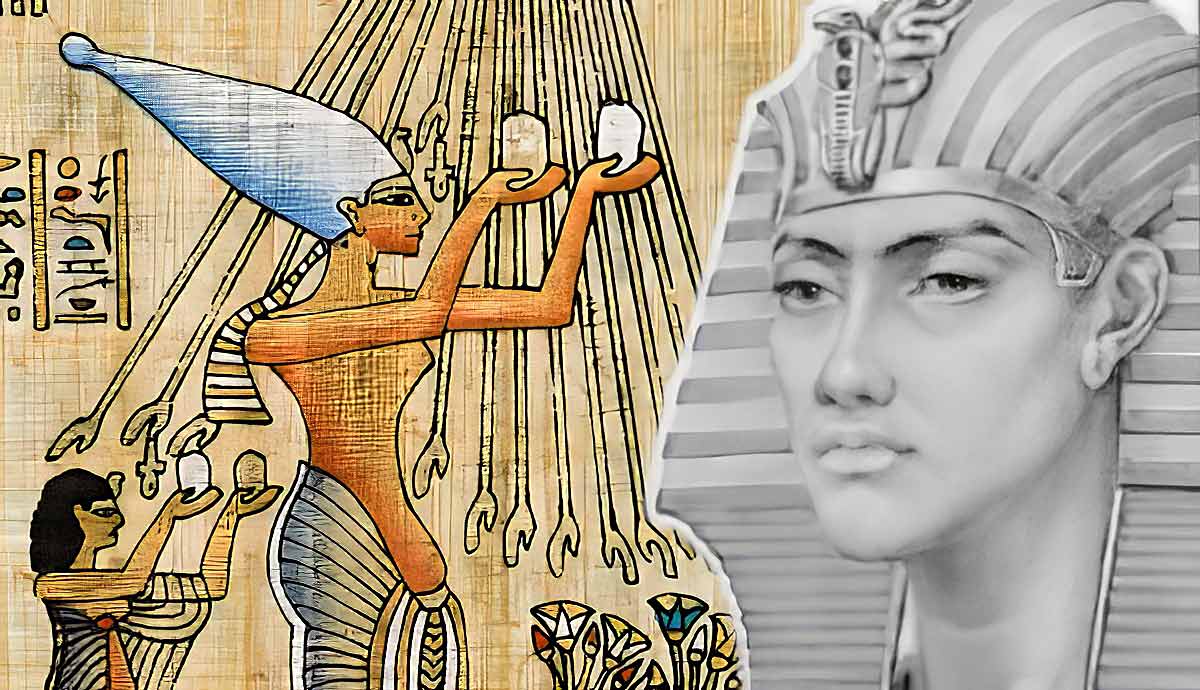
The Aten appeared as a circular disk which extended its rays downwards to reach human hands who held the Ankh (the symbol of life) to the Royal Family's noses.
The force existed through the "Light" which produced the "Life Force" that powered all living beings.
The "Living Ma'at": A Revolution in Realism
Atenism's main belief system used Ma'at which people understood as either "balance" or "justice". The meaning of this term was changed during Akhenaten's rule to define it as "Truth".
The cultural development experienced huge changes because of this.
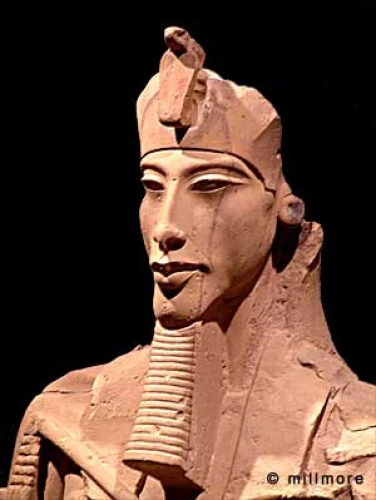
Naturalism in Art: The first appearance of the Pharaoh showed him with real human imperfections which included his potbelly and his thin limbs and his elongated face. The alien appearance of the actor proved he needed to change himself for his role. He appeared as a natural human being instead of existing as an idealized statue.
The Aten system generated human beings who loved life. The King showed public affection for his wife Nefertiti and his daughters when he kissed her and played with his daughters on his knee. Pharaonic history recorded no instances of public displays of love at this level.
The Aten worshippers built their open-air worship spaces because they needed to worship the sun which required them to construct roofless spaces for their worship activities. Worshipers experienced sunlight during their prayers because they faced the Egyptian sun which shone directly on them.
The Great Power Play: Pharaoh as the Only Bridge
Atenism presents itself as a peaceful religion of light yet its core beliefs contain political elements.
The Amun priests of ancient Egypt possessed such vast wealth and power that they sometimes surpassed the authority of the Pharaoh. Akhenaten declared the Aten as the sole deity which resulted in the following actions:
He stopped all financial support for ancient priesthoods by shutting down all temples.
He established himself as the sole intermediary through whom people could access the Aten.
The common people of 14th century BCE Egypt practiced their faith by praying to Akhenaten who acted as their spiritual link to the sun. The system allowed him to unite all religious and governmental power under his control.
The Great Hymn to the Aten
The Great Hymn to the Aten which King composed remains the most exceptional achievement that defines this time period. The poem exists as a global literary masterpiece because it describes how the sun brought forth all things starting from the "chick in the egg" and ending with the "fish in the river."
Researchers have discovered that this hymn shares remarkable resemblances with the biblical Psalm 104. The two songs express worship to a single god who creates everything in nature and protects all minor aspects of his creation. The question of whether Akhenaten played a role in developing Jewish and Christian belief in one God has continued to create disputes for over two hundred years.
"How manifold it is, what thou hast made! They are hidden from the face of man. O sole god, like whom there is no other!" — Extract from the Great Hymn.
Why the Light Went Out
Atenism rejected its beautiful innovative qualities because it proved to be unworkable. The religion ended when Akhenaten passed away. Why?
The religion existed exclusively for the King and his royal court. The common people, who relied on household gods like Bes (the protector of children), felt abandoned.
The Afterlife Problem: Egyptians believed they needed to complete their journey to the afterlife. Atenism did not recognize the existence of both the underworld and Osiris. People experienced terror because there existed no definite plan which would show them what occurred after death.
The local economies which depended on old temples suffered destruction when those temples shut down.
The Legacy of the Sun
Tutankhamun ascended to the throne when he was still a child because he had to lead his people back to traditional worship while he needed to leave behind the city of Amarna which his father had established as a heretical site. The name of Akhenaten was chiseled off every monument.
The "Amarna Experiment" showed that one person could successfully oppose established traditions which had existed for thousands of years. The first documented case of a monarch attempting to modify human religious beliefs exists in this historical record.
What’s your take? Was Akhenaten a visionary who saw a "truth" the world wasn't ready for, or was he a fanatic who let his empire burn while he stared at the sun?





-webp.webp "Hilton")
-webp.webp "dusit")
-webp.webp "Marriott Hotels")
-webp.webp "Azimut Hotel")
-webp.webp "Golden Tulip")
-webp.webp "sheraton")
-webp.webp "westin hotel")
-webp.webp "Movenpick")