


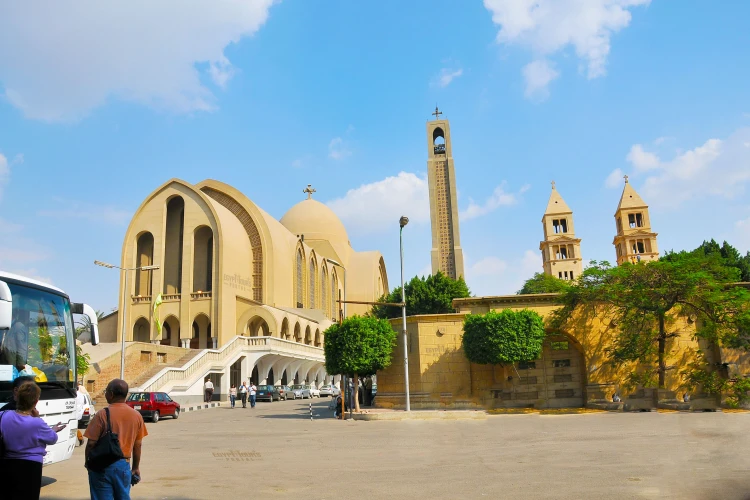
The Apostle of the Nile: How Saint Mark Brought Faith to Egypt
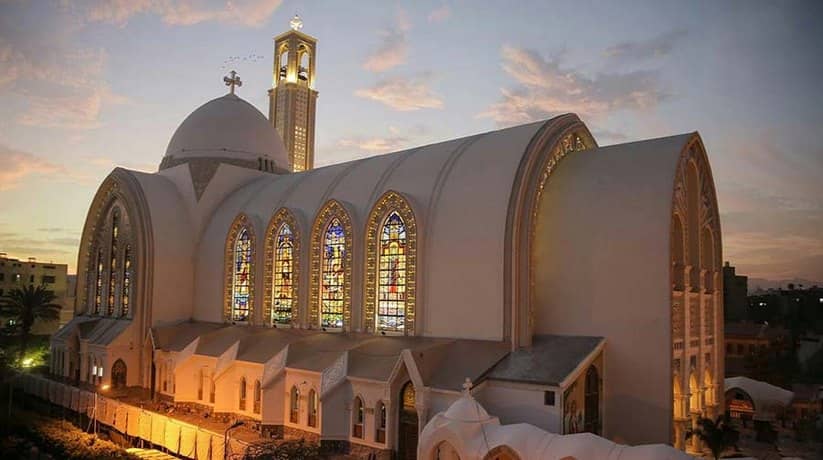
The Lion of Alexandria: Saint Mark and the Foundations of the Coptic Orthodox Church
While Christian history has been dominated by marble monuments in Rome and the imperial decrees from Constantinople, centuries prior to the penetration of Western Christianity into most of Western Europe, a powerful, mystical, and resilient form of Christianity had already flourished within the sands of North Africa, a place rich in intellectual traditions and ancient civilization. Here we can witness the fascinating emergence of the Coptic Orthodox Church of Egypt – a Christian tradition founded on the work of only one individual, Saint Mark the Evangelist.
As Egypt's patron saint known as the "Apostle of the Nile," represented historically as a lion and roaring proudly, Saint Mark was more than just a bearer of another theological tradition. Instead, he planted a spiritual seed which, by taking root into the Egyptian spiritual soil, helped create an enduring church throughout centuries of changing empires and cultures.
It would be fitting at this point to step back in time into the early century of Saint Mark to better understand the man, his arrival in Egypt, and how he shaped a distinct church.
1. Who Was Saint Mark? The Man Behind the Lion
Before being venerated as the patron saint of Egypt, Mark was a young man who was fully immersed within the early apostolic circle. He was born in Cyrene (now known as modern-day Libya), but his family moved to Palestine later on. Mark’s relationship with Jesus Christ within Coptic tradition is both personal and intimate.
The House of the Last Supper
It has been noted by various religious authorities that Saint Mark’s home in Jerusalem played host to several important events within Christian history. Mark’s house reportedly played host to the upper room wherein Jesus partook of the Last Supper with His disciples, and also the place where the Holy Spirit descended on them during Pentecost. Thus, Mark was able to witness first-hand the revolution within the early Christian church.
The Author of the First Gospel
Mark's role within world Christianity is guaranteed through his pen. He is credited with being the writer of the Gospel of Mark, which is accepted by most modern-day scholars to be the first of the four gospels. His literary style is swift, clear, and dramatic, portraying the activities of Jesus in such a way that it feels like an eyewitness account. It was this same vibrant energy that accompanied him into Egypt.
2. The Arrival in Alexandria: A Miraculous Encounter
Saint Mark disembarked from his boat on the busy docks of Alexandria sometime during the middle of the first century, about 43 AD. In that day, Alexandria was the jewel of the Roman Empire—home to a great library, lighthouse, and hotbed of debate between scholars of Greek, Roman, Egyptian, and Jewish origins.
It took extraordinary courage to preach the monotheistic religion of God’s crucified Son in such a place. Mark walked through the crowded streets until the thong holding his sandal tore, stopping him in his tracks.
Anianus, the Cobbler
Saint Mark sought shelter from the elements at the workshop of a shoe mender named Anianus. As he worked with his awl to make the necessary hole in the leather of Mark’s sandal, it slipped and pierced Anianus’s own hand.
Anianus called out in surprise, uttering a phrase that was often heard in those days: "Eis ho Theos!" This means "God is one!"
After listening to the artisan speaking about one God, Saint Mark picked up some clay from the ground, put it on the open wound of Anianus with his saliva, praying in the name of Jesus. Immediately the wound was healed without leaving any marks behind.
Struck by the miraculous recovery, Anianus invited Mark to visit his house. At his house, Mark taught him about the scriptures, spreading the teachings of Christ to all his relatives. They all became believers in Christ, thus becoming the first Copts in Egypt. Later on, when more people became believers, Anianus was consecrated as the first Bishop of Alexandria.
3. The Theological Hub: The School of Alexandria
With the rise in popularity of the teachings of Saint Mark from the poor areas to the educated people, he came to know that Christianity had to have an intellectual base to cope with the intellectual debates in Alexandria. For this purpose, he established the Catechetical School of Alexandria.
It was the best theological school of Christendom. In it, faith was not kept away from the intellect because science, math, literature, and philosophy were taught along with the Christian scripture.
Among the other brilliant men that this school produced, two important names are that of Clement of Alexandria and Origen. With this sound intellectual background laid down by Mark, the church of Egypt succeeded in defending its doctrines at the ecumenical councils in the coming centuries.
4. The Crown of Martyrdom
As you can imagine, such rapid growth of the Church made the Romans and the pagan priests unhappy. This conflict came to the breaking point in 68 AD in connection with celebration of a festival of the pagan god Serapis, which fell on the holiday of Christians – Easter.
The enraged people ran into the church where St. Mark was praying. They put a thick rope around his neck and dragged him through the stony streets of Alexandria for two days before he was torn to pieces.
According to the Coptic tradition, even on his deathbed St. Mark was praying for the perpetrators of this cruelty, saying "Into your hands, O Lord, I commend my spirit". Even though his earthly journey ended tragically, his church had taken its root.
5. The Birth of Monasticism: Egypt’s Gift to the World
This resilient and spiritual spirit injected into Egyptians by St. Mark set the stage for one of the most influential contributions made by the Church in history: Christian Monasticism.
As the Roman persecution increased its intensity and corruption began to spread within the cities, thousands of Egyptian Christians took to the deserts in the West and East seeking a life of complete solitude, prayers, and spiritual warfare inspired by St. Anthony of Egypt who is considered to be the father of monasticism in Christian history.
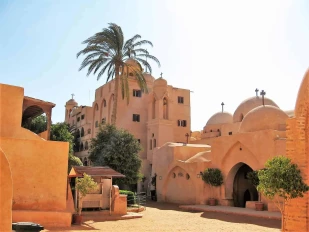
This particular Coptic culture of inward-looking and spiritual zeal quickly spread from the valleys of Scetis (Wadi El-Natroun), throughout the Mediterranean, influencing the monasteries of Europe and Ireland.





-webp.webp "Hilton")
-webp.webp "dusit")
-webp.webp "Marriott Hotels")
-webp.webp "Azimut Hotel")
-webp.webp "Golden Tulip")
-webp.webp "sheraton")
-webp.webp "westin hotel")
-webp.webp "Movenpick")
