
Serapeum of Saqqara Guide: History, Engineering Mysteries, and Travel Tips
The Shadows of Saqqara: Unlocking the Mysteries of the Serapeum
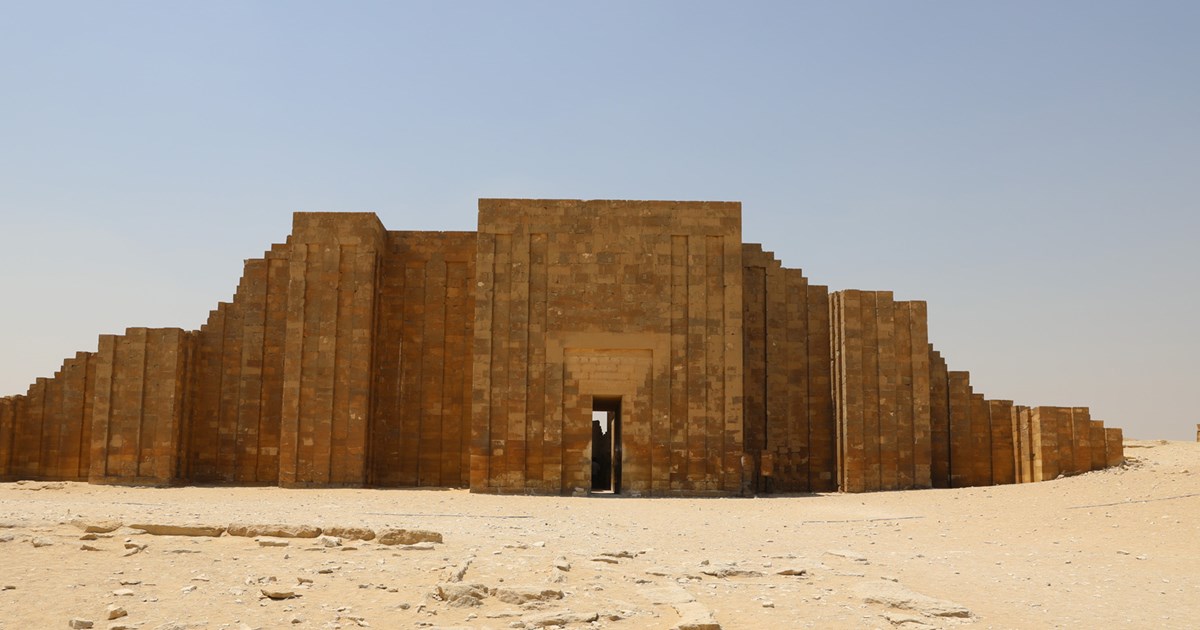
If you take a short drive, south of Cairo , and you leave that towering profile of the Giza Pyramids behind, eventually you’ll be swallowed by the broad, windswept sands of Saqqara. At first glance, the place looks pretty straight forward, mostly because the famous Step Pyramid of Djoser is sitting there like a landmark. The desert wind starts stirring up dust, and the sun heat feels… relentless.
But, if you just walk a few minutes to the northwest of that ancient step pyramid, it’s like the story flips. You follow a path that goes downward into the ground, then you descend a steep ramp and suddenly the desert sun is gone. The air changes fast. Dry hot air turns into something colder, quiet, and weirdly heavy, almost tangible.
That’s when you realize , you’ve stepped into the Serapeum of Saqqara.
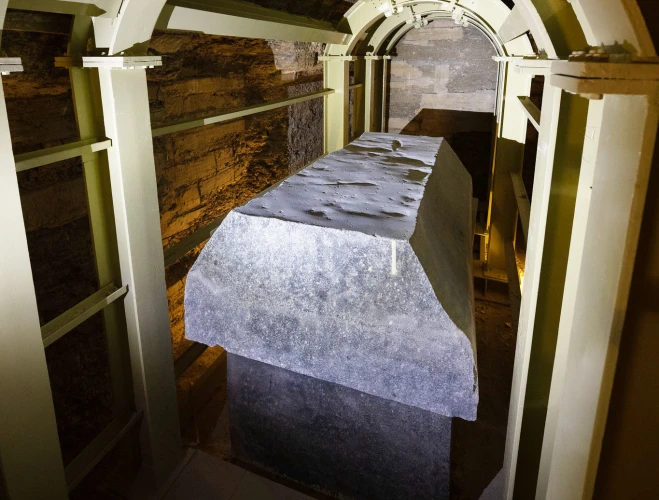
This underground maze of rock-cut passageways holds one of the greatest, most mind-bending engineering puzzles from the ancient world. Deep in dark corridors, inside alcoves carved into stone, there are 24 immense, super polished boxes made of black granite and basalt. Each one is rumored to tip the scales at around 70 tons, and the lids alone can add another 30 tons , so the numbers get hard to ignore.
So the questions pile up. How did they move them all the way here? Why are they so unbelievably flat, and so sharply precise? And what exactly was supposed to be placed inside, and buried for what reason? Alright then, let’s go further, into that cool darkness, and see what the Serapeum is hiding.
1. What is the Serapeum of Saqqara?
Found, around 1850, by the French archaeologist Auguste Mariette, the Serapeum was this grand, underground resting place for the Apis Bulls and all that religious meaning around them. It wasn’t just a simple pit or tomb either, it was subterranean burial in a big, serious way.
To the ancient Egyptians these weren’t ordinary farm animals. The Apis bull was thought of as the living physical presence of Ptah, the god of creation, plus the craftsmen and architects kind of domain. Only one sacred bull got picked at a time, and it was recognized by very precise divine signs on its coat, like a white triangle up on the forehead, or sometimes an eagle-shaped patch on its back, you know the general idea.
While it was alive, the bull lived almost like royalty in Memphis, fed well and protected by priests, while locals honored it too. Then once it died, the belief was that it blended into the god of the underworld, becoming Osiris-Apis—later the Greeks shortened that to Serapis, and that’s where the word Serapeum comes from, really.
After death, the bull was mummified with an intensity, care, and luxury that matched what pharaohs received, including very costly, fragrant spices. After that it was carried to Saqqara in a grand solemn funerary procession, and placed down in the dark depths of the earth, where it was meant to remain.
2. The Megalithic Boxes: An Engineering Nightmare
Honestly, as much as the religious history is interesting, what leaves modern engineers, stonemasons and even tourists totally speechless is the raw, almost unreal physical presence of the sarcophagi (giant stone coffins).
When you go through the Serapeum long vaulted hallways, you end up looking down into big, recessed spaces on both sides of the wooden walkway. In those pits sit 24 single-piece stone boxes.
If you want to get a real feel for the scale, just look at these bits of information:
The Weight: each box, especially the main chunk, is about 70 tons. Then there’s the solid stone lid at roughly 30 tons. So that’s a combined total near 100 tons , in other words around 15 adult African elephants, but all stuck into one single stone body.
The Material: these boxes are not made from easy, local limestone at all. Instead they’re built from rose granite, black granite, basalt, and diorite. These are some of the hardest rocks around, they score insanely high on the mineral hardness chart.
The Origin: the nearest quarries for those granites are up in Aswan , which is more than 800 kilometers (about 500 miles) south of Saqqara.
So, ancient makers basically had to cut out these 100-ton masses, move them along the Nile River, haul them across the hot desert sand toward Saqqara, and then carefully lower everything into a cramped, underground tunnel maze.
And because those passages are so narrow and tight, there’s barely enough room for a person to pass by the sides of the boxes. That means it’s basically impossible to have hundreds of workers gather around the stone to lift or drag it with ropes. How they arranged and set these heavy blocks exactly into their own alcoves—without any clear modern explanation—is still one of ancient history’s biggest, stubborn mysteries.
3. The Puzzle of Impossible Precision
If the weight of the boxes isn’t enough to blow your mind, then well their flat,polished surfaces will, for sure.
When you shine a flashlight onto the interior walls of these granite boxes you’ll notice a surface that is so smooth, it kind of acts like a dark glass mirror. Modern engineers who went through the site with high-precision measuring tools, like machinist squares and laser levels have said the internal angles are incredibly close to a perfect 90 degrees, every time.
Also the faces of the boxes are flat to within tolerances of just a few thousandths of an inch.
So how did they do it? Traditional Egyptology claims the artisans got that finish using copper chisels, stone pounders, and abrasive quartz sand.
Sure, it is technically possible, with a ton of time and a lot of manual grinding and all, but the consistency across all 24 boxes has started plenty of wild debates and alternative explanations. People still ask how the ancient workers could manage such near-perfect, laser-straight lines inside pitch-black tunnels, using only smoky, flickering oil lamps.
4. The Great Mystery: What was Inside?
When Auguste Mariette blew open that sealed entrance to the Serapeum in 1850 with gunpowder, he sort of figured, you know he would come across tunnels stacked with golden treasures, ancient papyri and maybe dozens of magnificent, mummified bull carcasses.
But instead… he ran into something genuinely confusing. Like, almost all the giant granite boxes were totally empty.
Out of the 24 massive stone boxes, only one was located as completely intact and still sealed. And when Mariette opened it, he was not greeted by a neatly preserved bull mummy inside. No, what he found was a mix of bituminous organic matter, a few broken animal bones, and just some small artifacts, nothing like what he expected.
So, this absence of bull mummies in the real granite boxes has sparked two broad schools of thought.
**The Mainstream View: Grave robbers, tomb raiders—whoever it was—came into the tunnels over the centuries, smashed those heavy stone lids and then dragged out the mummified bulls in order to strip the contents for their gold, jewelry, and even the protective amulets that were wrapped in their bandages.
**The Alternative View: Some independent researchers, however, argue that those giant boxes were never intended for bulls in the first place. They say this based on the observation that when actual bull mummies were found elsewhere in Saqqara, they were usually buried in smaller, plainer wooden or limestone coffins, not in 100-ton granite monuments.
5. Tips for Visiting the Serapeum
If you re thinking about traveling to Egypt and you want to actually see that underground wonder in person, it helps to keep a few practical travel things in mind, okay? Like, first of all, Mind Your Step. Those tunnels are dark, and they can feel kind of tight or claustrophobic pretty fast. You’ll notice wooden boardwalks along the route, but watch out because there are also steep steps going down into the main gallery area. So it’s smart to wear comfy athletic shoes , ideally with solid grip so you don’t slip when the light shifts.
Then, Bring a Good Flashlight. Even if the passageways already have modern LED lights, having a stronger torch (or just using your phone’s light) can really help you peer deeper into the hollow chambers. It also makes it easier to look closely at the polished reflective surfaces on those granite boxes, you know the ones.
And last, Combine Your Ticket. The entrance ticket for the Serapeum usually comes as an add on with the main Saqqara archaeological site ticket. So before you drive up toward the plateau, stop at the main entry gate and specifically ask for the “Serapeum” option. They generally do not sell tickets right at the cave entrance itself , so plan that part earlier.




-webp.webp "Hilton")
-webp.webp "dusit")
-webp.webp "Marriott Hotels")
-webp.webp "Azimut Hotel")
-webp.webp "Golden Tulip")
-webp.webp "sheraton")
-webp.webp "westin hotel")
-webp.webp "Movenpick")