

Sekhmet: The Lioness Goddess of Power, Destruction, and Healing
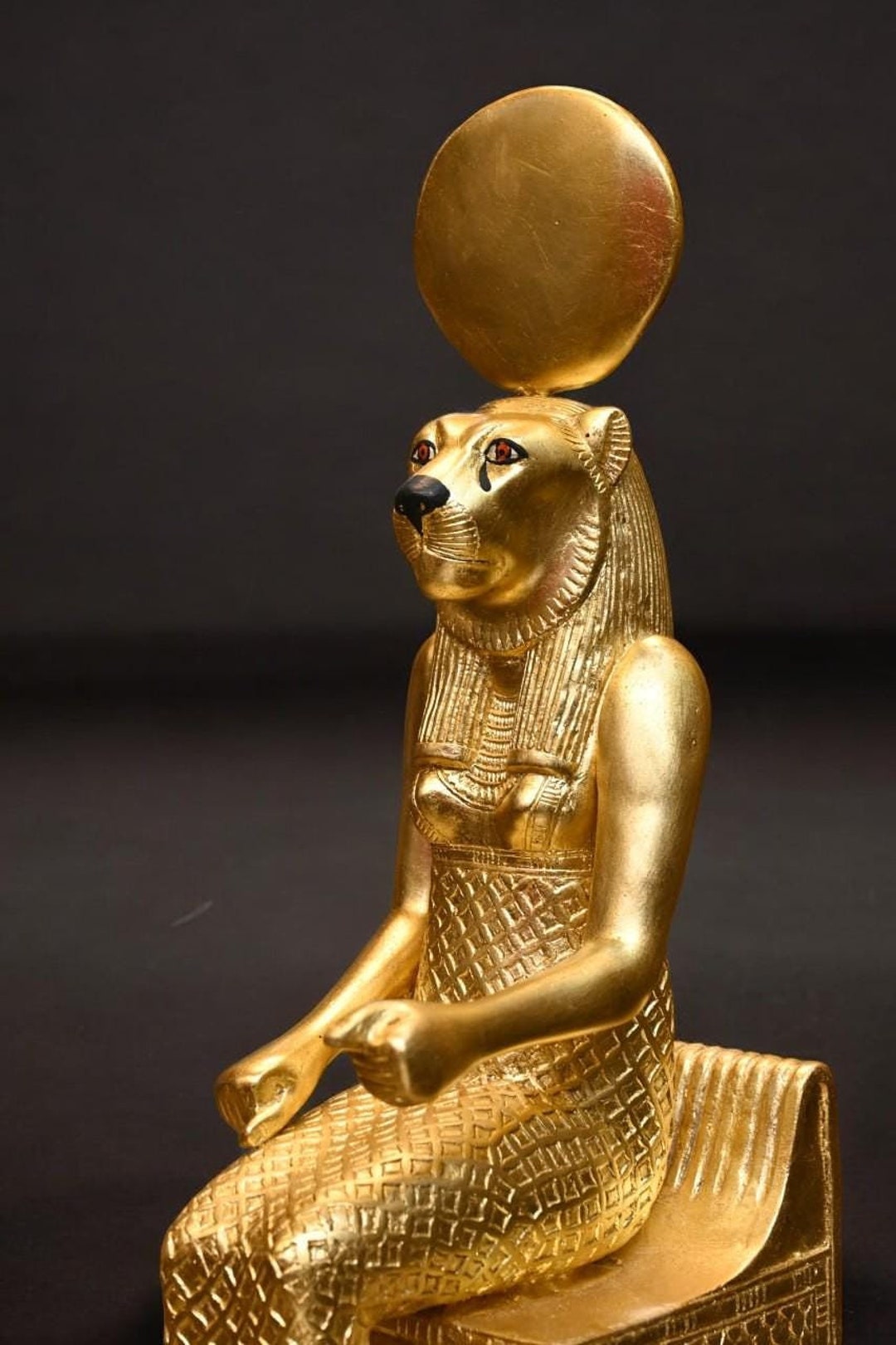
The Egyptian pantheon contains many deities but Sekhmet stands out as one of the most powerful figures who evokes deep respect from people. The goddess is shown as a woman who has a lioness head because her character contains two opposing elements. The goddess which people called "Lady of Terror" and "Devourer of Rebellion" received equal worship as "Lady of Life" and "Great Mistress of Healing" from her followers.
The present-day traveler who wants to learn about history must understand Sekhmet because her character represents the core beliefs of ancient Egyptians who believed that destruction and creation existed as two separate yet interconnected elements of existence.
The Meaning Behind the Name: "The Powerful One"
The name Sekhmet is derived from the Ancient Egyptian word "Sekhem," which translates to "power" or "might." Adding the feminine suffix makes her "The Powerful One."
Sekhmet represented the intense solar energy which other deities showed through their control over specific natural elements. She served as the "Eye of Ra" which functioned as the Sun God's primary tool for executing his retribution. The Egyptians recognized Sekhmet's power when sun rays transformed into lethal energy that destroyed crops and caused drought conditions.
The Myth of the Destruction of Mankind
The legend that describes Sekhmet's overwhelming power has become the most recognized legend within Egyptian mythology. The myth states that the Sun God Ra lost his faith in humans because they disobeyed him while showing disrespect for divine commandments. Ra commanded his "Eye" Sekhmet to execute punishment.
Sekhmet descended upon the earth with a bloodlust so intense that she nearly wiped out the entire human race. Ra experienced regret after observing the human destruction because he intended to teach humans a lesson instead of killing them. The only solution to control Sekhmet's violent actions required more than spoken words.
Ra created an ingenious strategy when he instructed his workers to produce a thousand beer containers which they mixed with red ochre or pomegranate juice to create a substance that resembled blood. The workers distributed this mixture throughout the agricultural fields. Sekhmet approached the scene of her continued killings and observed the "blood" which she drank with excessive greed. Her drinking caused her to become extremely drunk which resulted in her falling into a deep slumber. She awoke to find her intense anger completely disappeared. Some story versions show her changing into the peaceful cat goddess Bastet or the love goddess Hathor.
The Paradox: From Destroyer to Healer
The Egyptian people believed it to be logical when they saw that a goddess who committed violent acts served as the guardian of medical professionals who treated patients and performed surgical procedures. Sekhmet possessed the ability to bring plagues and "arrows of disease" to her enemies but only she knew how to make these threats vanish.
The "Priests of Sekhmet" belonged to the most advanced medical group which existed during ancient times. The specialists practiced physical medicine through the use of spiritual incantations. The invocation of Sekhmet brings forth the divine quarantine of a disease. The medical profession identifies pathogens to create cures which reflects the ancient belief that people must understand the root cause of their illness before they can control it.
The Memphite Triad: Family and Balance
The ancient capital of Memphis contained the powerful divine family of the Memphite Triad which included Sekhmet as one of its members.
Ptah: Her husband, the demiurge and god of craftsmen and architects.
Nefertem: Their son, the god of the sunrise and the blue lotus flower.
This family unit represented a cosmic balance. The stable force of creation existed through Ptah while Sekhmet functioned as the dynamic force which created protection and destruction and Nefertem brought forth beauty and rebirth.
A Legacy in Stone: The 730 Statues
The reign of Pharaoh Amenhotep III who ruled from 1386 to 1349 BCE because he was the grandfather of Tutankhamun provides the evidence which establishes Sekhmet's most impressive archaeological footprint. The king issued orders for the creation of approximately 730 Sekhmet statues throughout his reign which lasted 38 years as he wanted to produce two statues for each day of the calendar year.
The majority of statues were sculpted from granodiorite which is a dark and durable volcanic rock material that existed at his mortuary temple and the Temple of Mut at Karnak. Historians believe that Amenhotep III created this stone litany to satisfy the goddess because he needed her healing protection for himself and the people of Egypt.
Visitors to the Temple of Karnak located in Luxor can still encounter these statues which remain there today. The lioness appears both beautiful and frightening because she sits on her throne while holding ankh the life symbol and her eyes stare at eternity.
Sekhmet for the Modern Traveler
Travelers who want to visit Egypt should make it a priority to meet Sekhmet because she represents a key element of their spiritual and historical exploration. The best locations exist for people to "meet" the Lioness:
The Chapel of Sekhmet at Karnak: The northern section of the Karnak complex contains a concealed rooftop chapel which serves as her dedicated space. The chamber contains a stunning black granite statue. The way light travels through the chamber creates an atmosphere which achieves complete silence.
The Temple of Mut: This area contains hundreds of the original statues commissioned by Amenhotep III.
The Egyptian Museum in Cairo: Visitors can observe several well-preserved statues which display intricate details of the sun disk and the fine carving of the lioness’s mane.
A Symbol of Divine Feminine Power
People began to use Sekhmet as their emblem during the 21st century to show their demonstration of powerful female strength. She embodies the "fierce mother" archetype through her ability to protect others by establishing boundaries and demonstrating her powerful nature. The healing power of anger exists to create justice and purification when people apply it through proper channels.
People should show respect to her because she functions as a positive goddess who should not evoke fear in anyone. The balance of life exists in her teachings because people need to understand their ability to experience "fire" (passion and anger) which they must use to protect life and sustain the proper cosmic order (Ma'at).
Final Thoughts
Sekhmet stands as one of ancient history's most fascinating characters because she embodies the dual nature of existence which brings both beauty and danger and both life and destruction. The "Lady of the Sun" exists as an enduring figure who continues to dominate her influence across Egyptian history whether people consider her a historical object or a religious symbol.
Travel Tip: When visiting her chapel at Karnak, try to go early in the morning. The temple remains quiet before crowds arrive which enables you to experience the "Sakhmet vibe" that combines silent power with ancient mystery that has not changed for 3,000 years.




-webp.webp "Hilton")
-webp.webp "dusit")
-webp.webp "Marriott Hotels")
-webp.webp "Azimut Hotel")
-webp.webp "Golden Tulip")
-webp.webp "sheraton")
-webp.webp "westin hotel")
-webp.webp "Movenpick")