


-webp.webp)
Life, Death, and Betrayal: The Legend of the Brother-Kings
.webp)
The ancient Egyptians viewed their entire natural environment as their personal property which resulted in a family conflict among them. The tale tells about two brothers who embody the two opposing forces of Osiris who brought civilization and Set who governs storms.
The Osiris and Set legend exists as the first "throne of thorns" which exists among the numerous cinematic universes and epic dramas that surround us in 2026. The story explores human nature through its depiction of our deepest emotional states which include jealousy and the pain of losing someone and the intense love of a spouse and the belief that people can defeat death through their life choices. The myth presents gods who function as a reflective tool which reveals the inner nature of human beings.
1. Osiris: The King of the Living Green
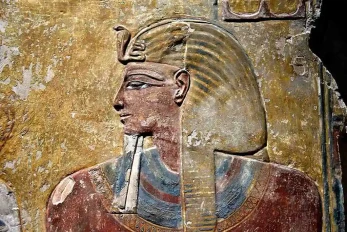
The king of all humans Osiris became the judge of all deceased souls after his death. The king of all humans known as Osiris walked among his people as their human king.
Osiris ruled his kingdom without using fear to secure his power. He taught the Egyptians various farming techniques which included methods for land cultivation and bread baking and beer brewing. He established Ma'at as the essential principle which unites all aspects of existence through truthful order.
People loved Osiris because he personified the Nile's natural cycle which brought life to the land. The people observed the "green" of Osiris returning when the river flooded and crops began to grow. His presence served as the only source of protection for them.
2. Set: The Red Lord of the Desert
The Egyptian people viewed Set as an evil figure but their actual comprehension of his character showed that he possessed authentic qualities.
Set The Outsider acted as the "Red One" who governed both empty desert lands and uncharted territories. He represented both power and turmoil together with the uncontrollable natural forces which exist in the universe.
Set betrayed his brother because his destructive emotions from his human drive to dominate others made him lose control. Set faced complete social rejection because his brother gained public admiration and the valley's agricultural wealth. People experience the need to hide from others yet they also harbor a desire to attack people who reject them.
3. The First Murder Mystery: The Trick of the Chest
The psychological drama of Osiris's betrayal creates an extraordinary psychological study which uses its storytelling to show different human mental conditions. Set's attack against his brother became a more complex conflict when he used his brother's vanity and curiosity to trick him.
The Golden Coffin: Set hosted a grand banquet and presented a magnificent chest, beautifully carved and lined with lead. The chest would be given to whoever succeeded in achieving a complete match between themselves and its inner space.
The Trap: The trap served as a system which created customized "custom-fit" solutions. Set and his accomplices used the lid to shut Osiris inside the box which they then sealed with nails before they submerged it in the Nile River.
The Human Toll: This moment marks the first great tragedy of Egyptian mythology. The story shows that even among gods, people we trust can betray us which proves that absolute safety can become our most dangerous situation.
4. Isis: The Hero of Grief and Devotion
The story reaches its climax through the murder of its protagonist which results in a tragic ending. But because of Isis, the wife of Osiris, it became a story of resilience.
The Search: Isis didn't accept the loss. She traveled the length of the world, mourning and searching for the chest. The 100% human journey displays a spouse who protects their loved one from being forgotten.
The Scattering: Set discovered the body for the second time, and his anger towards Isis's loyalty made him divide Osiris's corpse into fourteen pieces which he then distributed throughout the territory.
The First Mummification: Isis, with her sister Nephthys and the god Anubis, found all body parts except one missing piece. The mummification ritual, which she created, solved his problem because it let him keep his dignity. The birth of human hope happened because people began to believe that their bodies could serve as eternal vessels.
5. The Verdict: Order, Chaos, and the Courtroom
The fight reached its conclusion at a burial ceremony. The battle started at a celestial court where Set fought Horus for eighty years to determine the true king.
The Struggle for Justice: The myth shows characters creating new alliances while using deceptive methods to engage in vicious fighting. The human experience displays two facts about justice because it takes time to reach justice and requires people to endure a lengthy process.
The Role of Set: The Egyptians maintained Set's existence because they did not eliminate his character from their culture. After losing the throne to Horus, he received a position on the Sun God's boat. He used his chaotic powers to battle the serpent of darkness that attacked every night.
The Moral: This is a profound lesson for us in 2026. The statement indicates that we should not destroy our "dark" and "wild" natural tendencies because we must use them to achieve our objectives.
6. Why the Brother-Kings Matter in 2026
The myth of Osiris and Set provides unique comfort to people in a world which seems to be descending into chaos. The Cycle of Life: The cycle of life shows that "winter" (Set) will always lead to "spring" (Osiris). The process of destruction creates the conditions which make way for new forms of creation.
The Power of Memory: The Osiris cult maintained its existence for many centuries because it assured believers that their loved ones would never vanish forever from their memory until they were restored by their family members. We all contain elements from both brothers according to The Balance of Ma'at. Our desire for Osiris' stability conflicts with our need for Set's disruptive force which helps us progress.



-webp.webp "Hilton")
-webp.webp "dusit")
-webp.webp "Marriott Hotels")
-webp.webp "Azimut Hotel")
-webp.webp "Golden Tulip")
-webp.webp "sheraton")
-webp.webp "westin hotel")
-webp.webp "Movenpick")
