
kmt black land in egypt
In thoughts and retellings, pharaohs from times long past fetch visions not so much of deserts rich in gold but of the dark black rek underestimated in importance by travelers and historians. These conquerors called that huge empire "Egypt," but she set upon one name, by the features of the land beneath her feet. The main question piercing through ancient history inquiries is always, why did the ancient Egyptians call their country Kemet? The final answers lie in basic needs.
Since the collapse of the Sahara and its expansion, for millennia, the Nile would swell, becoming the most stupendous biological battery ever built at such a giant scale in the scorching valley. The flood would leave a thick layer of the pitch-black, nutrient-rich detritific sand from central Africa, which supported life for the ancient dwellers of the Kemet, the kem black land in Egypt. That lush border of soil was the literal serum of their lives, while their color divided a monumental geological barrier between a productive zone and the dreadful red desert, showing how strongly the entire universe of Ancient Egypt was color-coded.
Kemet vs. Deshret: Drawing the Thin Line Between Life and Death
The Nile River today shows its boundary which separates green agricultural land from dry desert territory. The two regions of kemet and deshret existed according to this clear geographical divider. Scribes used ancient hieroglyphics to establish the word kemet through a "determinative" which they represented as a flat irrigated plot of earth that appeared at the end of the word.
The Egyptians viewed their home through this intense black land vs red land symbolism which represented their two opposing power:
-
Color: Kemet was the inky, nutrient-rich mud; Deshret was the baking, lifeless sand.
-
Safety Level: The Black Land provided absolute security and food, while the Red Land was a dangerous zone of bandits and wild beasts.
-
Symbolism: Kemet represented life, order, and rebirth; Deshret stood for chaos, death, and exile.
The distance between survival and destruction occurs within a range of only two miles which leads a society to develop respect for water that maintains order in their territory. The dark earth at this sanctuary provided power for the entire location because the scientific study of silt and yearly flood patterns created their vitality.
Hapi’s Gift: The Science of Silt and the Annual Inundation Cycle
During every summer period, the Nile river began its seasonal transformation into a powerful flooding event known as the inundation, which originated from the Ethiopian highlands when dissolved volcanic minerals started to flow downhill. The river created a natural recharge system when it exceeded its banks to flood the surrounding plains, which resulted in the deposit of alluvial silt that contained dark super-fertilizer material. The ancient Egyptians used this rich compost to demonstrate how Nile flooding produced fertile land, which established Nile silt as an essential resource for their agricultural practices.
The ancient Egyptians viewed the Nile river inundation cycle as a sacred event because they believed it brought divine blessings to their land, which they associated with Hapi, the god of abundance, who they believed created life-saving floods for their people.
His muddy waters brought them their most valuable gift. When the river withdrew, citizens began their work to restore the land which had become visible with new earth. The process of flooding followed by planting and harvesting created three separate seasons which determined all human activities.
Farming the Black Land: The Three Seasons That Scheduled Human Life
Ancient farmers chose to redirect flood waters instead of attempting to combat them. They developed basin irrigation which functioned as a sophisticated system that used earthen walls to collect water from rivers into extensive shallow basins. The process enabled rich mud to settle completely into the earth. The Nile Valley produced fertile soil which functioned as an economic reserve for the empire because its thick soil deposits ensured high crop production and complete financial security. Ancient Egyptian agricultural practices depended on the environmental clock because their survival relied on following this cycle.
The civilization scheduled its whole year around three ancient Egyptian agricultural seasons to manage this vital cycle.
-
Akhet (Inundation): Fields flooded, shifting labor to monumental state projects.
-
Peret (Emergence): Waters receded, exposing the black earth for rapid planting.
-
Shemu (Harvest): Golden crops were gathered before the scorching summer returned.
The people faced permanent identity changes because their land disappeared into the sea and then returned to life with new vitality. The people established dark colors as their symbols of resurrection and rebirth because of their reaction to losing land to the sea.
The Alchemy of Black: Why a Dark Color Symbolized Rebirth and Resurrection
Contemporary western societies use black as their funeral color yet Egyptian people established black as their mourning color through its use in their funerary rituals. Black from Nile Valley people symbolized life and agricultural bounty and complete life preservation. The essential bond between humanity and divinity found its ultimate expression through the deity Osiris. Ancient people regarded him as the underworld king yet he functioned as the deity who governed agricultural harvests.
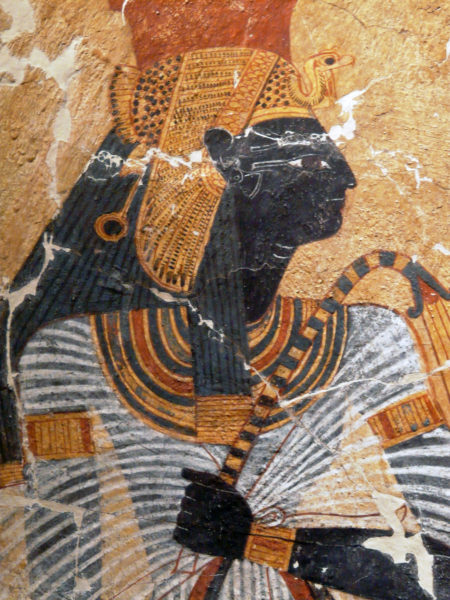
Statues frequently depicted him with pitch-black skin to mirror the life-giving mud which connected his mythological resurrection to the returning floodwaters. The soil held such deep significance for the people that they developed their religious beliefs which established fundamental environmental principles. Scholars who followed examined the civilization's sustainable natural systems under the name Al-Khemi which means "the art of the Black Land." The word kemet shows its historical development when the modern terms "alchemy" and "chemistry" emerged from that dark dirt. The identification of kemet as the origin of alchemy shows that their environmental identity remained intact through subsequent ages.
The Enduring Legacy of Kemet: What the 'Black Land' Teaches Us Today
The ancient culture no longer requires you to see it through the filter of golden sands and dusty mummies. The society existed as an example which demonstrated how to achieve environmental sustainability. Silt deposits brought multiple benefits to Egyptian civilization because they affected both agricultural productivity and spiritual practices. The rich dark earth created a vital desert boundary which proved their identity existed in permanent soil marks.
The modern world recognizes the indigenous name which enables people to understand kmt as the black land of Egypt. The next time you encounter a museum artifact, look past the shimmering gold to the lifeblood of the river that made it possible. The empire now reveals its real nature as a practical civilization which developed a permanent legacy through its existence along the fragile green ecosystem.



-webp.webp "Hilton")
-webp.webp "dusit")
-webp.webp "Marriott Hotels")
-webp.webp "Azimut Hotel")
-webp.webp "Golden Tulip")
-webp.webp "sheraton")
-webp.webp "westin hotel")
-webp.webp "Movenpick")