



King Djoser and the Step Pyramids
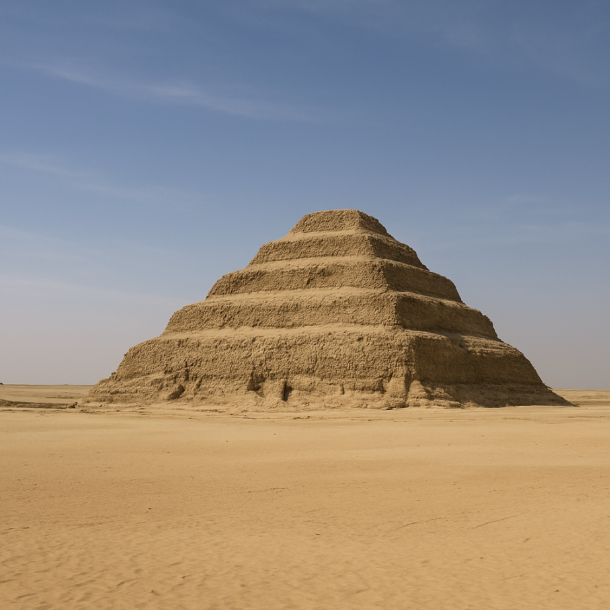
The ancient Egyptian horizon first appeared dedicated to its smooth-sided monuments after an ambitious ruler executed his first exceptional achievement. King Djoser wanted a stairway to heaven made of solid rock rather than traditional, crumbling mud-brick. The old Kingdom period established its first royal burial sites as basic flat burial mounds according to historical records.
Djoser used his role as a visionary corporate leader to centralize resources and develop the complete transformation of Saqqara's empty Saqqara plateau. According to archaeologists, the resulting Saqqara necropolis funerary complex represents the exact moment civilization decided to build for eternity. The builders constructed King Djoser and his step pyramid through the technique of stacking flat tombs which created an enormous stone structure that resembled a wedding cake. The Third Dynasty pharaohs receive essential historical information through this spectacular discovery.
How a Stack of Mud Bricks Became a Stairway to Heaven: The Evolution from Mastaba to Pyramid
Egyptian royalty chose to rest eternally under the mastaba, which served as their final burial site until King Djoser decided to reach the heavens. The durability of mud materials allows for construction on all types of buildings until their ultimate breakdown. Djoser made a groundbreaking decision when he decided to ditch mud construction materials because he wanted to create a building method which would last through time.
The actual architectural progress occurred when construction workers discovered that a single flat surface did not meet their design requirements. The architects who designed their buildings used the method of stacking mastabas with decreasing size until they created their first tiered architectural design. The transformation of mastabas into pyramids brought about a new architectural style which changed the entire royal skyline.
-
Shape: Moving from a single-level, flat block to a soaring, six-stepped staircase to the sky.
-
Material: Upgrading from fragile, sun-baked mud-bricks to heavy, enduring limestone blocks.
-
Height: Evolving from a modest mound to a peak roughly the height of a modern 20-story building.
The Djoser pyramid stands as the first permanent stone building which exists in the world today. The construction that created a stone mountain from a flat burial site required equipment that exceeded basic lifting capabilities. The project needed a creative genius who could transform a grand vision into actual execution.
The Dream Team of the Old Kingdom: Why Djoser and Imhotep Changed Egypt Forever
The general public ignores ancient builders who created blueprints for their work except for the artist who sculpted this monument. Imhotep established himself as the first documented architect when he demonstrated his ability to work in both engineering and medical fields. Subsequent generations considered his extraordinary intelligence to be divine when they worshipped him as a god who possessed wisdom after his death.
The transformation of architectural design into actual buildings needed special political authority which had never existed before. The ruler established a state-controlled agricultural system by unifying separate farming communities to serve as financial support for this major development project. The government created centralized resource management systems which enabled them to gather all essential agricultural resources and workforce to build the massive complex.
People experienced extreme psychological distress because they saw the highest building in the world materialize from the flat desert during the year 2600 BCE. The artificial stone mountain showed common people that their king had control over all of nature. The building reached extraordinary heights but its main treasure remains hidden from public view.
Inside the 3.5-Mile Labyrinth: The Hidden Secrets of the Subterranean Gallery
The pyramid's actual magic exists hidden underneath the desert sky which the stone steps control. The Saqqara building system includes an underground gallery which extends for 3.5 miles through its entire length as its designers cut through solid bedrock. This underground maze without light functioned as a permanent underground royal residence which contained four astonishing objects:
- The blue faience tiles created a design which imitated the appearance of woven reed mats.
- They used stone containers which they collected from their burial site to prepare for their afterlife.
- The royal names were inscribed on ancient inscriptions through which they achieved immortality.
- The king's heavily protected stone sarcophagus
The pharaoh's actual residence was displayed through the interactive path between these narrow passageways. The Nile's life-giving waters were symbolized through the installation of bright, glazed quartz tiles which covered the entire wall space.
Our modern understanding of this eternal environment comes from decades of painstakingly piecing together these shattered subterranean rooms. Explorers discovered 40,000 perfectly sculpted stone bowls and jars beyond the vibrant walls. The specific burial items from Djoser's time were ancient possessions which he used to show respect to his ancestors. The process of protecting his soul underground required him to fulfill two different tasks.
Beyond the Pyramid: The Heb-Sed Court and the Eternal Royal Stage
The dark entryway leads to a large limestone pit which contains walls that display artificial entranceways. The wall formed a complete stone city which served as a burial ground for the afterworld. The elegant chapels inside the building were constructed with permanent "dummy" walls which existed as spiritual display items without providing actual spaces for people to use.
The ritual arena stood as the most essential area within these front-facing structures. The Heb-Sed court existed to enable Djoser to celebrate his eternal jubilee through physical trials which would continuously restore his divine strength. The southern tomb's architectural elements functioned as magical protection because they provided a secondary burial chamber which operated as an energy reserve for his magical power.
The religious meanings of tiered tombs which rose above them united all courtyard buildings. The stacked monument functioned as an enormous stone launchpad which provided the king a real staircase to reach the sky.
From Saqqara to Giza: Why the Step Pyramid is the Blueprint for Civilized Wonder
The development of ancient Egyptian architecture demonstrates two achievements which connect King Djoser's step pyramid with the great Giza monuments. The process which created step pyramids eventually developed into the design of smooth-sided pyramids according to the evidence which exists between these two architectural styles. Egyptologist Jean-Philippe Lauer dedicated 75 years to restore this complex from its crumbling ruins which allows us to witness the architectural genesis that exists today.
The South Tomb at Saqqara plateau provides an exceptional historical view to all who study or visit this site. The massive stones create a visual experience which shows the actual moment when human beings discovered how to construct buildings that would last forever.




-webp.webp "Hilton")
-webp.webp "dusit")
-webp.webp "Marriott Hotels")
-webp.webp "Azimut Hotel")
-webp.webp "Golden Tulip")
-webp.webp "sheraton")
-webp.webp "westin hotel")
-webp.webp "Movenpick")
