
-webp.webp)
How to Visit Crystal Mountain, Egypt: Geology, Location, and Travel Tips
Jewels in the Sand: The Real Story of Egypt's Crystal Mountain
When travelers imagine Egypt’s Western Desert, they usually picture huge rolling sand dunes, those sharp chalk scenes of the White Desert, or the dark volcanic bumps of the Black Desert. Still, tucked pretty much right between the Bahariya and Farafra oases there’s a small, sparkling oddity that feels like it should be in some fantasy book.
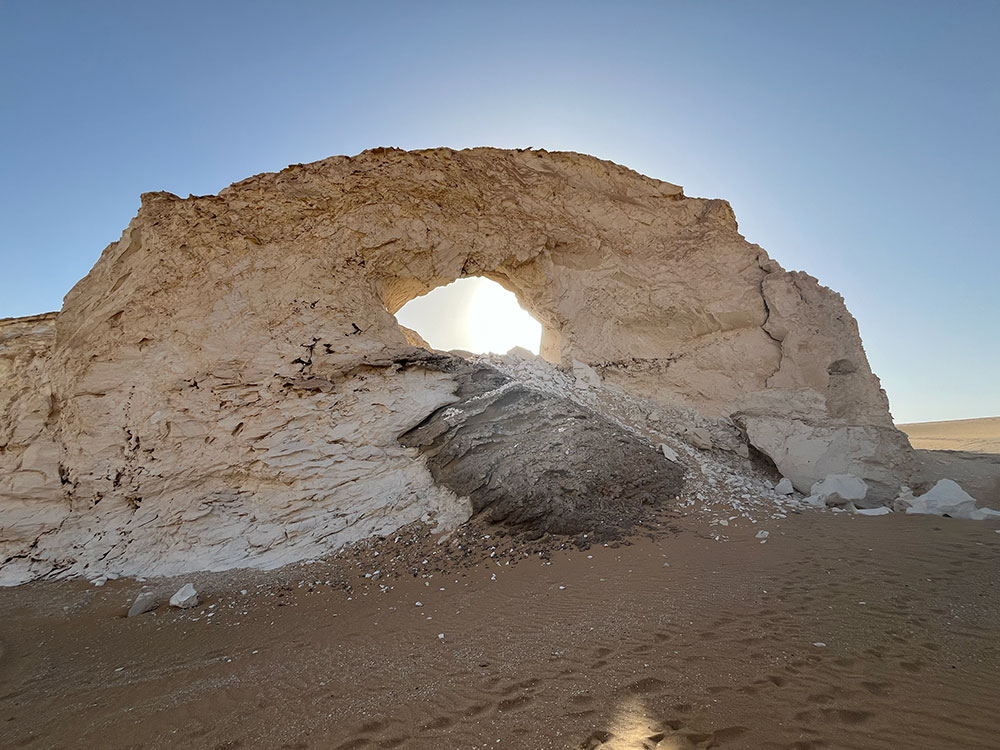
Locally it’s known as Gebel el-Iristal, also called Crystal Mountain, but it’s not a big snowy alpine summit type of place. Instead it’s a glittering ridge of old rock, with rough, uneven faces and even a natural stone arch. The thing is, it’s built entirely from shimmering translucent crystals. Under that harsh desert sun, the whole structure kinda winks and glows, like a crown of glass coming up from the golden sand.
To geologists it’s a rare, fossilized glimpse into the earth’s long-ago hydrothermal history. To travelers it’s an impossible-to-forget surreal stop during a deep-desert run. Here’s the plain, no-magic-removed version of how this crystal ridge got made, where you can find it, and how to go there in a respectful, responsible way.
1. The Geological Mystery: A Collapsed Ancient Cave
People often assume, without much checking, that Crystal Mountain is some sort of volcanic peak, or a pile of quartz crystals shoved up from the deep crust, you know, the usual story.
Reality is different though. Crystal Mountain is the fossilized, basically preserved skeleton of a very old prehistoric cave system.
Way back, in the Cretaceous and Eocene periods, this whole area was greener and wetter than you’d expect now, with a shallow sea covering the region. Acidic groundwater, bit by bit, slowly carved enormous underground limestone chambers and passageways, kind of like Djara Cave, only on a larger scale, or at least that’s the idea.
Then, over eons, hot geothermal springs started to run through those same hidden rooms. The water was mineral-rich, and it flooded the subterranean spaces. As the hot water cooled, it dropped out the dissolved calcium carbonate in high concentrations onto the cave walls. Over thousands of years, those deposits didn’t just sit there—they gradually crystallized, building thick layers of calcite crystals, and sometimes barite as well.
After that, tectonic motion did its thing. The roof of the cave eventually caved in. Over millions of years, the harsh Saharan winds and nonstop sandstorms basically worked like sandpaper, quietly removing the softer surrounding sedimentary rock.
So what’s left today is the heavy, tough crystal lining, standing there above the desert floor like a leftover imprint. And that well known natural “hole” or arch that tourists keep framing in photos, is actually a preserved archway from the original cave roof, not some random formation.
2. Knowing Your Gems: Calcite vs. Quartz
When you first approach the mountain, the sheer volume of glittering stone is kinda overwhelming, like you can’t take it in all at once. The ground for yards around the ridge is littered with shiny broken fragments that catch the light, sort of like diamonds but louder.
Still, here comes a quick word of warning for mineral enthusiasts: these are not quartz crystals, not really.
Up close, sure they look similar to the naked eye. But at Crystal Mountain the formations are mostly calcite. Calcite is a lot softer mineral than quartz. On the Mohs hardness scale, quartz lands on a tough 7, while calcite is down at a soft 3. So calcite can get scratched pretty easily, even with a steel pocketknife or, honestly, a copper coin.
And because of that softness, the whole structure is incredibly fragile and basically exposed to physical wear and tear.
3. Comparing the Tri-Desert Wonders
Crystal Mountain isn’t really seen as a stand alone place. People tend to pass through it, sort of as a gorgeous geographic threshold during multi day expeditions that stitch together the different scenery of the Western Desert, y’know, step by step.
4. The Urgent Call for Conservation: Take Only Photos
Because Crystal Mountain sits right next to the main paved road that connects Bahariya and Farafra, it is kind of easy to reach. Of course, that easy access turned into a double edged sword, not really in a good way.
Over the last few decades thousands of tourists have shown up, and quite a few made the destructive choice to chip off bits from the main arch, or pocket loose crystals as free souvenirs. Tour buses used to park way too close to the fragile structures and unregulated climbing has been chewing away at the ancient calcite pillars, slowly but surely.
The Preservation Rule: Crystal Mountain is a protected national protectorate. Never chip, break, or remove any crystals from the site.
If every single visitor took just one small crystal with them, this millions-of-years-old geological masterpiece would be gone within a decade. Please respect the delicate desert, stay on the marked routes, and preserve the magic for the people who come after you, like you are leaving a footprint on purpose not damage.
5. Planning Your Desert Journey Safely
Going to Crystal Mountain means you kinda go into the heart of the Egyptian wilderness, and honestly it feels special in a way but it also needs the right logistics and some preparation. If you skip that part, the trip can turn into a problem quickly
Use a proper 4x4 Convoy : The mountain is close to the road, sure but once you try to roam around the Agabat Valley sand dunes and the deeper sections of the White Desert, you really need a professional four by four and an experienced desert driver. Putting a standard rental sedan, on those sandy off road tracks is pretty risky, like highly dangerous
Pick the Sun timing: For the most magical view try to plan your stop around midday or early afternoon. When the sun comes straight down onto the calcite pillars, those translucent stones brighten up and the light spills in brilliant white and yellow reflections over the sand, it looks almost unreal
Lock in booking and payments: Multi day Saharan expeditions usually involve specialized permits, plus 4x4 vehicles, desert camping gear, and local Bedouin guides. So packages can cost a lot, and they’re not something you want to arrange casually
Keep your assets safe from digital problems: Before you commit, make sure the tour operator runs secure, bank-grade checkouts like WeTravel or other payment networks that are backed by Stripe. These systems use certified PCI-DSS Level 1 Encryption, they tokenize your card details securely, so you can book deposits, and handle installment payments from home with real peace of mind.




-webp.webp "Hilton")
-webp.webp "dusit")
-webp.webp "Marriott Hotels")
-webp.webp "Azimut Hotel")
-webp.webp "Golden Tulip")
-webp.webp "sheraton")
-webp.webp "westin hotel")
-webp.webp "Movenpick")