



Ancient Egyptian Prosthetics and Surgery
The Masterpiece of Pharaonic Medicine: The Untold Story of the World’s First Surgery and Prosthetic
Introduction: A Legacy Beyond the Pyramids
When we speak of the marvels of Ancient Egypt, the conversation almost reflexively turns to the colossal. We marvel at the Great Pyramid of Giza, the golden mask of Tutankhamun, and the sprawling complexes of Karnak. Yet, some of the most profound achievements of this civilization were not measured in tons of limestone, but in millimeters of wood, leather, and bone.
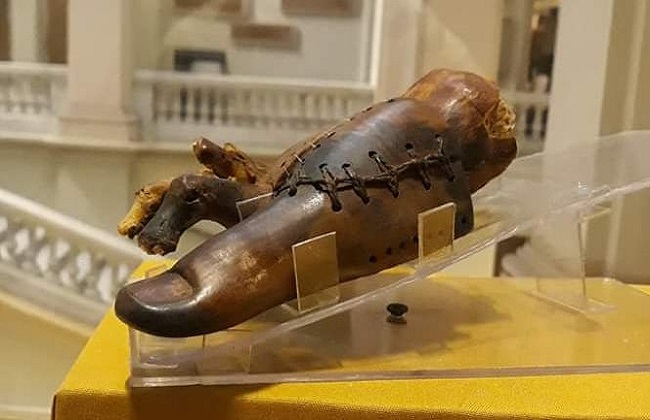
Deep within the necropolis of Thebes, archaeologists and medical historians uncovered a secret that shifted our understanding of human history. It wasn't a weapon of war or a ritualistic idol, but a prosthetic toe. This artifact represents more than just early handicraft; it is the definitive proof that the Ancient Egyptians were the world’s first true masters of surgery and bio-mechanical engineering.
The Egyptian Medical Philosophy: The "Swnw"
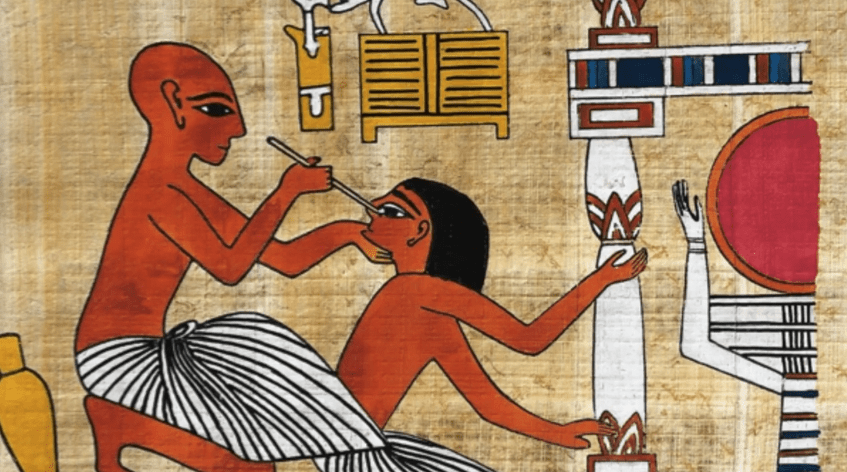
To understand how a surgery performed 3,000 years ago could be successful, one must understand the Egyptian approach to the human body. Unlike many contemporary cultures that viewed illness as purely a divine curse, the Egyptians practiced a dual system. While they respected the spiritual, they were intensely practical. The doctors, known as Swnw, were specialists. Some focused on the eyes, others on the teeth, and a elite group focused on "internal maladies" and trauma.
Their knowledge was codified in documents like the Edwin Smith Papyrus. This wasn't a book of spells; it was a trauma manual. It categorized injuries into "treatable," "contestable," and "untreatable." It is within this framework of logical diagnosis that the first successful amputations were born.
The Discovery: The Lady of the Thebes Toe
In the early 2000s, near the modern-day city of Luxor, a team of researchers examined a mummy from the Third Intermediate Period (c. 950–710 BCE). The mummy belonged to a woman, likely the daughter of a priest, who lived to a mature age. Upon examining her feet, they found something extraordinary. Her right big toe had been surgically removed, and in its place was a sophisticated replacement made of wood and leather.
This wasn't a "funeral prosthetic" meant only to make the body look whole for the afterlife. This was a functional medical device. Modern forensic analysis of the bone showed that the amputation site had healed perfectly. There were no signs of the ragged bone edges or infection that usually characterized pre-modern amputations. The woman had lived for many years after the surgery, walking on her new artificial toe.
The Engineering of the First Prosthetic
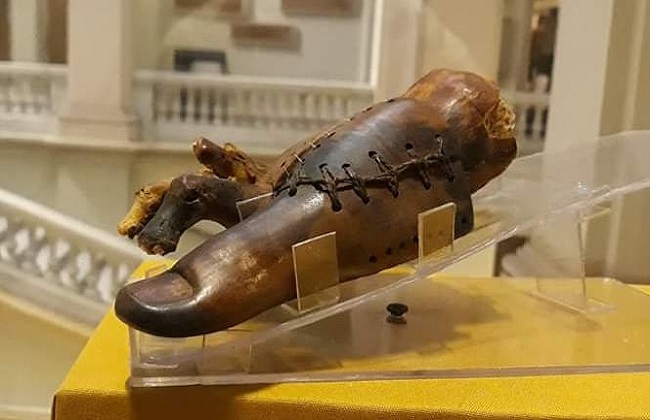
What makes the "Thebes Toe" a landmark in human history? It is the complexity of its design. If you were to look at a prosthetic from the Middle Ages or even the early industrial era, they were often rigid—clunky wooden legs or iron hooks.
The Egyptian version was light-years ahead. It was constructed of three separate components:
-
The Main Body: Carved from high-quality wood, shaped to mimic the exact contour of a human toe.
-
The Attachment Plate: A lateral piece that hugged the side of the foot, providing stability.
-
The Flex-Joints: The pieces were joined by intricate leather thongs. This allowed the "toe" to hinge.
When we walk, the big toe carries about 40% of our body weight and is responsible for the "push-off" motion. The Egyptian designers understood this. By creating a hinged device, they allowed the woman to maintain a natural gait. Microscopic wear patterns on the bottom of the wood confirm that it bore the weight of a walking human for a long duration.
The Surgery: How Did They Survive?
In an era without electricity, modern anesthesia, or chemical antibiotics, how did a patient survive a toe amputation? The answer lies in the Egyptian pharmacy.
-
Antiseptics: They used honey and resin. Honey is naturally hygroscopic (it draws out moisture) and produces hydrogen peroxide, effectively killing bacteria.
-
Pain Management: While they didn't have general anesthesia, they used derivatives of the poppy and even "Sienna marble" powder mixed with vinegar, which created a local numbing chemical reaction.
-
The Cut: Using copper or bronze scalpels, the Swnw performed precise cuts. They understood the need to leave a "flap" of skin to fold over the bone, a technique still used in modern surgery to ensure the stump can heal and eventually bear the pressure of a prosthetic.
Bridging the Gap: Surgery vs. Art
This discovery blurred the lines between the doctor and the craftsman. The creation of the prosthetic required a "multidisciplinary team"—a concept we think of as modern. The surgeon had to prepare the foot, and the master carpenter had to measure the gait.
The aesthetic detail was also staggering. The wooden toe featured a carved fingernail and realistic ridges. This speaks to the Egyptian value of Ma’at (balance and harmony). Restoring a patient wasn't just about utility; it was about restoring their dignity and their place in society.
The Wider Context of Pharaonic Healthcare
The Thebes Toe is the most famous example, but it wasn't an isolated incident. Evidence from the workers' village at Deir el-Medina (the men who built the Valley of the Kings) shows that the state provided "healthcare." We have records of workers taking "sick leave" for eye infections or injuries.
Skeletons found at these sites show successfully set fractures. Bones were aligned with wooden splints and wrapped in linen. The level of "union" (the bone knitting back together) seen in these remains is often as straight as what we see in modern X-rays. They were even performing early forms of brain surgery (trepanning) to relieve pressure from hematomas, with patients surviving the process.
Why the 2026 Perspective Matters
As we look back from 2026, a year where bionic limbs are integrated with neural interfaces, the Thebes Toe remains our "Version 1.0." It proves that the human desire to overcome physical limitation is as old as civilization itself.
For the modern traveler or history enthusiast, visiting Egypt is no longer just about seeing the tombs of dead kings. It is about standing in the place where the first steps toward modern medicine were taken. When you walk through the temple of Kom Ombo and see the wall reliefs depicting forceps, scalpels, and birthing chairs, you are looking at the birth of a science that saves lives today.
The Philosophical Impact
The Ancient Egyptians believed that to enter the afterlife, the body must be "Sah"—perfected or whole. This religious drive pushed their medical science to heights that the Western world wouldn't see again until the Renaissance. They didn't see a prosthetic as a "fake" limb, but as a "restored" limb.
This woman from Thebes, walking through the bustling markets of her time with her wooden toe clicking against the stone, was a living testament to human ingenuity. She wasn't defined by her disability; she was empowered by her society’s technology.
Conclusion: The First Step into the Future
The story of the first amputation and prosthetic is a humbling reminder that we are not as "new" as we think we are. The Ancient Egyptians were the first to treat the human body as a machine that could be repaired, maintained, and even upgraded.
The next time you view a Pharaonic artifact, look past the gold. Look for the small, wooden, and leather details. There, you will find the true genius of the Nile—a civilization that refused to let the loss of a limb be the end of a journey. They chose to build a bridge between what was lost and what could be, and in doing so, they took the first step for all of humanity.
Traveler’s Note for 2026
If you are exploring Egypt this season, make sure to visit the Egyptian Museum in Cairo or the Luxor Museum. Seeing these medical tools and prosthetic evidence in person provides a profound connection to the people who once walked these lands—not as myths, but as people who sought healing just as we do today. Whether you are arriving for a luxury Nile cruise or an archaeological tour, the medical history of Egypt is the "hidden" itinerary you shouldn't miss.





-webp.webp "Hilton")
-webp.webp "dusit")
-webp.webp "Marriott Hotels")
-webp.webp "Azimut Hotel")
-webp.webp "Golden Tulip")
-webp.webp "sheraton")
-webp.webp "westin hotel")
-webp.webp "Movenpick")
