
Famous Ancient Egyptian Temples
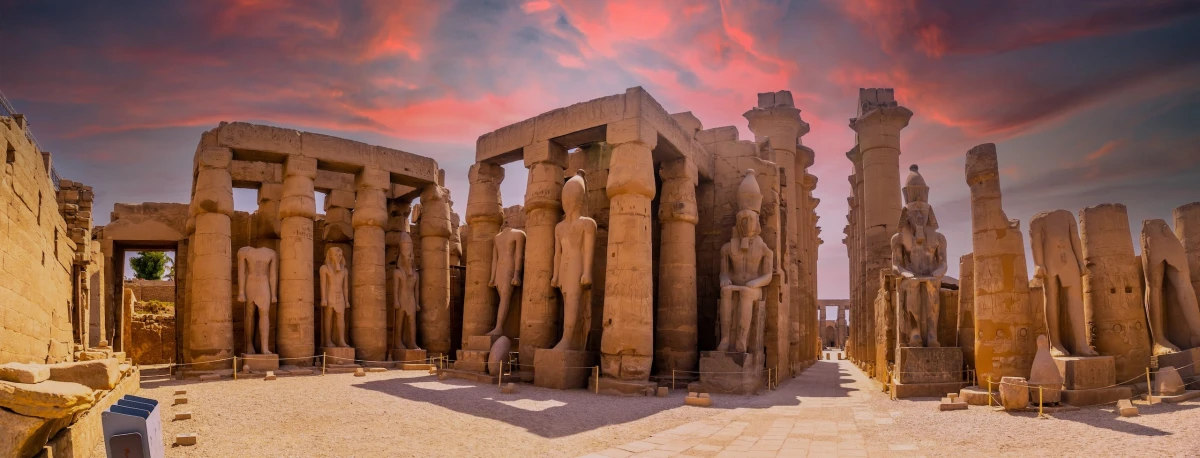
Egyptian temples functioned as worship sites dedicated to both gods and pharaohs, while serving as royal residences for the Egyptian deities. The Egyptian culture developed a succession of sacred shrines throughout its history, which they considered holy sites for their gods and royal descendants from heaven.
The Egyptian temples were made of stone, for the simple reason that they were the abode of the immortal gods, so they had to be long-lasting. In this sense, its walls were to protect the deities.
Types of Ancient Egyptian Temples and Their Purposes
Every temple constructed by the Egyptians served a distinct purpose because its design in both worship and design elements was dedicated to a specific deity. The following Egyptian temples, which exist as distinct types, can be identified in their respective sacred structures.
Solar temples arose with the intention of deifying the potential of the sun god Ra. Located mostly in desert areas, one notable example is the Solar Temple of Niuserre, which consisted of an open-walled courtyard with an altar and, behind it, a great obelisk where the sun’s rays were reflected. Funeral temples, although they did not have a very distinct structure, were monuments dedicated to the cult and remembrance of Egyptian pharaohs. In the classical period, temples were usually dedicated to a single god and built inside large fortified enclosures; among the most famous examples are the Luxor Temple, dedicated to Amun, and the Karnak Temple Complex.
13 Must-See Ancient Egyptian Temples
The Egyptian pharaohs and priests were the only individuals who could enter the temples while the people could only access the courtyards during ceremonial events. The rituals that were carried out in them revolved around achieving the protection of the people against the dark energies, and thus to seek the prosperity of ancient Egypt.
1- Karnak temple
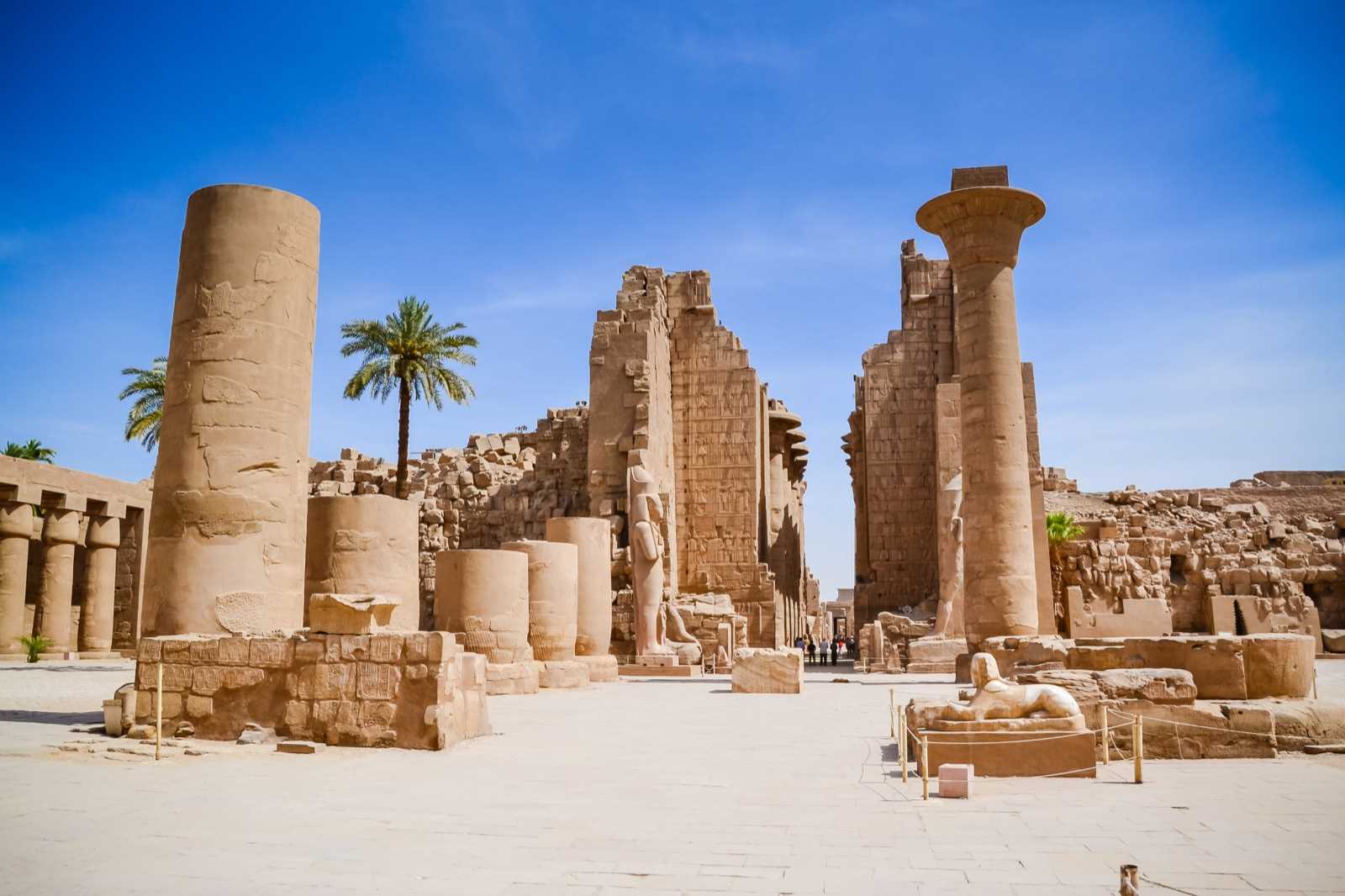
Karnak Temple. The complex served as both the main religious center for the great god Amon and the location where various chapels and temples dedicated to other deities were built.
The Karnak Temple stands as Egypt's largest temple which served throughout history as an extensive resource for studying Egyptian cultural practices and their deities. Ongoing excavations at the site continue to reveal fresh archaeological findings. The construction of the building started in 2200 BC and ended in 360 BC when various pharaohs including Hatshepsut Seti I Ramses II and Ramses III worked on its development.
The enclosure of Karnak Temple extends 2400 meters which it protects with an 8-meter-high adobe wall. The Temple of Amun main enclosure contains various temples including those dedicated to Khonsu. Ptah. Osiris. the Temple of divine regeneration of Taharqa. the Jubilee Temple of Amenhotep II. the Temple of Ramses III. The site contains various chapels which include the Tripartite Chapel of the Boat of Seti II.
The Ancient Egyptians initiated temple construction by beginning work at the sanctuary area of their sites. Karnak construction started from its central point and proceeded until workers finished their tasks at the entrance of the sacred area. The entire complex displayed elaborate decorations which appeared in vibrant colors throughout the structure. The Great Temple of Amon extended its main structure in two directions, which ran from east to west and from north to south. The temple base located on a mound which held sacred status served as the starting point for temple construction that extended toward multiple directions instead of just facing the Nile River.
2- Luxor temple
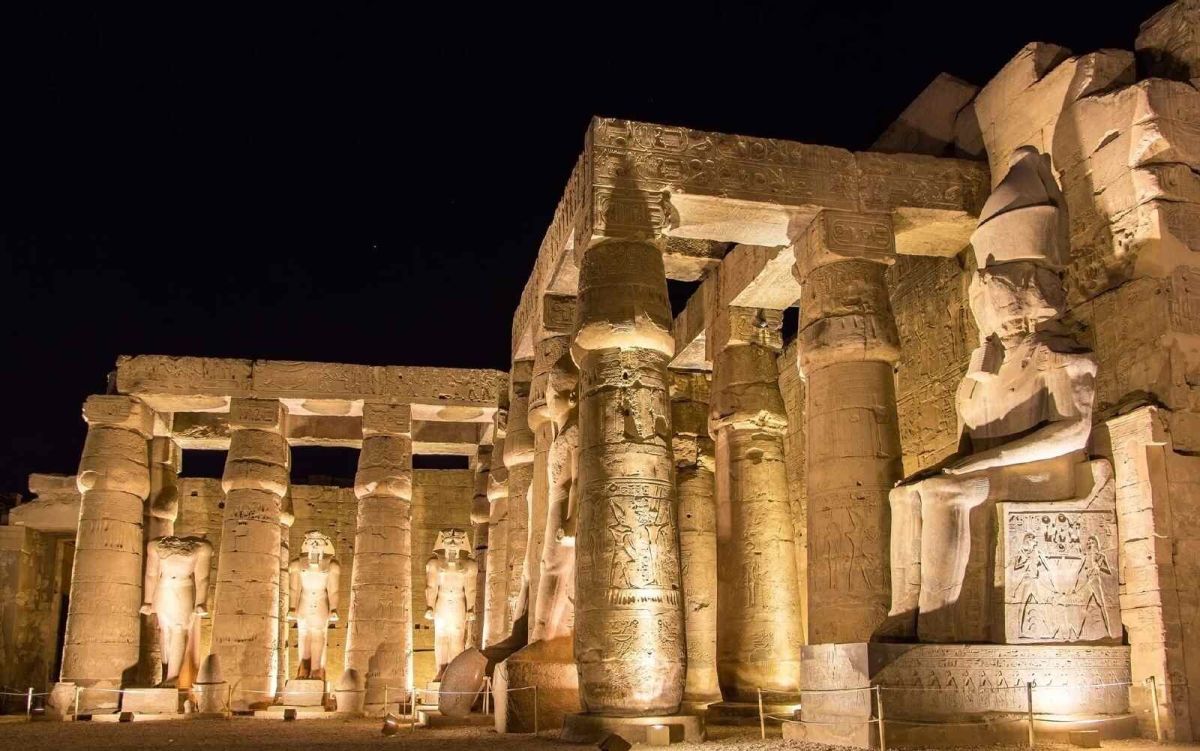
The Temple of Luxor was constructed by Amenophis III and completed by Ramses II to honor the deities Amon-Ra and Mut. The temple dedicated to Amun was constructed by the two great builders Amenhotep III and Ramses II who completed separate parts of the structure during their respective reigns. The great temple received additional contributions from various historical figures who visited the site. Tutankhamun Horemheb and Alexander the Great used their laborers to build monuments that would achieve permanent remembrance of their names.
The temple construction adheres to classical architectural standards through its implementation of a central courtyard and hypostyle room and vestibule and sanctuary design. The temple entrance displayed a Pentaur poem which described the pharaoh's military worth. The front area contains two obelisks which include a 25-meter tall obelisk that stays in place and an obelisk which Mohamed Ali donated to Place de la Concorde in Paris during 1836.
The entrance is also where the seated statues of Ramses II are located, of unimaginable size, decorated with images of prisoners representing the nine peoples conquered by Egypt. The statues which stand at more than 15 meters in height were constructed using gray granite.
The courtyard features 74 columns which display multiple deities alongside the pharaoh. The central sanctuary contains three chapels which Ramses II dedicated to the gods Amun, Mut, and Khonsu. The sacred boats used these spaces as their main storage locations.
3- Dendera Temple complex
Dendera is a small village located on the west bank of the Nile, 60 km north of Luxor. The Dendera temple which people also call the House of Hathor serves as a temple dedicated to Hathor who Greeks connected with their goddess Aphrodite who represents love and joy and beauty.
The Temple was built between 30 BC, making it one of the newest temples in Egypt. The structure was constructed above an earlier temple which still has anunknown construction date. The design of the "new" temple probably used elements from the earlier temple as its foundation.
The Hathor temple has a square shape and is surrounded by a portico with columns and thick walls that rise to half the height of the columns. The temple exterior displays multiple reliefs which show different figures and rituals.
4- Abydos temple
This temple stands in the Kom el-Sultan area because it shares its existence with the Seti I Temple and the Ramses II Temple which are both situated in close proximity to the temple. The temple exists from First Dynasty times according to historical records which date its existence from that period to the present day based on archaeological evidence found at the site.
The Temple has not been completely preserved and is worse preserved than the cenotaph Temple of Seti I, but its structure can be completely seen. The second pylon displays only its lower segments which remained standing from its original structure. The outdoor spaces contain many reliefs which display their original colors because they have been preserved in excellent condition.
5- Temple of Taffeh
During the Roman era in Egypt, Emperor Augustus ordered its construction. The site originally served as a dedication to the goddess Isis but functioned as a component of the military Roman fortress Tapis which existed in southern Egypt. The site later transformed into a Christian worship temple.
6- Mortuary temple of Hatshepsut
This temple constructed through the architectural techniques which Hatshepsut used to build her Deir el-Bahari temple, represents her design vision through its pure geometric design. The building showcases feminine elegance through its modern architectural design and through the porticos which display polychrome paintings of Egyptian trade routes to Somalia.
7- The Temple of Horus at Edfu
The temple stands as Egypt's second largest temple which follows Karnak as the first and it remains in better condition than any other ancient site. The site maintains its excellent preservation because desert sand completely covered it until 1800 ended.
The temple dedicated its worship to the God Horus. The entire central area remains covered with roofs that used to display extensive colorful murals. The building provides direct access to an outdoor gallery which displays numerous intact hieroglyphics that have served as essential historical resources for scholars. The object stands as their ultimate valuable possession.
8- Kom Ombo temple
The site exists at a distance of 50 kilometers from Aswan. The construction process started in the second century BC during the Ptolemaic dynasty and the temple complex consists of two identical temples which share the dedication to separate deities. The southern half of the temple complex dedicated itself to the god Sobek who appeared with a crocodile head while the northern half dedicated itself to the god Horus who appeared with a falcon head. The structure of the building contained two main entrances together with two separate religious areas and two hypostyle rooms and additional shared spaces.
9- Abu Simbel
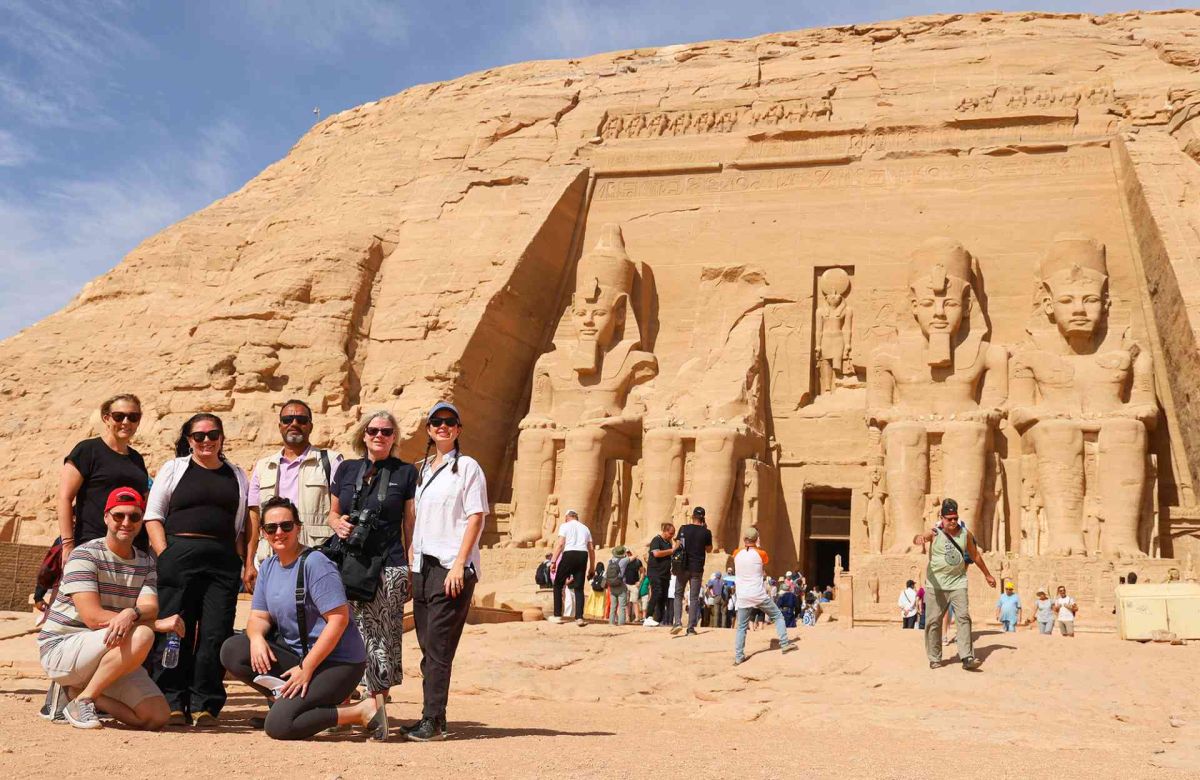
Abu Simbel is one of the most historically interesting archaeological sites in Ancient Egypt. The temple served its purpose for Ramses II because he constructed it approximately during 1274 BC as a tribute to the Kadesh battle and to honor the deities Amun, Ra, and Ptah. The construction project, which took 20 years to finish, built this impressive structure to show southern people Egyptian religious beliefs.
The Great Temple is accompanied by a smaller yet equally beautiful temple which dedicates itself to the queen Nefertari and the goddess Hathor. The entire site was moved stone by stone to a new location which exists 231 kilometers southwest of Aswan on 1964 the western shore of Lake Nasser. Today, it is the Open Air Museum of Nubia and Aswan which exists as a UNESCO World Heritage Site.
10- Temple of Ellesyia
Pharaoh Thutmose III built a temple in 15th century BC to worship the gods Amun and Horus and Satis. The work from the 18th dynasty operated between the first two Nile River waterfalls as they excavated it to place it into the rock. The Egyptian government chose to donate this item to the birthplace of civilization which they considered as the cradle of civilization. Italy received this monumental gift from Italy in 1965 which contained priceless national heritage elements. The Egyptian Museum in Turin presents its 1990 restoration as a major attraction.
11- Temple of Dendur
The sanctuary dedicated to the goddess Isis first started construction in 15 BC when Emperor Augustus ordered its creation through Gaius Petronius who served as Prefect of Egypt. The original structure of the Dendur temple in Nubia needed relocation to safeguard its architectural integrity. The first stop of its 642 blocks was the island of Elephantine. The MET in New York displays exquisite reliefs of Isis, Osiris, Horus which include lotus flower designs because the Arab Republic of Egypt donated these artifacts to the United States Government in 1965.
12- Temple of Khnum
The Temple of Khnum at Esna stands 54 kilometers south from Luxor while its location near Esna pier extends into the Nile River. The temple of Jnum which exists in a moat that reaches a depth of nine meters contains only its Roman era section because all other parts remain unexcavated. The structure uses 18 columns to support its roof which displays various floral capitals that include palm leaves and lotus blossoms and grape clusters. The wall engravings show Roman emperors who make offerings to local gods while dressed in pharaonic clothing.
13- Philae Temple
The temple dedicated to Isis stands as an exceptional structure which showcases its remarkable features through its decorative bougainvillea and its multiple viewing spots that provide access to its beautiful vistas. The most surprising thing, however, is that this temple was deconstructed, stone by stone, on its original site under the waters of the dam and rebuilt in all its splendor on the small island of Agilkia, twenty meters above.



-webp.webp "Hilton")
-webp.webp "dusit")
-webp.webp "Marriott Hotels")
-webp.webp "Azimut Hotel")
-webp.webp "Golden Tulip")
-webp.webp "sheraton")
-webp.webp "westin hotel")
-webp.webp "Movenpick")