

Egypt Travel Guide: Must-See Monuments, Nile Cruises, and Insider Logistics
Egypt Tours: The Ultimate Guide to the Best Egypt Tours & Egypt Travel
The moment Egypt gets mentioned , it instantly brings up a rush of iconic images. You kind of picture yourself standing at the foot of the huge Giza Plateau while the morning sun hits the Great Pyramid and basically burns off the desert mist. Then you’re imagining walking through the brightly painted underground burial chambers of the Valley of the Kings, or you’re just watching the white canvas sails of a traditional felucca drift along the Nile at sunset… it all feels very real.
Egypt isn’t only a standard holiday destination either. It’s more like a profound journey, back to the cradle of human civilization, and that sounds dramatic but, you know, it really lands that way. Going there lets you step right into what feels like the pages of history books. Still, since the country covers an enormous geographic distance—running from the lively Mediterranean vibe in Alexandria all the way down to the quiet nubian landscapes around Abu Simbel near the Sudanese border—planning a truly authentic itinerary can start to feel like, too much. Too fast. Too many choices, and you’re not even halfway through deciding.
So, to help you smoothly turn your travel fantasies into something perfectly organized and real, this comprehensive guide lays out the absolute best ways to experience Egypt, the key regional highlights you shouldn’t miss, and practical insider strategies for a flawless modern adventure through Egypt.
The Core Route: Constructing Your Ideal Egypt Itinerary
An authentic, comprehensive Egyptian vacation kinda hinges on a proven travel corridor people often call the "Nile Axis." Since the ancient Egyptians lined up their monumental temples, palaces, and tombs along the life-giving Nile River, it’s pretty natural that a first time itinerary drifts along this geographic backbone.
If you want the whole package, like balancing old history, everyday culture, and some downtime, your route really should stretch about 10 to 14 days and move in a fairly structured progression:
Geographic Zone Ideal Duration Primary Historical & Cultural Focus
Cairo & Giza 3 - 4 Days The Pyramids, Sphinx, Old Coptic Cairo, and the Grand Egyptian Museum (GEM).
The Nile Corridor (Luxor to Aswan) 4 - 5 Days Karnak Temple, Valley of the Kings, Philae Temple, and river cruising.
Abu Simbel 1 Day The massive rock cut temples of Ramesses II (usually a day trip from Aswan).
The Red Sea Riviera (Hurghada/Sharm) 3 - 4 Days World class coral reef diving, upscale coastal resorts, and desert unwinding.
1. Cairo & Giza: The Historic Hub
Your journey will probably start in Cairo, a sprawling city where the really old history meets that 21st-century energy kind of vibe . It’s kind of impossible to miss, honestly.
No visit to Egypt really feels finished unless you give a full morning to the Pyramids of Giza and the Great Sphinx. Instead of sprinting through the area, slow down a bit, let yourself take in the huge engineering feat of the Great Pyramid of Khufu—the only surviving wonder from the ancient world.
Right nearby, on the same plateau, you’ll find the Grand Egyptian Museum (GEM). This place is said to be the biggest archaeological museum complex on earth. It covers more than 5 million square feet, and it holds as a permanent home for over 100,000 ancient artifacts. There’s also the first full public showing of all the treasures recovered from King Tutankhamun's tomb since it was found back in 1922.
And once you’re done with the pharaonic structures, make sure your Cairo tour also includes a stroll through the calm stone lane s of Coptic Cairo, where the Hanging Church is legendary. Then, in the evening, wander through the maze of spice vendors and copper workshops inside the historic Khan el-Khalili bazaar .
2. Luxor: The World's Greatest Open-Air Museum
From Cairo, you can do this as a quick domestic flight, or if you like less fuss and more romance, an overnight train that’s kinda scenic—either way you end up going south into Upper Egypt and then, pretty much, arriving in Luxor. The place is split by the Nile right down the center and Luxor, honestly, feels like it has the densest pile of archaeological monuments anywhere on the planet.
On the East Bank (The Land of the Living): this is where the sun comes up and you start with the huge Karnak Temple Complex. Take your time, walk slow through the Great Hypostyle Hall and you might even feel like it’s the stone that’s warm, as you pass your fingers over those massive columns, intricately carved, towering around 70 feet up into the sky. Later, at night, you’ll see the Luxor Temple lit up beautifully, and it links back to Karnak through the freshly restored avenue of Sphinxes.
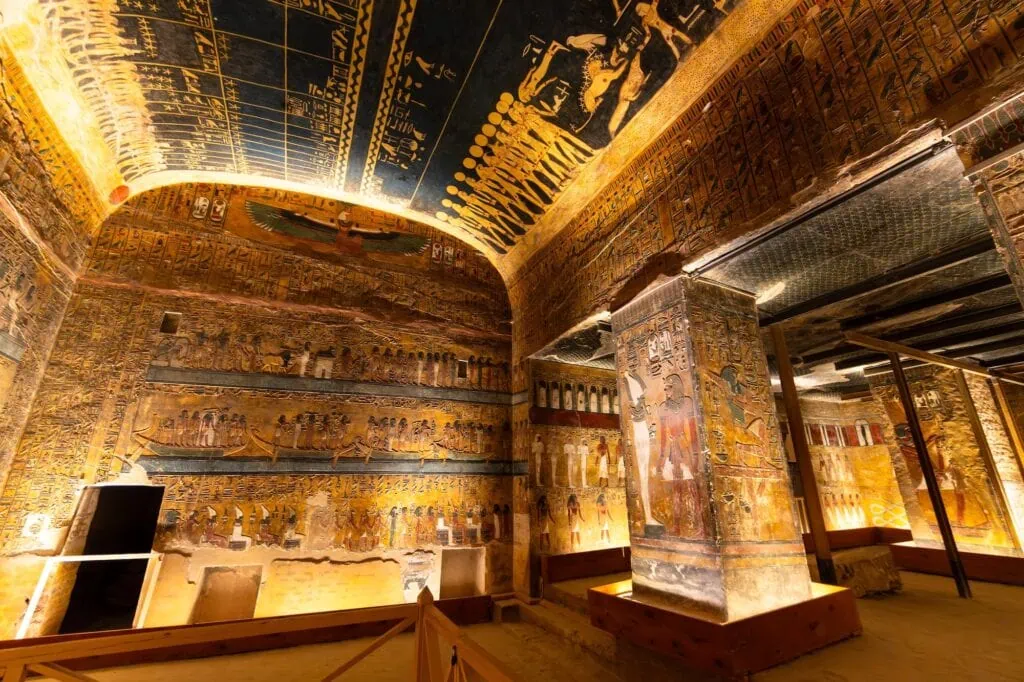
On the West Bank (The Land of the Dead): where the sun goes down, you cross the river and head out toward the Valley of the Kings. It sits hidden in a severe desert gorge, and those underground, rock-cut tombs were made to safeguard mummies and the treasures belonging to Egypt’s pharaohs. Inside, the vivid, multi-colored hieroglyphic paintings along the walls still look jaw dropping bright, like the ancient painters put their brushes away just yesterday, no exaggeration.
3. The Nile River Cruise: A Timeless Travel Tradition
Even though you can travel between Egypt’s southern historical sites by train or in a private car, the truly best way to feel the whole shift from Luxor to Aswan is to be onboard a traditional, multi-day Nile River cruise.
Going down the Nile isn’t just a way to get from A to B, it’s more like this slow, immersive pause in everything. As your boat drifts, almost lazily, along the river, you can sit back on the top sun deck and catch rural Egyptian life rolling by. The banks look lush, green, and calm, the same way they have looked for thousands of years. You’ll see farmers tending their water buffalo, kids waving from palm lined river edges, and classic wooden felucca sailboats sliding past without hurry.
Plus, cruising gives you kind of effortless, ready-made access to amazing riverside monuments that are harder to reach any other way, like the double Temple of Kom Ombo, which is dedicated to the crocodile god Sobek, and the remarkably well preserved Temple of Edfu.
4. Aswan & Abu Simbel: The Nubian Frontier
Your river cruise will sort of, comfortably end in Aswan, a pretty scenic city that’s slower paced, and where the Nile winds through dramatic granite boulders and golden sand dunes that drop right into the water. Aswan is really the heart of Nubian culture, and it’s known for vibrant brightly painted villages and musical traditions that feel unique, in a quieter way. The big moments here include the island Temple of Philae which feels romantic, dedicated to the goddess Isis, plus the massive Aswan High Dam.
After Aswan, you’ll need to continue the essential pilgrimage even further south to Abu Simbel. Those temples were carved straight into a solid sandstone cliffside by Pharaoh Ramesses II, and they come as two twin temples that feature four colossal 65-foot seated statues guarding the entrance.
This place is also a true marvel of modern engineering; back in the 1960s, a huge UNESCO international rescue operation managed to cut the whole temple complex into massive blocks , and then moved it 200 feet higher up the hillside, so it could be saved from the rising waters of Lake Nasser.
Modern Rules of the Road: Tips for a Flawless Journey
To make your trip across Egypt feel really smooth, safe, and not at all stressy, keep a few practical, modern “insider” tricks in mind, ok:
The Cashless Shift: The Egyptian government has pushed pretty hard to make most big archaeological areas and museums 100% cashless for entry. That means you generally can’t buy tickets for the Pyramids, the GEM, or the temples in Luxor with physical cash anymore. Instead you swipe a physical international credit/debit card (Visa and Mastercard are usually accepted everywhere that matters) at the ticket desk, or you buy the ticket electronically before you go via the official government online booking portals.
Secure Online Payments: When you’re picking a boutique operator or an independent agency for your main land route plus internal flight packages, try to choose companies that push your reservations through heavily encrypted systems, not just random checkout pages. One example people mention is WeTravel. These types of platforms are built around bank-level PCI-DSS Level 1 Encryption, so you can pay deposits or even use interest-free installment type schedules from home, while your sensitive banking details stay tokenized and protected, so leaks are less likely.
Embrace Baksheesh (Tipping): Even if most purchases become digital, physical cash still rules for everyday human interactions, especially the cultural parts. Baksheesh is basically a socially embedded practice in Egypt, and it’s not really optional in many moments. Keep a small pocket stash of Egyptian Pound (EGP) bills, so you can tip airport porters, cruise cabin stewards, and drivers when they help a lot or go the extra mile during the ride.




-webp.webp "Hilton")
-webp.webp "dusit")
-webp.webp "Marriott Hotels")
-webp.webp "Azimut Hotel")
-webp.webp "Golden Tulip")
-webp.webp "sheraton")
-webp.webp "westin hotel")
-webp.webp "Movenpick")