
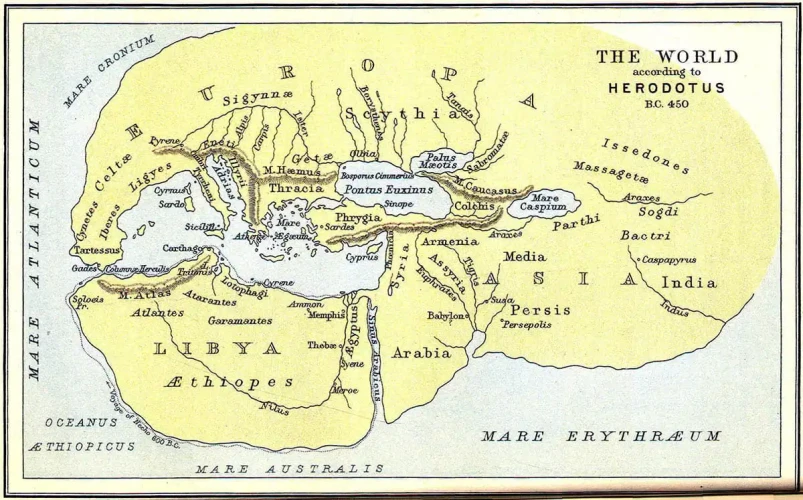
Echoes of the Nile: The Egyptian Travels of Herodotus
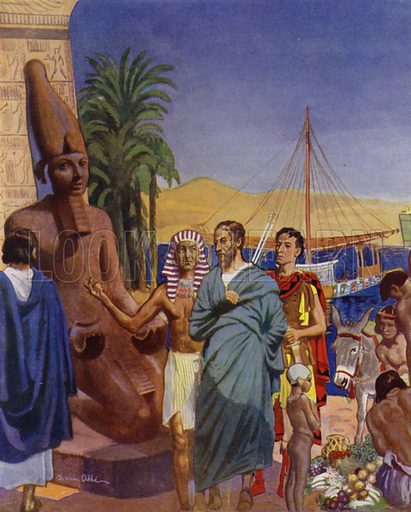
The bustling Greek marketplace of 440 BCE would have revealed to you a man who read from a large scroll which showed signs of frequent use. The speaker presented "Inquiries" which derives its name from the Greek word historia because he read from a scroll which contained his research. Herodotus spent many years conducting research which he recorded in his notebook while he developed his endless stream of questions.
The year 2026 shows our society's fixation on travel bloggers and influencers who share their discoveries of secret locations. The original travel influencer for the world existed in the person of Herodotus. His research interest extended beyond the identification of war winners to the study of Egyptian cat worship and the construction methods of pyramids and the reasons behind Nile River flooding which happened when all other rivers stopped flowing. The human aspect of his existence becomes evident through his discovery that history extends beyond chronological events since it contains all the remarkable and unusual elements which define human identity.
1. The Man Who Couldn't Stay Put
Herodotus was born in Halicarnassus (modern-day Turkey), but his spirit lived on the horizon. He visited Egypt during the Persian occupation, and he was absolutely captivated by it. Egypt stood before him as his neighboring country but he regarded it as the most ancient and mysterious civilization which existed throughout human history.
The Relentless Interviewer: The man studied monuments while he engaged in conversations with various individuals. The man conducted interviews with priests who worked in Memphis and sailors from Alexandria and merchants located in Heliopolis. The man needed to verify the actual human experience of events which he believed his sources had expanded upon through their numbers.
The "Autopsia" Method: He relied on autopsia—seeing it for oneself. He traveled to the site for verification whenever someone shared a story. This was the birth of investigative journalism.
2. "Egypt is the Gift of the Nile"
The most famous sentence about geography was written by Herodotus. He understood that the desert had no life without the existence of the river.
The Curious Scientist: In his second book, he dedicated most of his time to understanding the reasons behind the Nile's summer floods which occurred during the summer months that followed the Greek river patterns. His scientific conclusion failed to be correct but his method of using logic together with observation established the foundation of contemporary geographical study.
The Landscape Artist: He described Egyptian soil as "black and crumbly" which he compared to both the red soil of Libya and the stony ground of Greece. He considered the earth to function as a historical witness.
3. The "Father of Lies" or the Father of Truth?
The ancient critics through two hundred years described Herodotus as the "Father of Lies" because he reported stories about gold-digging ants and flying snakes. Modern archaeology has shown that many of his "outlandish" claims have been proven to be true.
The Skeptical Reporter: What people often forget is that Herodotus frequently added: "I am bound to report what is said, but I am not bound to believe it." The first person to record "oral history" documented what people believed, which he considered to be as significant as actual events.
The Honest Historian: He showed his research origins to the public. He recorded what a priest told him about the construction of the Pyramids through "wooden machines" which he could not see.
4. The "Upside-Down" Culture
The most human part of his writing exists in his authentic astonishment about how Egyptians differed from Greeks. The following fact captivated him:
Egyptian women conducted their market activities while men stayed home to weave.
They wrote from right to left (the opposite of the Greek style).
They used their feet to knead dough while their hands handled mud.
He referred to them as "wonders" instead of using the term "barbarians" to describe them. The Egyptian culture held greater value for him because he considered it to be older than his own culture, which demonstrated his ability to accept different cultural practices that remained relevant through 2026.
5. The First Tourist at Giza
Herodotus provided the first comprehensive "tourist report" about the Giza Pyramids through his writing.
The Laborer’s Diet: He famously noted an inscription on the Great Pyramid that listed how much was spent on radishes, onions, and garlic for the workers. The Pharaoh's honor remained secondary to him because he regarded builder labor as equal to the Pharaoh's honor.
The Construction Mystery: He claimed it took 100,000 men working in shifts to build the Great Pyramid. Herodotus provided the first estimations of the human scale measurements for these structures which exist today.
6. The 2026 Perspective: Why We Still Listen
The present-day world which focuses on "short-form" content and 15-second video clips needs Herodotus to teach us to take our time and hear the complete narrative.
Cultural Empathy: He was a man who crossed borders during a time of war and looked for what was beautiful in "the other."
The Power of Story: He understood that facts alone don't move people; stories do. The "Gift of the Nile" exists in our memory because he presented it as a story instead of a simple fact.
7. The Man Who Saved Our Memories
The ancient world remains inaccessible to us because we lack Herodotus' writings which would have explained Egyptian mummification methods and the everyday activities of their priests. The historian functioned as more than a historian because he studied the complete range of human experiences throughout history.
The reading of his work delivers more than a standard textbook experience. The reader experiences a Nile River journey with a curious traveler who shares his secret about Memphis priests through a whisper. The curiosity of others becomes his first virtue because he believes every human being deserves to be investigated. The best method for understanding your own home requires you to explore different parts of the world.



-webp.webp "Hilton")
-webp.webp "dusit")
-webp.webp "Marriott Hotels")
-webp.webp "Azimut Hotel")
-webp.webp "Golden Tulip")
-webp.webp "sheraton")
-webp.webp "westin hotel")
-webp.webp "Movenpick")