


-webp.webp)
Echoes of a Lost Love: Unveiling the Secrets of Sheikh Abada
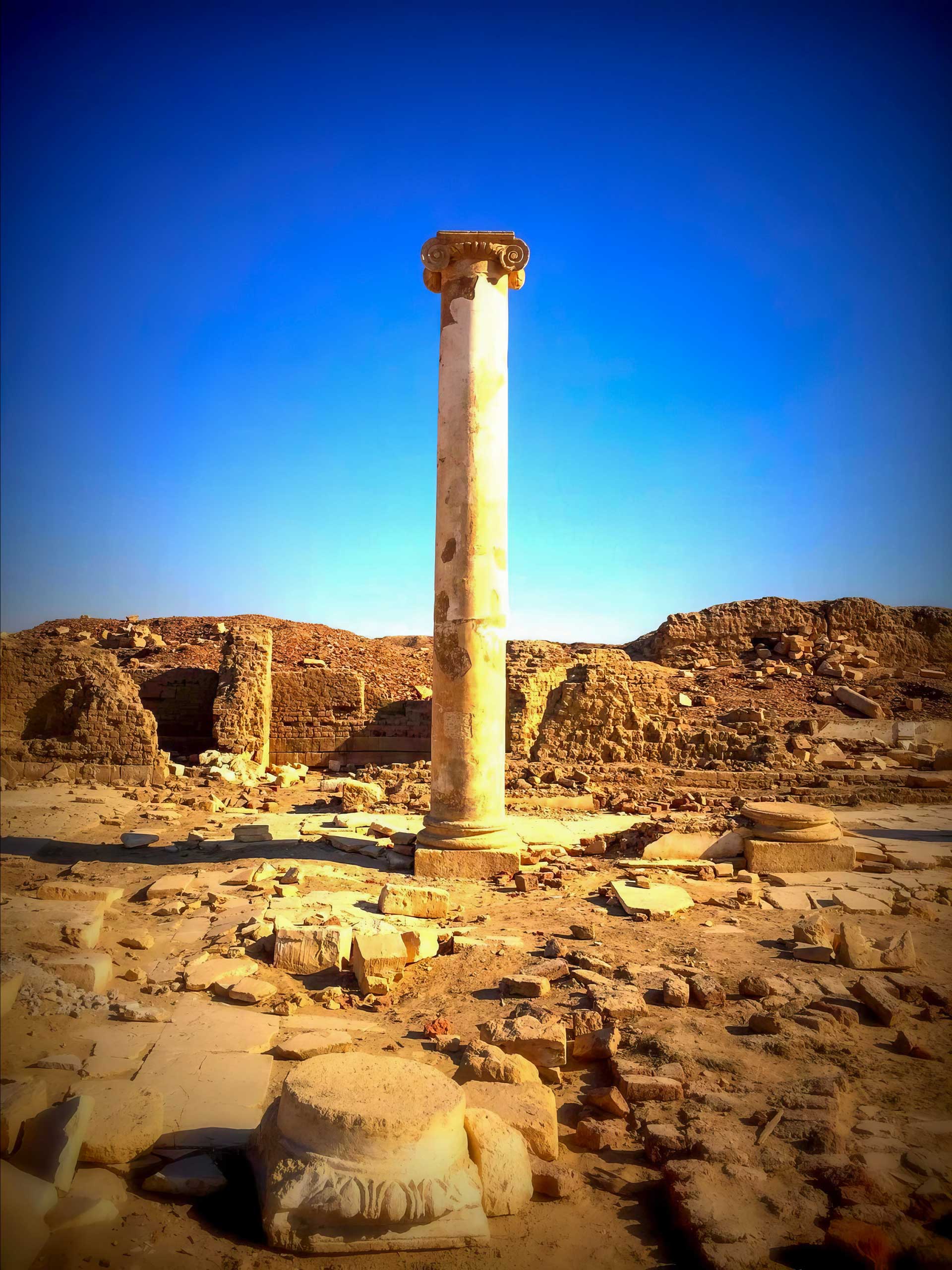
The existing situation at Sheikh Abada remains silent which creates a deep sense of present existence. The archaeological site known as Antinoopolis exists in Minya Governorate on the Nile's eastern bank which makes it distinct from all other Egyptian archaeological sites. The city did not exist to function as a border defense or to establish dominance over commercial routes. The establishment occurred because a man experienced total destruction of his life.
The year 2026 brings us multiple technologies which record all events yet people still find difficulty in dealing with permanent loss. The story of Sheikh Abada is a 1,900-year-old echo of that very struggle. The city exists as a creation which honors Roman Emperor Hadrian's emotional pain over his friend Antinous who had died. The story shows how love as a primary human feeling became part of Egyptian territory which created a heritage that lasted through multiple empires and religious changes and all historical periods.
1. The Moment the Nile Stood Still
The Roman imperial naval fleet advanced through the Nile River during October 130 CE. Emperor Hadrian reached his maximum power when he displayed his exceptional intelligence and constant drive for activity. The youth from Bithynia named Antinous stood next to him because his exceptional beauty attracted people throughout the Mediterranean Sea.
The Tragic Turn: The unthinkable occurred when The location Near the ancient city of Hermopolis experienced an unexpected turn of events. Antinous fell into the Nile and drowned. The details remain hidden within the deep waters because people have different theories about the incident which resulted in death. people believe it was either an unexpected accident or they think it was a sacred killing which protected the Emperor from his declining health.
Humanized Response: Hadrian reacted to the situation through his emotional response which displayed his vulnerability. He reacted like a broken man. The ancient historian Cassius Dio records that Hadrian "wept for him like a woman." Through his deep sadness he made the extreme choice to challenge the celestial powers. He declared Antinous a god and ordered that a magnificent city be raised on the very spot where the youth had vanished.
2. A Roman Dream in the Heart of Egypt
Antinoopolis existed as more than a village because it served as a "New Rome" which Hadrian designed to construct architectural beauty that would honor the memory of a lost building. The Architecture of Perfection: The city created a perfect urban design that extended through its entire area. The building used a strict grid layout which operated as a "Manhattan" duplicate on the Nile River while it contained two main colonnaded streets that met at a major tetrapylon.
The Grand Theater: He constructed a large theater which could accommodate thousands of audience members. The semi-circular ruins of this building remain visible to modern observers who scan the desert landscape.
The Hippodrome: He built Egypt's biggest chariot-racing track to maintain the city's energetic atmosphere. He envisioned a city where life and music and competitive events would create a vibrant atmosphere that opposed the death which had happened in that location.
3. The "Antinoopolite" People: A Life of Privilege
Hadrian, for the city of memory, knew that it had to have a soul. He invited Greeks and Egyptians who received "Antinoopolite citizenship." Social freedom was advanced through the residents being given a special right of epigamia, which sanctioned legal intermarriage between Greeks and Egyptians, creating a mixed society many centuries ahead of time.
Luxury trade: The city acted as a market for high textiles and medicinal merchants. Today the Sheikh Abada papyri prove the existence of a refined middle class—a class of doctors, weavers, artists, who lived in the City of Tears but filled it with the vigorous business of life.
4. The Transition: From Love to Faith
The world-transforming changes that occurred after Sheikh Abada came to life as its most authentic human element. The "City of a Pagan God" did not disappear; it changed its identity to become a "City of Saints."
The Christian Sanctuary: By the 4th century, the city had become a major stronghold for early Coptic Christianity. The theaters and temples which Hadrian constructed remained standing or were converted into functioning buildings that operated as new churches.
The Desert Fathers: The cliffs behind the city became a honeycomb of hermitages. Monks sought the same "silence" that Hadrian had found in his grief, but they channeled it toward a divine love.
The Martyrs: The city became famous for its devotion, becoming a site where many Christians stood firm in their faith during the Roman persecutions, eventually becoming a place of pilgrimage.
5. Sheikh Abada: The Islamic Veil
The present name Sheikh Abada originated from a historical period that predates its current usage. The city received its name from Ubada ibn al-Samit who served as a companion to Prophet Muhammad during the Islamic conquest of Egypt.
The Peaceful Overlap: The existence of a city which Roman founders established to honor a young Roman man now exists under the protection of an Islamic saint's name. The mosque and the ruins of the Roman arch exist in the same space.
The Living Village: The villagers of Sheikh Abada continue to inhabit their village which contains historical ruins. They use the ancient stones in their walls; their sheep graze in the old theater. The location functions as "living archaeology" because its inhabitants use the area as their residence instead of treating it as a historical exhibition.
6. The 2026 Perspective: Unveiling the Secrets
The "Echoes of a Lost Love" continue to exist in 2026 because Sheikh Abada functions as a mirror.
The Fragility of Power: Hadrian possessed the ability to create entire cities through his mountain-moving powers, yet he remained unable to prevent anyone from dying. His weakness creates an authentic connection that makes him the most understandable historical personality.
The Beauty of Blending: The city’s history from Roman to Coptic to Islamic demonstrates that Egypt exists as an interconnected tapestry. The land belongs to no single culture because each culture contributes a different cultural element to it.
The Archeology of Emotion: The study of historical events consumes our time, but Sheikh Abada exists to teach us about their fundamental reasons. Humans construct buildings through their love and their fear of extinction and their need to comprehend their environment.
7. The City That Refused to Drown
The name of Antinous remained alive after his Nile drowning because Hadrian established Antinoopolis as a permanent memorial site for the tragic event.
Sheikh Abada is a site for the romantic, the philosopher, and the historian alike. The site allows visitors to experience two thousand years of human history by sitting on a broken column. The statement demonstrates that our personal stories involving love and loss will persist beyond the existence of empires and changing religious beliefs.
Visitors to Minya should make sure they see the "City of Tears" attraction. The theater's silent space allows visitors to gaze at the Nile while they remember that the entire city exists because a man wanted to declare his everlasting remembrance for the water.



-webp.webp "Hilton")
-webp.webp "dusit")
-webp.webp "Marriott Hotels")
-webp.webp "Azimut Hotel")
-webp.webp "Golden Tulip")
-webp.webp "sheraton")
-webp.webp "westin hotel")
-webp.webp "Movenpick")
