
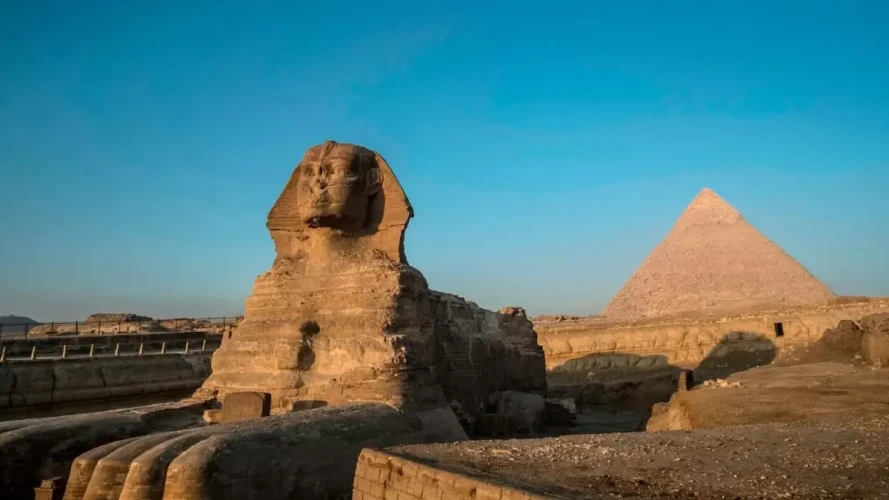
Did Aliens Build the Pyramids? Separating Cosmic Myths from Human History
The Great Pyramid of Giza remains an engineering mystery which people throughout history and across the internet have sought to solve for many centuries. The structure's enormous size and precise construction and ancient age create disbelief among many people who view it as a product of human craftsmanship. The public doubt about the existence of aliens started one of the most famous conspiracy theories which became known as the Ancient Alien Theory. The blueprints for the project come from "little green men" or instead we should recognize the actual intelligence of our ancient ancestors.
Why the "Aliens" Theory Stuck
The Pyramids of Giza stand as a physical representation of architectural achievement. People who search for extraterrestrial life do so because they find statistical evidence more compelling than other research methods:
The Scale: The Great Pyramid consists of roughly 2.3 million stone blocks which include blocks that weigh up to 80 tons.
The Precision: The pyramid stands aligned to True North with precision that matches modern GPS accuracy.
The Speed: The pyramid construction required block placement at intervals of several minutes throughout the entire 20-year period.
The contemporary person believes that only machinery and power tools can execute this task. The theory states that extraterrestrial visitors granted their technology to humans while constructing these stone monuments as a marker of their presence.
The Human Evidence: What Archaeology Actually Says
1. The Lost City of the Workers
People believed that slaves built the pyramids until modern evidence proved that trained workers constructed these structures. Excavations have revealed worker villages, bakeries, and medical facilities where workers received surgery for broken bones. Aliens don't need bakeries; humans do.
2. The Tool Marks and Quarries
The evidence shows that aliens used lasers to cut stones because the resulting melted surfaces and smooth edges remain visible. The actual evidence shows that workers used copper chisels and wooden wedges and stone hammers for their tasks. The quarries show visible marks which demonstrate how the Egyptians extracted half-finished blocks from the earth.
3. The Power of Water and Friction
How did they move 80-ton stones across the sand? A well-known wall painting depicts a worker using a sledge to pull a large statue while another worker sprays water on the sand path in front of it. Recent physics experiments prove that wetting the sand reduces friction by half, making it surprisingly easy to slide massive weights.
The "Orion Correlation" and Ancient Astronomy
A major "pro-alien" argument is that the three pyramids of Giza align perfectly with Orion’s Belt. While this alignment is real, it doesn't prove extraterrestrial help. The Egyptians were master astronomers; their religion was deeply tied to the stars. They didn't need aliens to tell them where the stars were—they spent every night watching them.
The Verdict: Human Ingenuity vs. Cosmic Intervention
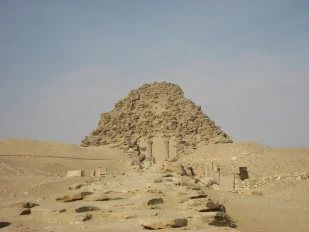
So, did aliens build the pyramids? The short answer is no. The practice of assigning these structures to extraterrestrial beings takes away from the remarkable achievements of ancient Egyptian civilization. The pyramids weren't built by magic or laser beams; they were built through trial, error, and sheer willpower. The learning process which Egyptians followed throughout their history shows actual progress from their initial attempts at pyramid construction until they reached their ultimate success at Giza.
The Real "Alien" Element
The pyramids only exhibit one alien element which comes from the different worldviews that ancient people held compared to modern people. The ancient Egyptians showed a unique ability to work together because their social structure required them to maintain strong relationships with their entire community.
What do you think? Is the mystery more fun when it involves UFOs, or is the reality of human achievement even more impressive?




-webp.webp "Hilton")
-webp.webp "dusit")
-webp.webp "Marriott Hotels")
-webp.webp "Azimut Hotel")
-webp.webp "Golden Tulip")
-webp.webp "sheraton")
-webp.webp "westin hotel")
-webp.webp "Movenpick")