


-webp.webp)
City of the Sun: The Rise and Fall of Akhetaten at Tell el-Amarna
.jpg)
The desert cliffs of Middle Egypt create a natural amphitheater which receives direct sunlight to display one of the most hauntingly beautiful ancient sites. The site of Tell el-Amarna marks the location where a king attempted to transform the national identity of his people. The ancient site of Akhetaten served as the "Horizon of the Aten" which operated as the world's central point for ten years before its existence ended.
The year 2026 brings us stories about transformation because Amarna provides the perfect example of human existence. The city functioned as more than a stone-built settlement because it served as a center for intellectual thought. The "Heretic King"and his Queen who became known as a legendary figure dreamed that people would discover a new way to view the world.
1. The Visionary Break: Why Akhenaten Left Thebes
The explanation of Amarna requires you to learn about the "Human" who executed the relocation. Pharaoh Amenhotep IV committed his most shocking act in 1346 BCE when he adopted his new name Akhenaten and rejected the Amun priests of Thebes while declaring Aten to be the only true god who exists.
Akhenaten selected Amarna for his capital because the location contained no sacred sites dedicated to other deities. The area existed as an untouched space. He asserted that the sun rose from the eastern cliffs to create a visual pattern which resembled the "Horizon" hieroglyph, which proved this location functioned as a sacred site.
The architects created a new construction process which used small bricks in their construction because they needed to complete their project at an accelerated pace. The construction process enabled workers to build a majestic city which emerged from desert grounds to develop into a complete "Pop-up Capital."
The 2026 Perspective: People commonly use the term "disrupting" to describe their intention of creating entirely new businesses and markets. Akhenaten originated the concept of disruption to all existing systems. Amarna served as his "startup city" which introduced an innovative design that combined simplicity with direct access to natural light.
2. The Amarna Style: Realism, Emotion, and the Nefertiti Factor
The art of Tell el-Amarna serves as the most effective means to present human qualities of the ancient Egyptians. Egyptian art maintained its rigid and official character until the start of this historical period. The human nature of Akhetaten emerged through its divine existence.
The Royal Family: The Pharaoh now appears to us as more than a distant god because we can see him as a father. Carvings show Akhenaten kissing his daughters, bouncing them on his knee, and holding hands with his wife, Nefertiti. The work presents a modern relationship through its fresh approach to show love between people.
The Nefertiti Bust: The world-famous Nefertiti bust emerged from an artist's workshop at Amarna which belonged to the sculptor Thutmose. The queen, who ruled with her husband as a co-ruler, appeared to the artist as a living woman who possessed a swan-like neck and a thoughtful gaze.
The "Flaws" of the King: Akhenaten ordered artists to create his statue with a long face and a heavy stomach and thin arms. The depiction of "Truth" (Ma'at) through his medical condition or his chosen symbol demonstrated a complete break from the idealized physical form of traditional kings.
3. Life in the Sun: The Layout of a Dream
The city of Amarna operated as a residential area which supported 30000 citizens in addition to royal inhabitants. The archaeological team in 2026 investigates how people lived their daily lives during their time at the royal residence.
The Great Aten Temple: The Amarna temples functioned as open-air structures which contrasted with the hidden temples of Luxor which functioned as secret worship sites. The structure lacked a ceiling. The king believed that to worship the sun, you had to be standing in its rays.
The Central City: This area served as the central business district which held the Royal Palace and the "Records Office," which contained the Amarna Letters. These clay tablets function as 3000-year-old diplomatic emails which show the king's urgent messages to foreign rulers in Babylon and the Hittite Empire.
The Workers' Village: The desert village functioned as a residence for artisans who constructed royal burial grounds. The presence of small houses and personal shrines shows that residents kept their traditional ties to ancient deities such as Bes who protected their homes.
4. The Shadow in the Sunlight: The Price of Revolution
The city of Amarna preserved its attractive features until its inhabitants faced mounting challenges which forced them to exceed their boundaries. The human cost of Akhenaten's vision for his empire directly affected his ability to perform his duties.
The commoners' cemetery skeletons show that ancient Egyptians experienced difficult life conditions according to recent research. The young workers faced two problems. The 99 percent of people who worked on the project experienced severe physical demands because they constructed an entire city from desert terrain.
The Isolation: While Akhenaten was writing poetry to the sun, the empire was fraying at the edges. The Amarna Letters show that his generals were begging for help to defend the borders, but the king was focused on his spiritual revolution.
The Lesson of Balance: Amarna demonstrates that great visionary plans can become destructive blind spots. The "City of the Sun" requires that its aesthetic appeal continues while its basic needs of the population are fulfilled.
5. The Fall of the Horizon: Why Amarna Became a Ghost City
The young Tutankhamun who succeeded Akhenaten as ruler faced pressure from the old guard to return the capital to Thebes while he needed to restore worship of the ancient deities. The Great Erasure caused all inhabitants of the cities to disappear from their homes. The destruction of temples occurred through their dismantling while the king's name disappeared from all monuments which remained in Akhetaten until natural forces buried it. The area developed into a "Heretic City" which existed as a "Heretic City" that "never happened."
The Preservation of Silence: The city remains abandoned because its inhabitants chose not to rebuild the city which allows sand to function as a permanent time capsule. Amarna serves as the most "pure" archaeological site in Egypt because it showcases an entire historical period which remained unchanged.
6. Where to Witness the Revolution in 2026
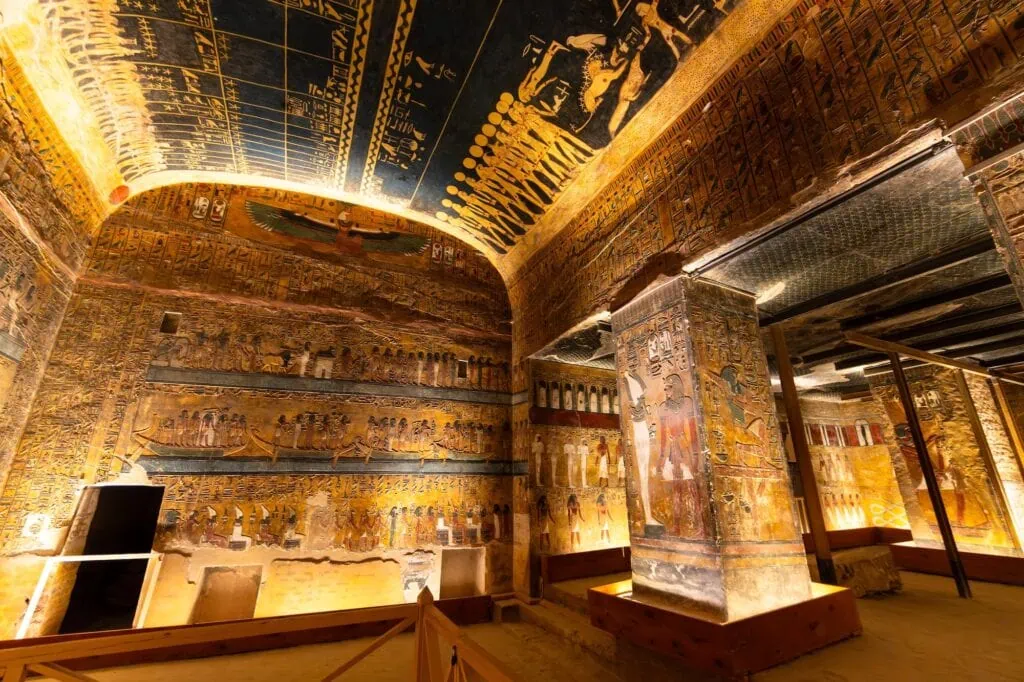
The Tell el-Amarna site creates an atmosphere of haunting tranquility which stands in opposition to the active Giza temple zone. The Royal Tomb: Deep in a lonely wadi, Akhenaten’s tomb is unique. The royal tomb shows sun rising over the city of Amarna which serves as its only scene instead of showing the underworld journey.
The North Tombs: These belong to the high officials. The Royal Family carvings provide such intricate details that viewers can observe the jewelry and food items consumed during their banquets.
The Boundary Stelae: These are massive rock-cut inscriptions that mark the limits of the city. The stones contain the "human" oath which Akhenaten took to maintain until his death.
7. A Humanized Reflection: Finding Your Own "Horizon"
The Great Palace ruins explain Amarna as a storyabout how humans attempt to establish new beginnings. The Courage to Change: Akhenaten and Nefertiti were the first people in history to say: "I don't believe what everyone else believes." The act of individual conscience exists as a fundamental human trait which persists regardless of the revolution's success. The Fragility of Dreams: Amarna shows that beautiful things and conceptual ideas exist as delicate entities. They need community assistance together with proper care and balance to sustain their existence.
8. The Eternal City of the Sun
The designation of Tell el-Amarna as a "Heretic City" has been revoked. The site represents a demonstration of how humans create and investigate actual existence. The "Amarna Spirit" which transforms into artwork for Tutankhamun spread through all artworks after the stones were taken apart because their creators wanted to focus on light and nature and family bonds.
The archaeological site of Akhetaten will keep transmitting its ancient messages to us in 2026 because its ruins stand in the desert. The message shows that our "sunsets" and city destructions will happen yet we will experience true existence through our pursuit of the "Horizon". The site contains broken bricks which visitors should examine because these bricks represent the vision that a man and a woman created to experience the world bathed in pure light.




-webp.webp "Hilton")
-webp.webp "dusit")
-webp.webp "Marriott Hotels")
-webp.webp "Azimut Hotel")
-webp.webp "Golden Tulip")
-webp.webp "sheraton")
-webp.webp "westin hotel")
-webp.webp "Movenpick")
