


-webp.webp)
Before the Pyramids: The Untold Story of Pre-dynastic Egypt and the Birth of a Superpower
The Great Pyramid of Giza and the golden mask of Tutankhamun and the Luxor temples are the immediate visual associations which people create when they think about Ancient Egypt. But have you ever wondered what happened before the first Pharaoh sat on the throne?
Egypt existed as an experimental territory which people used to create their first eyeliners and their first beers during the time between 4000 BC and 2600 BC before the Egyptians built their first pyramid. The Pre-dynastic Period represents the actual beginning of human civilization although history books fail to acknowledge this fact.
Through this research project we will uncover how different Nile tribes unified to create the most advanced empire in history through our investigation of their historical development.
1. The Green Sahara and the Great Migration
The study of Pre-dynastic Egypt requires us to discuss climatic conditions of that time period. The Sahara Desert existed as a "Green Sahara" which had lakes and grasslands and giraffes approximately 6,000 years ago.
The desert population needed to decide between two options when the climate changed and rainfall stopped. The population decided to migrate toward the Nile because it served as their only constant water supply. The people established a new social order because they needed to move to a different location. The river's rapid population growth compelled people to develop organizational systems and technological advancements which ultimately resulted in state formation.
2. The Badarian Culture: The Original Trendsetters (c. 4400–4000 BCE)
The Egyptian "style" story commences at the location of El-Badari. The Badarians had already established their optimal existence while the worldwide community remained occupied with discovering fundamental stone tools.
The First "Look": People who believe they see makeup as a current trend should reconsider their belief. The Badarians became the initial users of malachite (green ore) for creating eye paint. The eye paint served two purposes because it protected their eyes from intense sunlight and insect bites while also enhancing their appearance.
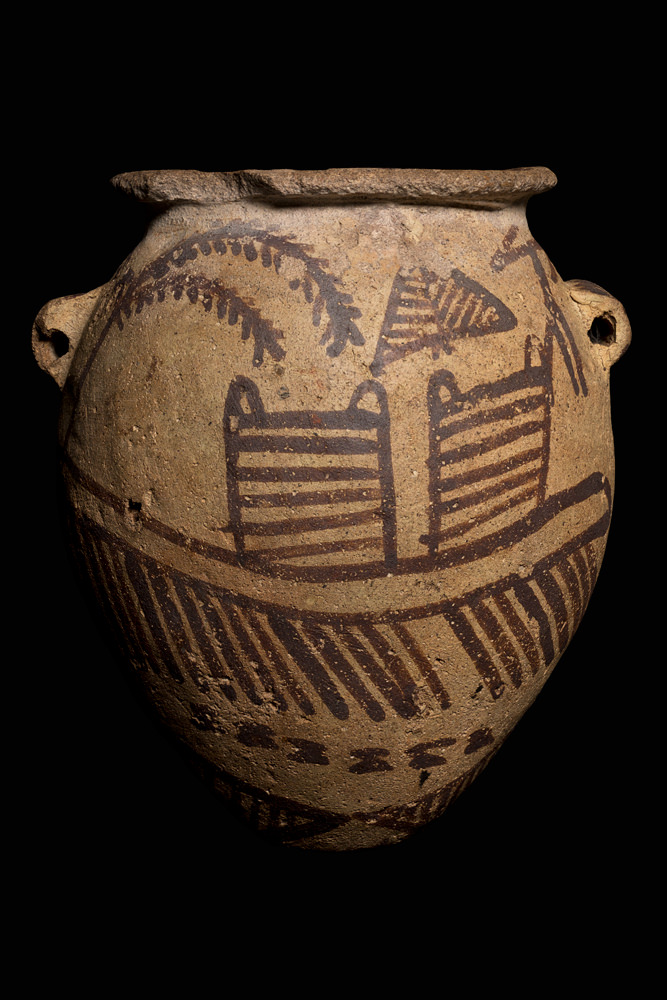
Exquisite Ceramics: They created "black-topped" pottery which achieved such extreme thinness that it reached the level of fine china. The bowl functioned as a social status indicator beyond its role as a serving dish.
The Afterlife Obsession: The practice of western burial with precious objects and tools began in that time period. The seed of the "Book of the Dead" was planted right here.
3. The Naqada Revolution: From Villages to City-States
The Naqada Period in its three phases begins to show its serious nature. The first stage shows the development of basic agricultural communities into "Protomeroe" which served as miniature kingdoms.
Naqada I (The Amratian Period)
As this period advances we start to observe the first visual representations of the "Bearded Man" along with various animals on ceramic items. Trade began to flourish. The traders exchanged both wheat and their intellectual property.
Naqada II (The Gerzean Period)
Egypt experienced its initial "industrial" revolution during this time period. The people of that time period established trade relationships with remote regions which included Mesopotamia and Afghanistan. The excavation of Lapis Lazuli, a blue stone not found in Egypt, from burial sites of this time period proves that trade already existed in Egypt during that time.
Naqada III (Dynasty 0)
The current time period represents the moment when the world first encountered the "Protocol" which operates under the "Dynasty 0" designation. Before the first official dynasty powerful regional kings controlled the territories. The first Hieroglyphs emerged during this time which served as tax documentation instead of poetic expression. (Even 5,000 years ago, you couldn't escape the taxman!)
4. The Real "Scorpion King": Hollywood vs. Reality
The real King Scorpion (Serqet) was a warlord-king who ruled from the city of Hierakonpolis.
The archaeologists found a large limestone macehead which depicts a man who wears the "White Crown" of Upper Egypt while he carries a hoe to perform ceremonial canal opening. The evidence presents two distinct conclusions which we can reach from this information.
-
The King was a warrior.
-
The King was the master of the water.
The Nile irrigation system in Egypt provided its controllers with complete power over all inhabitants. King Scorpion and his contemporaries (like King Ka) were the "tough guys" who paved the way for the total unification of the country.
5. Hierakonpolis: The City of the Hawk
The "Capital before the Capital" exists at Hierakonpolis which people also know as Nekhen. The city served as a large urban area which people dedicated to worshiping the hawk god Horus.
The recent excavation work discovered an amazing discovery which turned out to be the earliest known industrial-size brewing facility in existence. The system operated at a capacity which enabled it to brew more than 300 gallons of beer in one production run. Beer existed in Pre-dynastic Egypt as a beverage and a liquid bread product which provided people with nourishment and served as a method to compensate employees.
6. The Mystery of the Narmer Palette
The Pre-dynastic period officially "ends" with a bang—the Narmer Palette. This 2-foot-tall slab of siltstone is the most important historical document in the world.
The artwork shows King Narmer who is frequently recognized as Menes wearing the Crown of the South on one side and the Crown of the North on the other. He is depicted "smiting" his enemies which represents the time when Egypt became a single nation.
7. Daily Life: What Was It Really Like?
What would your life look like in 3300 BCE?
Diet:You would consume emmer wheat bread together with onions and garlic and Nile fish. Meat was a luxury reserved for festivals.
Fashion:Everyone wore linen because it provided coolness and breathability and washing was simple. Men wore kilts while women wore basic sheath dresses.
Religion:You would not worship the official gods who the later temples established. Your home would contain small clay figurines of cattle or fertility goddesses. People practiced their faith through personal rituals which followed the river's seasonal patterns.
8. Why Does the Pre-dynastic Period Matter Today?
What would your life look like in 3300 BCE?
Diet:You would consume emmer wheat bread together with onions and garlic and Nile fish. Meat was a luxury reserved for festivals.
Fashion:Everyone wore linen because it provided coolness and breathability and washing was simple. Men wore kilts while women wore basic sheath dresses.
Religion:You would not worship the official gods who the later temples established. Your home would contain small clay figurines of cattle or fertility goddesses. People practiced their faith through personal rituals which followed the river's seasonal patterns.
Final Thoughts: The Foundation of Greatness
The Pre-dynastic period shows that people need to work hard over time to achieve great things. The construction of the project required thousands of years of testing which demanded tremendous human dedication to reach completion. Next time you see a picture of the Sphinx, remember the Badarian farmers and the Naqada traders who laid the foundation for that stone.
Want to learn more about the secrets of the ancient world? Drop a comment below and let us know which "unsolved mystery" of Egypt we should cover next!




-webp.webp "Hilton")
-webp.webp "dusit")
-webp.webp "Marriott Hotels")
-webp.webp "Azimut Hotel")
-webp.webp "Golden Tulip")
-webp.webp "sheraton")
-webp.webp "westin hotel")
-webp.webp "Movenpick")
