
Bakers, Boats, and Nobles: The Human Story Behind Giza’s Stone Giants
Beyond the Postcard: The Hidden Wonders of the Giza Necropolis
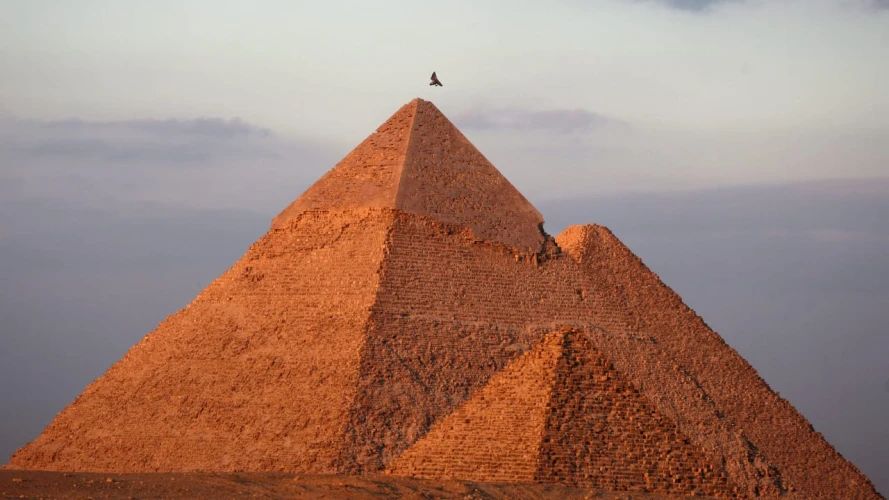
Every year, millions of people travel over to the rocky limestone plateau of Giza. They show up with their cameras, kinda eager to stand in the shadow of the three Great Pyramids: Khufu , Khafre,and Menkaure. Honestly it feels like one of those bucket-list things you really can’t skip. The sheer size of these mountain-like structures, built more than 4,500 years ago has kept showing up in humanity’s imagination for centuries, almost without break.
Yet here’s the real tragedy of the usual, hurried tour bus detour through Giza: most folks mostly see the “postcards.” They take a photo of the Great Pyramid, do a fast camel ride, look at the Sphinx for a moment,and then they move on.
And because of that, they miss the real thing, the actual nature of the place.
The Giza Plateau isn’t only a trio of giant tombs, it’s a sprawling, extremely layered necropolis—this huge city of the dead. Around the towering pyramids there are thousands of less-known tombs, old worker communities, sacred temples,and also puzzling pits. Together they bring forward the deeply human scenes of everyday people, the ones who built , lived, and protected this sacred ground. So lets look past the obvious heights, and notice what really makes the Giza Necropolis so extraordinary.
1. The Mastaba Fields: The City of the Court
When the pharaohs took their rest inside those huge, hard stone mountains, the big officials, royal family people, the priests and the court nobles from the Old Kingdom were laid to rest out in the desert around them.
To the east and west of the Great Pyramid of Khufu, there are massive, neat grid-like systems of mastabas, flat-roofed rectangular stone tombs with slanted sides. In other words, these are the East and West Fields of Giza, sort of like… waiting in the sand.
If you walk through the calm, sand-swept stone lanes, it can feel a bit like wandering around a deserted suburban neighborhood from 2500 BCE. And since these nobles didnt hold the king’s divine rank, they relied on their smaller tombs to keep track of the very human details of everyday living.
In the little offering chambers of the mastabas, there are beautiful hand carved reliefs showing children playing, scribes working busily, writing on papyrus rolls, and musicians playing harps. You know, these quiet dusty halls where the real, practical society of ancient Egypt comes to life, without any noise.
2. The Khufu Ship: A Vessel for the Stars
In 1954, the Egyptian archaeologist Kamal el-Mallakh made this really shocking find. Somewhere out there in the sand, in a tightly sealed limestone-covered pit right next to the southern side of the Great Pyramid, he uncovered this huge, stacked amount of ancient wood, like nothing you’d expect.
The thing turned out to be a royal ship in pieces, built from Lebanese cedar, and it was made of exactly 1,224 individual parts. For more than 4,500 years, it sat there completely undisturbed, in that airtight dry pit, without any real disruption, or at least none that anyone could see.
Restorers then spent over fourteen years carefully reassembling it, almost like a careful puzzle that you can’t rush. They did all of it without using a single modern nail. Instead, the original craftsmen had fastened the whole vessel using wooden pegs, and woven grass ropes which tightened when they got wet, which is kind of clever if you think about it.
The final ship becomes, basically, a masterpiece of ancient sea craft. It’s 43 meters long (143 feet), and it has this gracefully curved prow that looks almost unreal.
So why put together a massive ocean-worthy boat on a dry desert plateau? The explanation is that it was a solar barque, a ritual vessel, designed to transport the soul of the resurrected Pharaoh Khufu across the sky beside the sun god Ra, during his never-ending travel through the heavens.
3. The Workers' Village: The People Who Built the Dream
For centuries , popular culture and Hollywood movies kept rolling out this big myth , like it was always true, that the pyramids were thrown together by thousands of brutalized, whipped, foreign slaves.
But modern archaeology has basically torn that story to pieces , and the real proof sits just south of the main plateau wall, at a place called Heit el-Ghurab (The Wall of the Crow).
It’s been excavated pretty extensively , and what shows up there is the Workers' Village , kind of like a lively ancient city that held the builders , stonemasons , bakers , and draftsmen who actually constructed the pyramids. The stuff they uncovered doesn’t look random at all , it points hard to a system that was tightly organized and backed by the state :
A High-Protein Diet : animal bone remains suggest workers were regularly given thousands of pounds of high-quality beef, sheep, and goat meat , daily. Not only that , it was the kind of luxury meal most ordinary Egyptians just couldn’t get very often.
The World's First Bakery : archaeologists also uncovered huge industrial bakeries , built to churn out tens of thousands of loaves of dense barley bread, every single day, to keep up with the exhausting physical work.
Medical Care : skeletal evidence shows that they weren’t just left to suffer through injuries. Researchers found bones with fractures that were set properly , amputations that healed, and even signs that brain surgery was carried out successfully.
So yeah, taken together these findings basically show the pyramid builders weren’t enslaved captives. Instead, they look like respected , well-fed , and cared-for Egyptian citizens, who seemed to take real pride in raising these enormous monuments for their divine king.
4. The Sphinx Temple: Echoes of Lost Rituals
Pretty much every traveler stops, takes a photo, standing right beside the huge lion bodied figure of the Great Sphinx. But like, very few bother to look closer at the ruined stone structures that sit basically right in front of those giant paws, you know , The Sphinx Temple.
This place was made from enormous, multi-ton limestone blocks cut right from the Sphinx quarry. The whole thing used to be this breathtaking open air sanctuary , lined with red granite columns from Aswan and with massive statues of Pharaoh Khafre, standing there like they still own the sand.
And the design isn’t just “cool” it’s incredibly sophisticated for its time, with astronomical alignments that seem almost unreasonable. Around the spring and autumn equinoxes, if you’re inside the temple, you can watch the sun lower and line up straight with the main altar. That moment was meant to show that unbroken cycle, death into rebirth, over and over. It’s one of those powerful , quiet spaces where you can almost physically sense the deep spiritual bond the ancient builders kept with the motion of the cosmos.
5. Tips for a Deeper Giza Experience
If you’re trying to slip out of that ,kind of generic tour bus rush, and actually touch the deeper layers of the Giza Necropolis, then keep these down-to-earth thoughts in your head:
Wander the East and West Fields: those mastaba areas are fully open to walk through, with just your usual site ticket. they feel almost strangely calm, like, a real break from the loud vendors hovering around the pyramids.
Go to the Panorama Point by foot ,or carriage: don’t just grab a quick picture and move on. choose a open air horse carriage, or hike toward those further out desert viewpoints. from a distance, you can see how everything sits together in space, and that sacred, intentional geometry between the monuments becomes way more obvious.
Lock in your local tour plans: exploring a place that’s this huge and historically layered like Giza, is honestly smoother with a private licensed guide. they can show you the quiet details—hidden tombs, smaller relics—and talk through the newer excavations without making it feel like a script.
And when you’re arranging these more tailored private tours, double check that the whole booking flow goes through secure ,bank-grade checkout systems like WeTravel, or payment gateways supported by Stripe. these tools use certified PCI-DSS Level 1 encryption, so they tokenize your card details in a protected way, keeping your personal financial info safer while you wander through the antiquity side of things.




-webp.webp "Hilton")
-webp.webp "dusit")
-webp.webp "Marriott Hotels")
-webp.webp "Azimut Hotel")
-webp.webp "Golden Tulip")
-webp.webp "sheraton")
-webp.webp "westin hotel")
-webp.webp "Movenpick")