
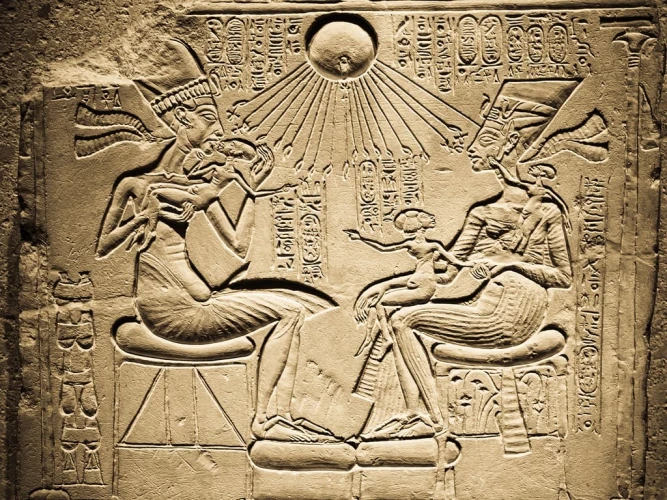
The Pharaoh with a Woman’s Body: Was Akhenaten Sick or Just a Genius?
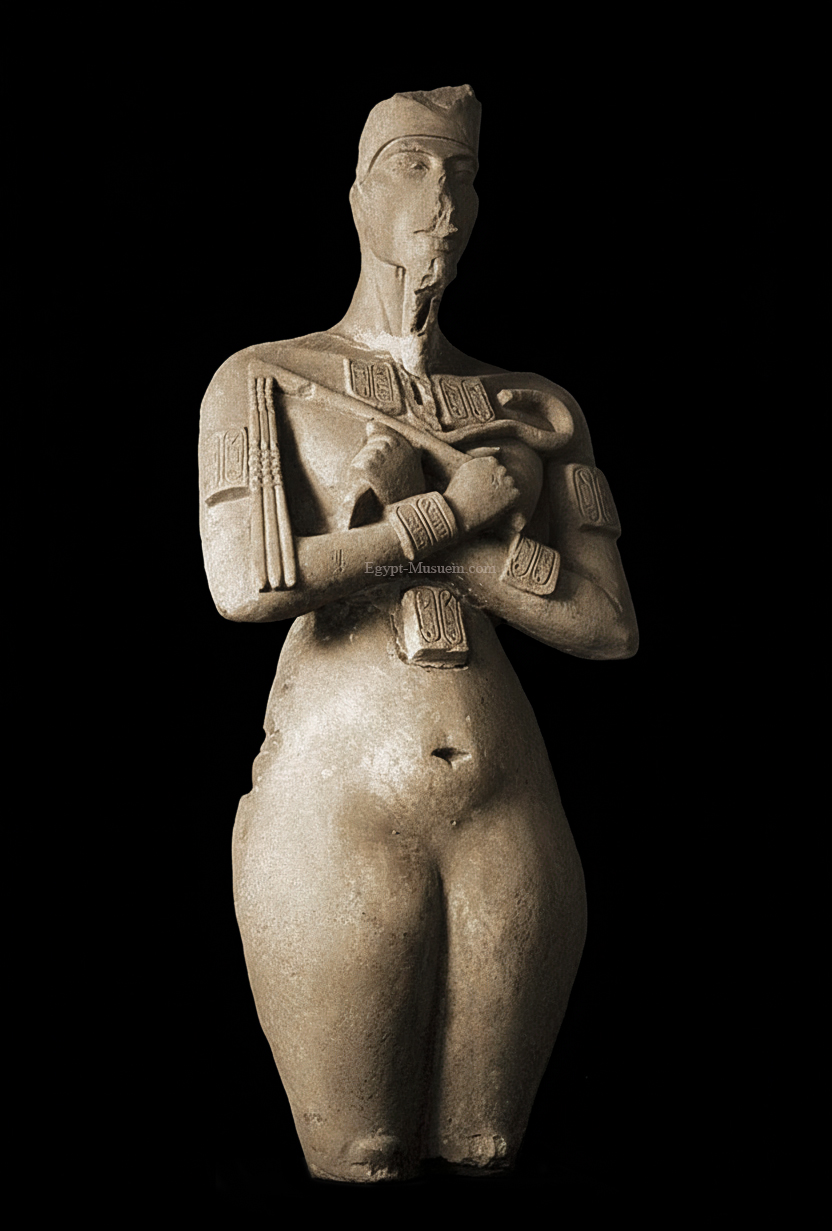
Egyptology researchers refer to this inquiry as the "Million Dollar Question." From their statues of Akhenaten, people can see his facial features which include a narrow face and heavy eyelids together with his potbelly and wide hips and prominent breasts.
There are three main theories why the "Heretic King" was depicted with such feminine physical traits.
1. The Medical Theory: "The Sick Pharaoh"
Researchers maintained their belief about Akhenaten's medical condition until their studies showed he had a hereditary hormonal disorder. Two main candidates were often cited:
Froehlich’s Syndrome: This condition causes a feminine distribution of fat (wide hips, breasts) and a lack of muscle tone. The condition leads to infertility but Akhenaten had at least six daughters.
Marfan Syndrome: This explains the facial features which exhibit elongated structures and the body displays thin arms and extended fingers. The condition describes wide hips and abdominal development but it does not determine the complete body shape of the individual.
The Twist: The research team examined the mummy discovered inside tomb KV55 which people believe to belong to Akhenaten and found that the mummy's body structure appeared "normal." The body displayed normal features because it lacked the extreme physical abnormalities seen in statues which indicates that the feminine appearance was a deliberate choice rather than an actual medical condition.
2. The Theological Theory: "Mother and Father of All"
Historians currently consider this theory to be their most accepted explanation. Akhenaten used his body not to display his physical form but to express his religious belief.
The Nature of the Aten: In his new religion, the sun disk (the Aten) was the creator of all life, containing both male and female energies.
The King as the Image of God: As the sole son of the Aten Akhenaten wanted to show his god's dual nature through his actual appearance. Through his his combination of male and female attributes he showed the complete state of existence.
3. The Artistic Theory: "The Amarna Revolution"
The architectural depiction of Egyptian rulers showed them as superhuman figures during the period before Akhenaten who displayed complete physical perfection and eternal youth. Akhenaten wanted to smash that tradition.
Breaking the Mold: He introduced a style of "Truth" (Ma’at).He probably instructed his artists to create larger-than-life representations of his facial characteristics so that he could be recognized as a unique individual who differed from the "ideal" monarchs who came before him.
A "Family" Style: His daughters and his wife Nefertiti showed the same physical characteristics through their depictions which included elongated skulls and thin necks. The evidence shows that artists used an artistic branding method which they called a "filter" to create a unified appearance for the entire royal family instead of having him show specific medical symptoms that affected only him.
The Verdict
All current research shows that experts now believe Akhenaten used his appearance to achieve political and religious goals. By appearing androgynous, he was telling his people: "I am not just a man; I am the living bridge to the Creator, who is both Mother and Father to the world."
The process of "rebranding" reached its highest point in human history when people transformed their identity from warrior-king to spiritual being who possessed complete power.
Speaking about his distinctive fashion, have you seen the famous bust of his wife, Nefertiti? Her graceful appearance creates a stunning contrast with his exaggerated and unusual facial characteristics.





-webp.webp "Hilton")
-webp.webp "dusit")
-webp.webp "Marriott Hotels")
-webp.webp "Azimut Hotel")
-webp.webp "Golden Tulip")
-webp.webp "sheraton")
-webp.webp "westin hotel")
-webp.webp "Movenpick")