
Abydos Temple Guide: Osiris Mythology, the Osireion, and Egypt’s Finest Reliefs
.jpg)
The Sacred Abyss: Unlocking the Mysteries, Art, and Eternal Magic of Abydos Temple
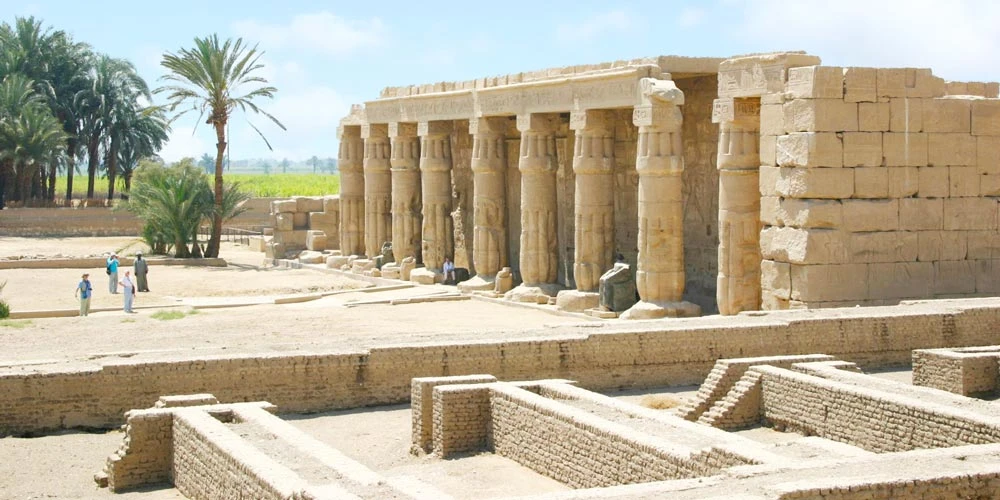
There is a distinct sort of moment when a traveler steps out of that bright dusty heat from Upper Egypt, and into the shadowed, limestone halls of the Temple of Seti I at Abydos. The chaotic sounds of the modern world instantly disappear, sort of evaporate, replaced by a heavy almost physical silence that has stayed put inside these walls for over three millennia. And as your eyes adjust to those soft golden shafts of light punching through the roof, you kind of get greeted by what people, universally, consider the most sublime relief carvings… breathtaking really, and preserved in a way that feels almost impossible through all that time. The colors—deep Egyptian blues rich ochres, and vivid malachites—are so extraordinarily crisp they look like the royal artists packed away their chisels only yesterday, honestly.
Meanwhile, the towering pylons of Karnak and the cliff-cut grandeur of Abu Simbel pull in the loud massive tourist caravans, but Abydos stays more like a destination for the true seeker. It sits roughly three hours north of Luxor, within the Sohag Governorate, and it is not simply some other monument meant to pump up a pharaoh’s ego. For ancient Egyptians, it was more or less the center of the universe—like a sacred passage to the underworld, the burial place of the first kings, and the emotional core of the cult of Osiris.
In this comprehensive, human centered travel guide we will set out on a spiritual plus historical wander, to sort of unlock the profound mythology, the artistic masterpiece scenes, the architectural enigmas, and the practical wonders tied to the legendary Abydos Temple.
1. The Cradle of Eternity: Why Abydos Mattered
To understand the architecture of Abydos, you kind of have to start with its sacred geography first, really. Long before the pyramids of Giza ever were even imagined, Abydos was already acting like a crowded necropolis. Its in a desert valley called Umm El-Qa'ab, which people translate as Mother of Pots, and it’s here that the earliest pharaohs, from Egypt’s 1st and 2nd Dynasties, were laid to rest. For the ancient mind, this place wasn’t just important it was the literal cradle, of Egyptian kingship.
Then, as time kept rolling on, Abydos grew into the main pilgrimage stop for Osiris. He was the god of the afterlife, resurrection and agriculture, sort of all together. In the older foundational story of Egypt, Osiris had been a king who was wise, then he was murdered in a brutal way and his body was dismembered by his jealous brother, Set. After that, his devoted wife Isis traveled across the lands to gather what was left, burying his sacred head right there at Abydos.
So naturally Abydos gets this “Mecca” feeling, for the ancient world. Every Egyptian, from the richest noble down to the simplest peasant, wanted to make the trip here, or at least have a commemorative stone stela raised with their name on it. The whole idea was that their soul would find safe passage into the afterlife, under Osiris protection, without much delay.
2. The Temple of Seti I: A Masterpiece of the New Kingdom
The jewel of the Abydos archaeological landscape is, the Great Mortuary Temple built by Pharaoh Seti I (and completed by his legendary son Ramesses II) during the 19th Dynasty. Seti I was a brilliant military commander, but his biggest legacy was this sweeping cultural restoration thing. Coming shortly after the religious upheaval of Akhenaten's Amarna period , Seti tried to prove his family’s royal lineage by raising a place of worship that gave what it felt like was a final nod to Egypt’s older , primordial deities.
Now, the temple has a unique, kind of unorthodox L-shaped plan , which is a clear break from the usual linear layout seen in New Kingdom temples. That odd structure wasn’t just for show. Ancient builders made that deliberate decision to protect a mysterious, way more ancient building sitting right behind it: the Osireion.
The Hypostyle Halls and the Fine Art of Relief
As you move through the outer courtyards , you step into two breathtaking Hypostyle Halls, held up by columns shaped like papyrus buds. This is where the artistic genius of the Seti era really shows up, no doubt.
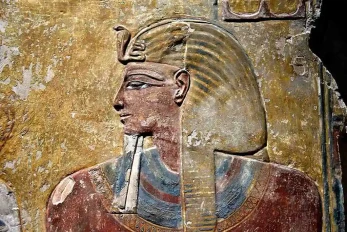
Unlike the later period carvings that are deeper and heavily incised (and kind of meant to survive the brutal outside sunlight ), the interior reliefs at Abydos are cut in exquisite raised relief. The limestone is smoothed down to this almost silk-like surface, so the gods and royal figures don’t just “sit” on the wall they project subtly outward into the room. And the way the humans are handled, like the soft curve of a goddess’s jaw, the careful pleating of linen cloth, the vivid muscle tone of the pharaoh, really hits that top tier of pharaonic fine art.
3. The Seven Holy Sanctuaries
Even though the older Egyptian temples were usually devoted to one main divinity, the Temple of Seti I feels a bit different, almost as if it was built with several altars in mind at once. It has seven sanctuaries running parallel, right there side-by-side along the rear wall. You walk in and it’s like the place starts splitting into seven lanes, each one a vaulted space, each one linked to a particular pillar of the Egyptian pantheon.
So, you get these sanctuaries, in a line like that:
Seti I the Pharaoh , later seen as a god
Ptah, the creator deity of Memphis
Re-Horakhty, the sun god associated with Heliopolis
Amun-Ra, the ruler among the gods
Osiris, the lord of the underworld
Isis , the divine mother and skilled magician
Horus, the falcon-headed avenger of his father
If you step into the central sanctuary of Osiris, you can still make out the very finely cut scenes, with their layered ritual details. They show the complicated Beautiful Feast of the Valley, where the statues of the gods were ceremonially cleaned, rubbed with sacred oils, wrapped and dressed in fine linens, and then set before offerings: food, wine, and lotus flowers.
4. Unlocking History: The Famous Abydos King List
For historians and language lovers, walking down that long narrow corridor called the Gallery of the Lists is a spine tingling sort of experience. Carved cleanly into the eastern wall is the world famous Abydos King List.
This huge inscription shows a mature Seti I, with his young son and heir, the future Ramesses II, holding a burning censer of incense before a massive chronological roster containing 76 past pharaohs of Egypt. The list starts with Menes, the legendary unifier of the nation and it reads kind of like an ancient history textbook, except it’s carved right into stone.
What makes this list a masterpiece of historical politics is all those intentional gaps. Seti tried to show a story of uninterrupted orthodox cosmic order, so he completely erased the names of rulers he considered heretical or illegitimate including Hatshepsut, Akhenaten, Tutankhamun and Ay. For modern Egyptologists this wall served as a crucial Rosetta Stone for mapping out the “correct” succession among Egypt’s dynastic dynasties.
5. The Enigmas: The Osireion and the "Helicopter" Hieroglyphs
Abydos is one of those places where history keeps flirting with mystery, so it becomes a favorite stop for alternative historians and people who are into the esoteric, for whatever reason you might like.
The Osireion: The Underground Titan
Behind the main temple, and sitting a few meters lower than the foundations of Seti’s build , lies the Osireion. This strange monument is made from massive, plain blocks of red granite. It almost echoes the Old Kingdom vibe, like the Sphinx Temple at Giza , more than the smoother New Kingdom look people usually expect.
Inside, there’s a central island surrounded by a deep natural looking water moat. The whole thing is meant to work like a symbolic tomb for Osiris, tied to the idea of the primeval mound of creation rising up from the waters of chaos. And because the water levels have shifted over time ( modern rising water tables are doing their thing ), the site ends up half-submerged, giving it this eerie, cinematic kind of beauty, like it predates the temple above by centuries.
The “Helicopter” Hieroglyphs
No tour of Abydos really feels complete until you talk about that famous internet internet image, the one people point to in the first Hypostyle Hall. Up on a ceiling lintel, a cluster of overlapping hieroglyphs looks, from a modern angle, like a helicopter, a submarine, and some futuristic fighter jet , all at once.
Sure, online theorists enjoy treating it like evidence of advanced ancient tech or time travel, but the truth is much more grounded. It’s basically a palimpsest— a stone that got carved twice. Seti I originally engraved his royal titles there; later, his son Ramesses II covered the earlier carvings with plaster and then chiseled his own titles right on top. Then over the millennia the plaster wore away, leaving the two sets of hieroglyphs sort of mixing into a messy overlapping pattern, and now our modern brains read it as machine shapes, not old writing.
Insider Tips for an Elite Voyage to Abydos
The Ultimate Day Trip Combo: Since Abydos sits way down in Upper Egypt it’s usually best tied together with a stop at the Dendera Temple (it’s dedicated to the goddess Hathor). A private day car ride from Luxor that covers both Dendera and Abydos is kinda long but still deeply rewarding cultural safari, if you have the time.
Bring a High-Quality Flashlight: Even though the temple has modern floor lighting, a lot of the finest bits, like the astral ceilings, plus those tucked away side chambers are better seen with a steady beam of light so you can really catch the real depth of the relief carvings.
Hire a Local Egyptologist: The whole web of theological relief scenes, and the hieroglyphs on the King List are incredibly dense. Having a knowledgeable guide to unfold the meanings story-by-story wall-by-wall turns the visit from simple eye pleasure into a kind of intellectual awakening .



-webp.webp "Hilton")
-webp.webp "dusit")
-webp.webp "Marriott Hotels")
-webp.webp "Azimut Hotel")
-webp.webp "Golden Tulip")
-webp.webp "sheraton")
-webp.webp "westin hotel")
-webp.webp "Movenpick")