
A Labor of Love: Inside the Sacred, Hand-Rolled Ritual of Egyptian Mahshi
.webp)
The Communal Art of Stuffing: Why Mahshi Is Egypt’s Ultimate Comfort Food
If you wanna get what “love” really means, and also family, and hospitality in an Egyptian household, don’t bother staring at the living room or the photo albums like they some kind of proof. You just walk, straight into the kitchen, on a Thursday morning.
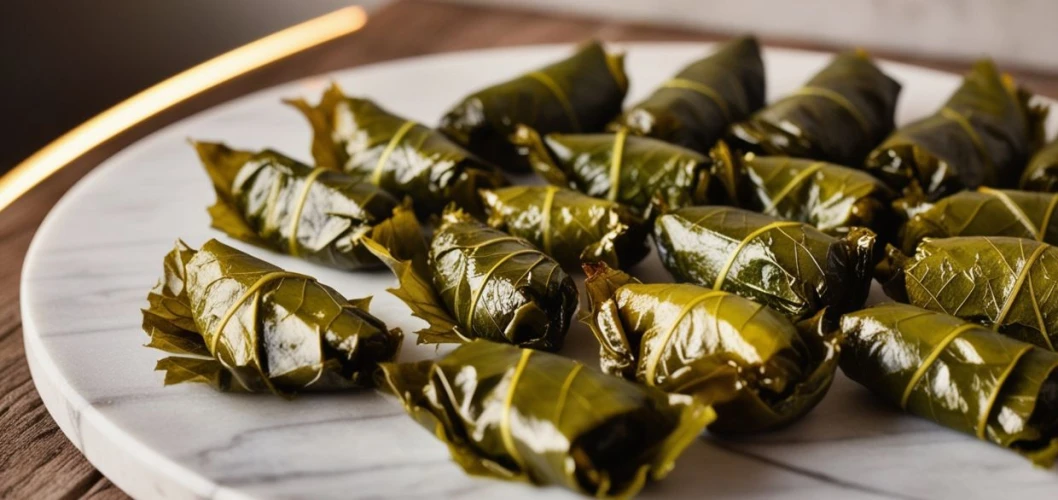
Right there, over this big wooden table, you’ll probably catch this full on little chaos of domestic work. A mother, a grandmother, maybe an aunt, all sitting together. Their hands look faintly green from fresh herbs, like they been wrestling with thyme and parsley all night. One person is super steady, hollowing out the middle of dozens of tiny zucchini with a long metallic corer. Another is rolling grape leaves, the soft blanched ones, into these ridiculously tight, neat cigars, like each one got measured. On the stove there’s a massive pot, gently doing its bubbling thing, filled with thick, aromatic tomato sauce that pulls in smells of fresh dill, parsley, and sweet onions, all at once.
This, basically, is the sacred ritual of Mahshi (pronounced MAH-shee).
Mahshi in Arabic literally points to “stuffed,” and yeah almost every culture around the Mediterranean and the Middle East has its own version of stuffed vegetables, from Turkish dolma to Greek yemista. But in Egypt, they kinda take the whole idea and turn it into a national art, grand, and a little stubborn about being perfect. Mahshi isn’t only a side plate or something you throw together on a random weeknight. It’s Egypt’s ultimate comfort food, the kind that hugs you. This is the meal for celebration, the one a mother makes to welcome her kids back from university, and honestly it’s also the clearest culinary way to say warm, maternal care.
In this deep-dive, human made guide, we’re gonna move into the heart of the Egyptian kitchen, and look closely at the vibrant anatomy of Mahshi, the seasonal vegetables that define it, the little secret to a herb infused rice stuffing that tastes just right, and why this labor-of-love dish kinda sums up the whole mood of Egyptian comfort.
1. The Soul of the Stuffing: A Vegetarian Masterpiece
At the core of every single plate of Mahshi — no matter which vegetable is being featured — there is the Khaltah (the stuffing mixture), and yeah it really does drive everything. Some regional spins across the Levant add minced lamb or beef into the stuffed leaves, but the classic, traditional Egyptian Mahshi stays proudly and clearly vegetarian. It leans on a smart, brilliant combination of short-grain rice, aromatics, and just an absolute mountain of fresh greens, not to be downplayed.
Making a legendary Khaltah starts with a generous pool of vegetable oil or rich clarified butter (samna) in a heavy pot. Finely minced yellow onions are sautéed gently until they go sweet, translucent, and golden. Then a smooth tomato puree is poured in and left to simmer slowly, until the oil separates on top, which is basically the signal that you’ve built a deep, concentrated flavor base.
Once the sauce is off the heat, that’s when the real thing happens. The chef folds in short-grain Egyptian rice along with a staggering amount of finely chopped, fresh herbs. Like,
Fresh Dill (Shabat): bringing a sweet, aromatic, a bit anise-ish lift.
Fresh Coriander / Cilantro (Kuzbara): giving it a bright, almost citrusy punch.
Fresh Flat-Leaf Parsley (Baqdunis): setting a clean, peppery foundation, not too heavy.
After that, the mixture gets a cozy, elegant spice profile, mostly cumin, black pepper, dry coriander, and a pinch of cinnamon. Sometimes there’s also a handful of dried mint leaves, crushed lightly between the palms, for that extra depth. The outcome is a vibrant, intensely fragrant, red-and-green stuffing that looks alive, and smells like a freshly walked Mediterranean garden wrapped in rich tomato sweetness, it’s really hard to describe it perfectly but you get the idea.
2. The Grand Vegetable Kingdom of Mahshi
Part of the joy of eating Mahshi in Egypt is honestly the sheer variety of textures and canvases that show up. An Egyptian feast rarely sticks to only one type of stuffed vegetable, instead a massive serving platter tends to land with a kind of colorful patchwork of different varieties, like the whole thing has been curated but also kind of improvised at the same time.
1. Wara' Enab (Stuffed Grape Leaves)
The undisputed queen of the Mahshi kingdom. Delicate, tender grape leaves are blanched briefly in hot water, just to soften them. Then the cook puts down a tiny, precise line of the rice mixture at the base of each leaf, tucks the sides inward with what feels almost like surgical precision, and rolls it forward into a tight, neat cylinder, no larger than a pinky finger. They get stacked systematically in concentric circles inside a deep pot, and then they’re slow-simmered with lemon slices and a rich broth. The result is tangy, meltingly tender, and yes… highly addictive in that very specific way.
2. Kosa (Stuffed Zucchini / Courgette)
Small pale-green Mediterranean zucchini are gently scrubbed and hollowed out using a specialized serrated tool called a Mo’wara. The trick here is physics, the cook has to leave the walls thin enough to become sweet and tender once cooked, but thick enough so the zucchini don’t split or crack when the rice expands inside.
3. Bitinjan (Stuffed Eggplant)
With small glossy black eggplants and also the delicate white ones (called Arous locally), you core them, then fill them. The result is this pretty deeply rich, earthy, buttery kind of contrast next to the bright tomato rice. Kinda like one layer is loud and the other one is calm but in a good way, you know.
4. Kromb (Stuffed Cabbage)
Honestly the winter comfort, the big one. Take large white cabbage leaves, boil until they are soft enough, then strip off the tough ribs, cut into tidy squares, and roll them tight around the spiced rice. You simmer everything on a low flame, and after a while the cabbage turns sweet, tender, and somehow soaked through with the rich fats from the broth.
3. The Science of the Simmer and the Grand Flip
Once the vegetables are sorta meticulously stuffed, they are packed tightly, side-by-side into this massive deep aluminum or stainless-steel pot. The packing has to be firm—if there is too much empty space , the boiling liquid will cause the vegetables to thrash around, and then the delicate rolls get loose, or the rice spills right into the broth. Not ideal, obviously.
The pot is then drenched with a rich, heavily seasoned bone broth, traditionally taken from slow-cooked duck, goose, or lamb. Duck broth (Shorbat Bat) is often treated by local purists as the absolute high note pairing for Mahshi, because its naturally high fat content and deep gamey savor sink into the rice, giving it that incredibly rich, almost luxurious feel.
After that, the pot is brought up to a roaring boil, then covered tightly and turned down to the lowest possible whisper of a flame. For the next hour, the kitchen ends up full of this dense comforting steam, as the rice drinks in the herb-scented broth and the vegetables soften into total submission.
When it’s finally done , the end result is pure domestic theater. The chef grabs the massive piping-hot pot, lays a giant silver serving platter over the top, and in one swift, muscular flip, inverts the whole setup upside down. The pot is lifted away with a flourish, releasing this magnificent, steaming pyramid of glistening, aromatic Mahshi that tumbles across the platter, ready for the family to gather around.
Insider Tips for the Ultimate Mahshi Feast
Eat with your hands, basically. While zucchini and eggplant can be sliced with a fork, Wara' Enab (grape leaves) and Kromb (cabbage) are made more for the tactile thing. Just grab them with your fingers, dip them lightly into any leftover broth that’s sitting on the plate, and then eat them in one single, glorious bite.
Check the bottom layers, for real. If you happen to get Mahshi served straight from a home kitchen, look closely at what’s on the very bottom of the platter. Traditional cooks tend to line the bottom of the pot with sliced tomatoes, onions, or the trimmed ribs from the cabbage leaves, so the Mahshi doesn’t burn. Those bottom pieces get deeply caramelized, slightly charred, and they’re basically jammed with concentrated flavor. Think of them as the kitchen’s secret, hidden treasures.
Bring the lemon power. For grape leaves specifically, make sure there are fresh lemon wedges on the table. Then right before eating, give the hot rolls a final, sort of aggressive squeeze of fresh citrus juice, and it somehow sharpens the natural tanginess of the leaf, and it cuts through the richness of the duck or lamb broth, really smoothly.







-webp.webp "Hilton")
-webp.webp "dusit")
-webp.webp "Marriott Hotels")
-webp.webp "Azimut Hotel")
-webp.webp "Golden Tulip")
-webp.webp "sheraton")
-webp.webp "westin hotel")
-webp.webp "Movenpick")