


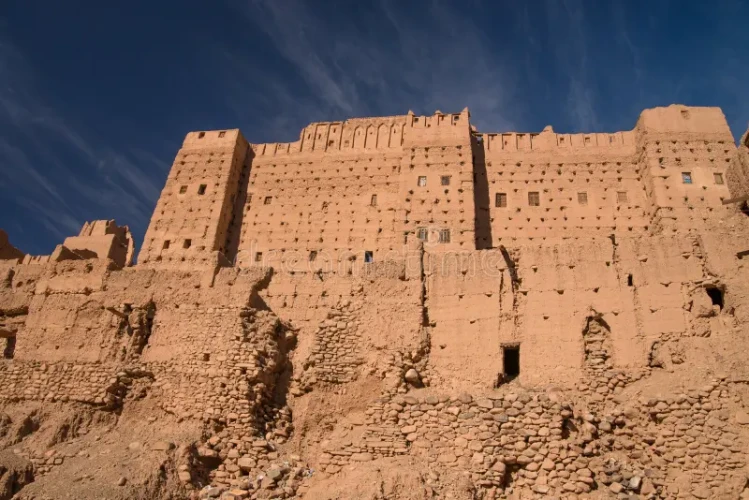
The Mud-Brick Fortress: Unlocking the Secrets of the Hawara Pyramid
.jpg)
The current view of the Pyramid of Hawara shows visitors a giant weathered mountain which rises from the Faiyum Oasis boundary. The Giza landscape shows sharp limestone peaks, while Hawara displays a shape that resembles an unformed natural body. Its "crumbling" form should not deceive you about its actual worth. The mud-brick structure contains an advanced engineering system which represents the most intelligent technology created throughout human history.
The Pyramid of Hawara functions as a 4,000-year-old "high-security vault" because people in 2026 dedicate their time to cybersecurity and data encryption research. The structure which Middle Kingdom Pharaoh Amenemhat III built, serves as an eternal soul protection system which he created to function as an unbreachable sanctuary.
1. The King Who Built Two Tombs
To understand Hawara you must first learn about its founder. The 12th Dynasty reached its peak during the reign of Amenemhat III. The king showed his dedication to his country by transforming the Faiyum region into Egypt's primary agricultural area. The king suffered from two contrasting emotions because he wanted to protect his territory and he feared that thieves would destroy his ancestral burial sites.
The "Black Pyramid" Failure: He first constructed a pyramid at Dahshur but the foundation proved unstable which caused the building to develop cracks.
The Hawara Redemption: He didn't give up. He decided to construct something superior after he reached the border of the Faiyum territory. His second attempt at Hawara became his greatest creation. It served as a proof of his ability to overcome obstacles.
2. The Mud-Brick Core: A Choice of Strategy
The people from Hawara believe that the king used mud-brick because he wanted to show his power to others. The actual situation demonstrates human behavior together with practical needs.
The construction process became faster through mud-brick usage but its primary advantage came from creating highly stable structures when builders combined it with their internal limestone framework.
The original structure at Hawara used white limestone to create a protective shell that enclosed the entire complex. The ancient travelers who visited the site would have seen it as an equal to the Great Pyramid in its majestic appearance. The existing mud-brick structure represents the "skeleton" which remains after all outer materials were taken off by subsequent generations.
3. The Labyrinth: A Wonder Beyond the Pyramids
The Greek historian Herodotus described a building which he said exceeded the size of the Giza Pyramids. The building received the name Labyrinth.
The complex operated as a massive administrative and religious facility which contained twelve enclosed courtyards and three thousand rooms that split between underground and aboveground areas. The design of the building created an experience which would disable all visitors through its audio and visual components which portrayed the Pharaoh's authority and the complicated nature of Egyptian governance systems.
The Labyrinth became a Roman stone quarry during the first century BC because it lost its original purpose. The "Maze of Hawara" legend still captures the imagination of every traveler who visits San al-Hagar because only foundation elements and partial remains exist.
4. The Ultimate Security: The "Unbreakable" Burial Chamber
The public area of Hawara operated as its main attraction through the Labyrinth, while its burial site functioned as its hidden main component. Amenemhat III used every available method to prevent grave robbers from accessing his tomb because he feared their attacks.
The Single-Block Vault: His designers created the entire burial space through their skill in cutting one complete piece of yellow quartzite into its final form. The workers transported a 110-ton monolith which they buried into a pit and created an empty space inside. The structure showed absolute integrity because it lacked any visible seams or cracks or openings that would permit wall extraction.
The Sand-Lowering Lid: The roof of this chamber was a massive slab. The architects implemented a "sand-drain" system to create the building's protective seal. The sand-based system supported heavy stone pillars, which began to descend after the sand was removed through small openings, enabling the stone lid to rest securely on the burial site of the Pharaoh, who would remain entombed for eternity.
The Dead Ends: The pyramid contained hidden pathways that led to dead ends together with ceiling trapdoors and corridors which ended in emptiness. The artists utilized stone materials to create a mental battle which occupied their opponents.
5. The Treasure of Princess Neferuptah
The King had exclusive use of Hawara. Archaeologists discovered his daughter's tomb near Hawara in the 1950s. The King’s chamber flooded because of rising groundwater which represents the main danger to Hawara today. The Princess's tomb produced amazing treasures which included gold, carnelian, and feldspar jewelry.
The Pharaoh shows his human side through her burial near his major construction project. His "unbreakable fortress" design showed his desire to keep his family members close to him.
6. The 2026 Perspective: Fighting the Water
The greatest secret of Hawara exists today as a hidden treasure which lies underwater. The lower chambers of the pyramid experience flooding because rising water table levels in Faiyum plus the Hawara Channel's location create this situation.
The Underwater Mystery: Explorers in 2026 use their special diving equipment plus sonar technology to create a map of the submerged passageways. We are discovering historical evidence which has remained hidden since the 12th Dynasty period.
Conservation as a Mission: Hawara operates as a "red alert" site for all travel industry professionals. The "fortress" needs human maintenance because it requires protection from natural elements.
7. The Genius of the Maze
The Pyramid of Hawara demonstrates the intellectual characteristics of Middle Kingdom Egyptian civilization. The goal of their research was not to create the largest work but to develop the most intelligent solution. The Egyptian king Amenemhat III possessed knowledge about stonebreaking techniques yet he believed that complicated structures would remain intact forever.
The existing mud-brick ruins do not demonstrate a "melted" pyramid. The remains of the structure display evidence of a complex city that existed before and a secure area which prevented ancient thieves from entering. The story tells about a king who developed a protective maze for his spirit and created a mud and sand fortress which remains intact after 4,000 years of existence.




-webp.webp "Hilton")
-webp.webp "dusit")
-webp.webp "Marriott Hotels")
-webp.webp "Azimut Hotel")
-webp.webp "Golden Tulip")
-webp.webp "sheraton")
-webp.webp "westin hotel")
-webp.webp "Movenpick")
