

Elephantine Island Aswan Egypt Guide
History of Elephantine Island Aswan: A Gateway of Ancient Egypt
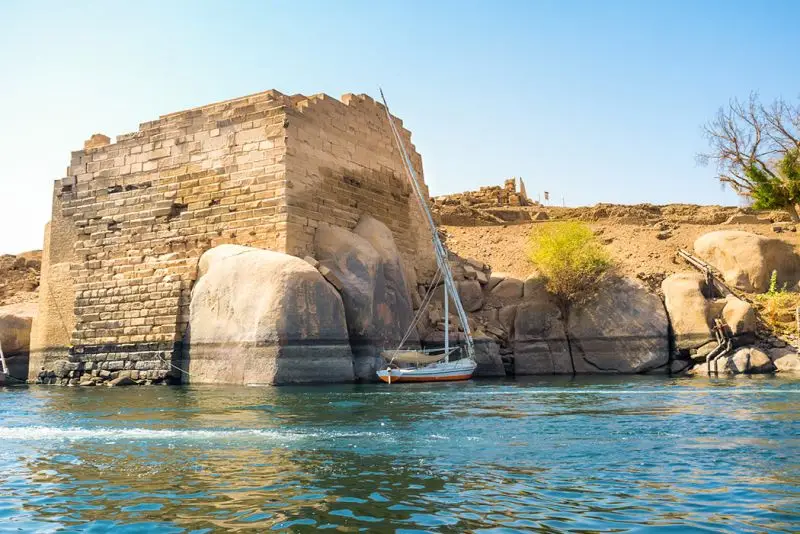
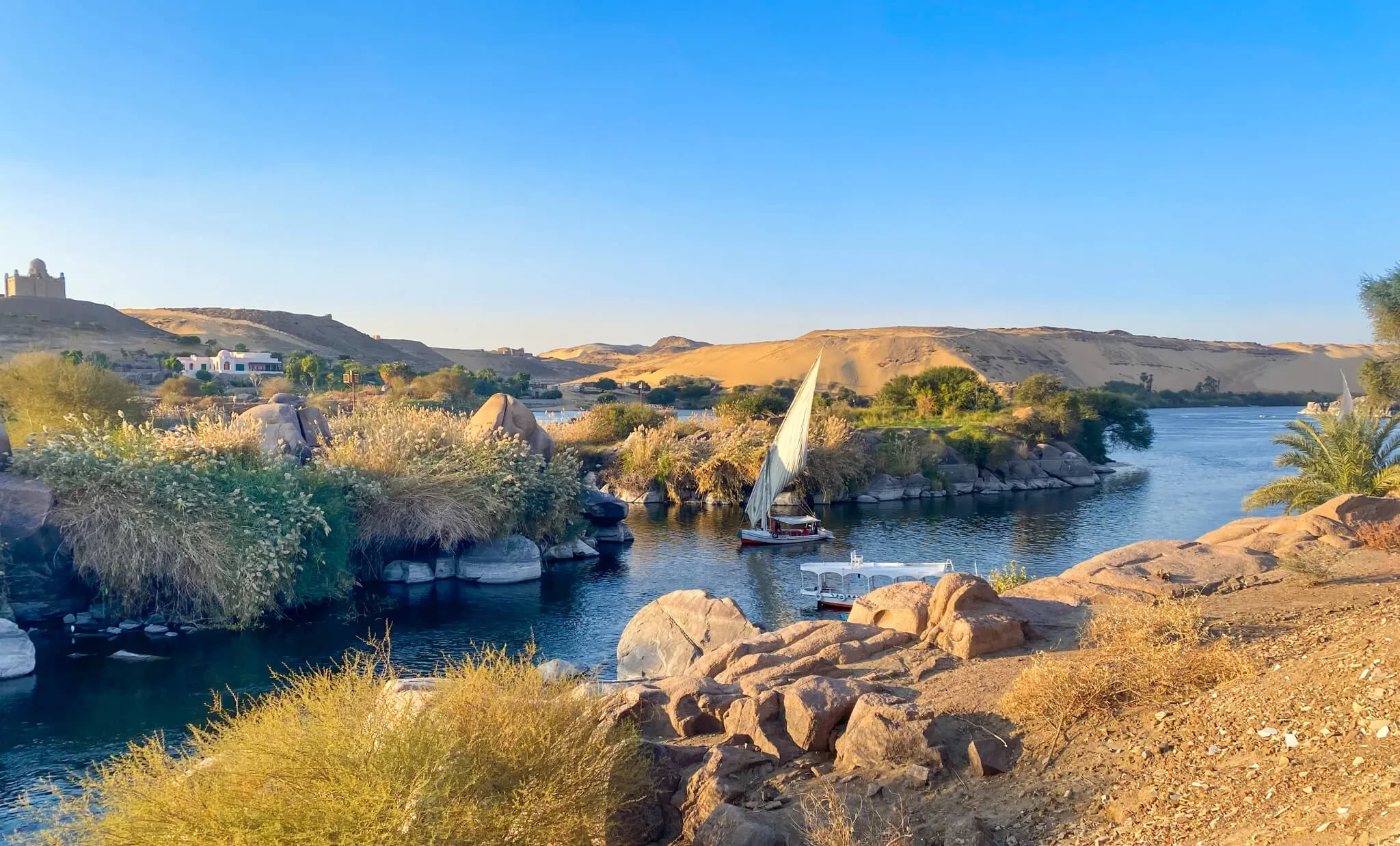
Elephantine Island is among the top significant sites of the Nile River, directly across from the city of Aswan, south of Egypt. Its name derives from the ancient Greek word, Elephantine, which implies “elephant” as an island shape or ivory that was traded in the area. Historically known as “Abu” in ancient Egyptian periods, the island was an important outpost serving as Egypt’s border with Nubia. Through millennia, it served as a military base, trading hub and religious destination, rendering it one of the most ancient settlement continuously populated areas in Egypt.
From the Old Kingdom, through the Middle and New Kingdoms, the Elephantine Island helped control the Nile River’s trade routes. Precious materials such as ivory, gold, ebony, spices and rare creatures were traded, linking Egypt with Nubia and other African areas. The island is tied to the yearly floods of the Nile, essential for Egypt’s agriculture.
Ancient Egyptians believed the ram-headed god Khnum, worshipped in the island, commanded the waters of the Nile and crafted humans.
This belief made the island significant politically and religiously.
Archaeological Sites on Elephantine Island: Temples, Nilometer, and Ancient Ruins
Today, the island is an open archaeological museum featuring numerous sites dating back thousands of years of Egyptian history. Most noteworthy is Khnum’s temple dedicated to the ram-headed god controlling the Nile’s overflow and the human creation. Adjacent sites of temples built in honor of the goddesses Satet and Anuket (guardians and nourishers of the region) can be discovered. These were rebuilt multiple times throughout different dynasties, from the Pharaoh, Ptolemaic, to the Roman periods.
The island is home to an ancient Nilometer – one of the world’s oldest measuring instruments of water level. This staircase like structure, constructed of stones, was used by priests to measure the Nile level during its annual overflow to set taxes, planning crops and foretell success. Ruins of homes, administrative and defense constructions give visitors a glimpse into the lives and administration of the people inhabiting this ancient border area. The museum within the island, Aswan Museum, showcases artefacts collected from excavation process such as earthenware pots, sculptures, engravings and tools which gives deep insight into daily life.
Nubian Culture and Life on Elephantine Island Today
Beyond its rich history, Elephantine Island is a thriving culture hub that perpetuates the traditions of the Nubian people. Bright colored houses decorate the Nubian villages on the island, with ornate embellishments, and a kind of welcoming culture. If you walk around through the hamlets you start noticing a peaceful atmosphere of music, hospitality and those old customs handed down across generations, like they never really stopped. The island’s culture includes Nubian language, delicious food and traditions.
Most visitors delight in meeting with the local residents, exploring the small markets and enjoying traditional Nubian snacks and tea. The island offers a tranquil refuge from bustling Aswan and allows travelers to admire stunning Nile views while gaining understanding of one of Egypt’s unique cultures. A mix of historical sites and lively culture makes Elephantine Island a rare attraction where ancient and modern lifestyles converge peacefully.
How to Visit Elephantine Island Aswan: Travel Guide and Tips
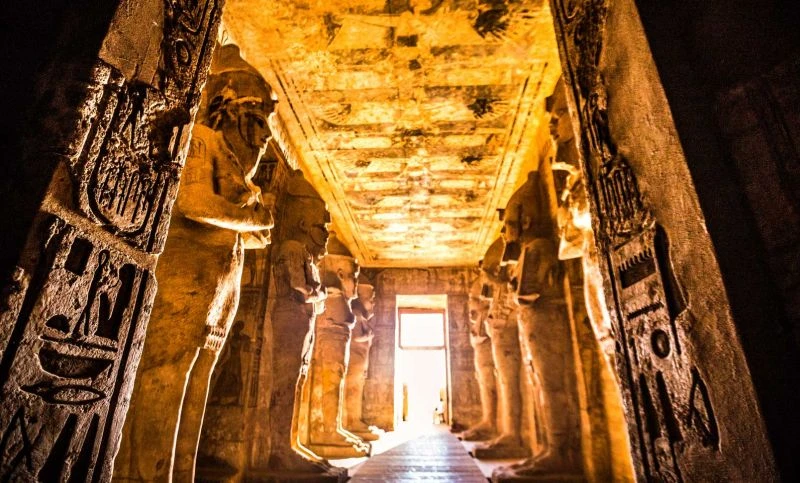
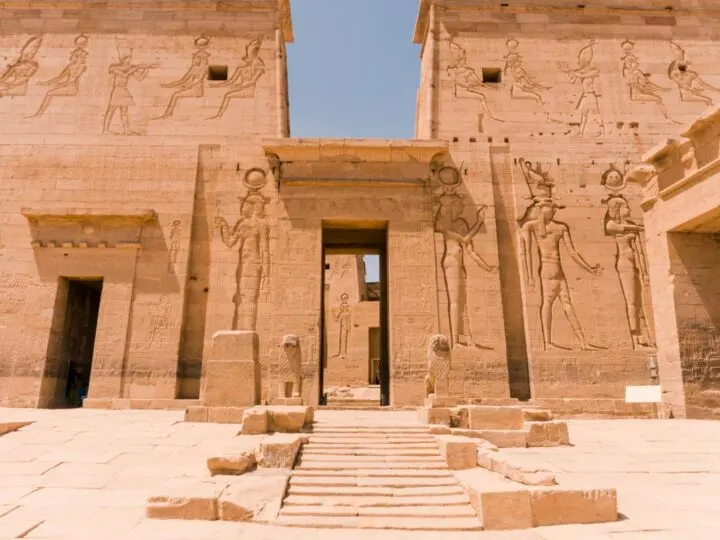
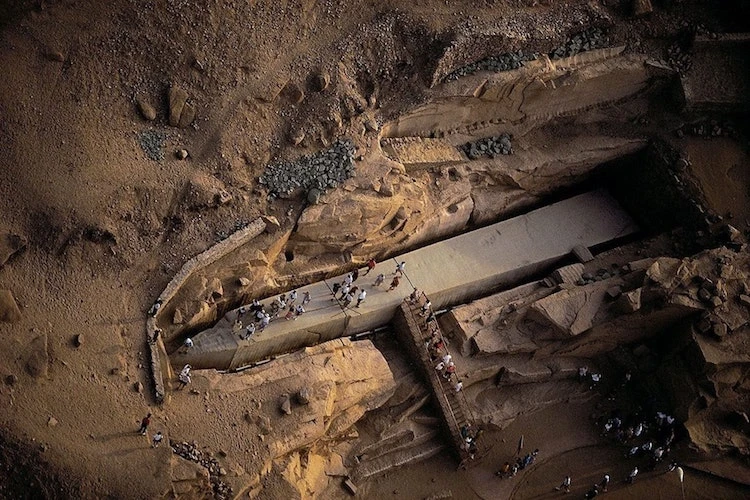
It is easy to get to Elephantine Island from the city of Aswan using traditional felucca sailboats or motorboats; a Nile journey in itself is memorable. Typically, people combine the visit with a larger tour to Aswan’s other attractions such as the High Dam, Unfinished Obelisk, and Philae Temple. Any time of the year is fine to visit, but October to April is considered best as the climate is cool and suited for strolling and site viewing.
It is advisable to book a guide to help one fully grasp the historical significance of the ancient ruins, temples, and other historic structures. Visitors can walk leisurely through established paths, absorbing the natural beauty of the Nile River as well as the remnants of the past. No matter how much someone is into archaeology, ancient religion, or Nubian culture, Elephantine Island ends up feeling surprisingly profound, and also a sort of really enriching stop, like 100% a definite must see, when you are visiting southern Egypt. Aswan Day tours provide the chance to immerse oneself in one of Egypt’s most tranquil and cultural cities.With captivating views of the river,ancient temples and rich Nubian history, Aswan has something special for the sightseers who seek to discover its ancient attractions with knowledgeable tour guides.




-webp.webp "Hilton")
-webp.webp "dusit")
-webp.webp "Marriott Hotels")
-webp.webp "Azimut Hotel")
-webp.webp "Golden Tulip")
-webp.webp "sheraton")
-webp.webp "westin hotel")
-webp.webp "Movenpick")